Browsed by
Category: Editor’s Blog

The blog posts of Black Gate Managing Editor Howard Andrew Jones and Editor John O’Neill

What Makes a True Hero? Announcing the Winners of the Writing Fantasy Heroes Contest

What Makes a True Hero? Announcing the Winners of the Writing Fantasy Heroes Contest

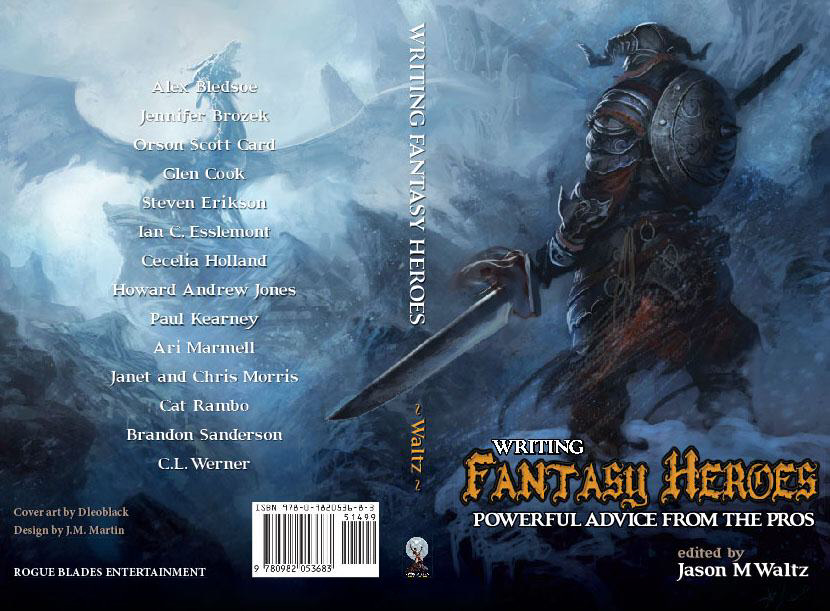
Writing Fantasy HeroesThree weeks ago, we asked Black Gate readers to tell us about their ideal hero in one paragraph or less. It could be a fictional character, or a general description of those qualities that make a hero ideal.

In return, we offered to award a copy of the new book, Writing Fantasy Heroes, edited by Jason Waltz and published by Rogue Blades Entertainment, to three lucky winners.

Those three winners will be randomly drawn from the list of all the entrants.

Before we announce the winners, let’s have a look at some of the best entries. As much as we’d like to, we can’t reprint all the entries we received, so we’ll limit it to the 20 we found most insightful, well written, or original. We’ll start with Daran Grissom, who tells us an ideal hero is:

Someone who, when confronted by the possibility of adventure, enters into it reluctantly, but with determination. A man or woman with a unique trait or skill who is delivered, by fate or vocation, to a place where he or she chooses to go above and beyond what is reasonably asked of them. An exceptional person, in exceptional circumstances, doing exceptional things. That is a hero.

A fine summary, and we’ll see plenty of examples in the next 19 entires — including Han Solo, Conan, Kane, The Gray Mouser, and of course John Wayne.

Read More Read More

Vintage Treasures: Chaosium’s Thieves’ World

Vintage Treasures: Chaosium’s Thieves’ World

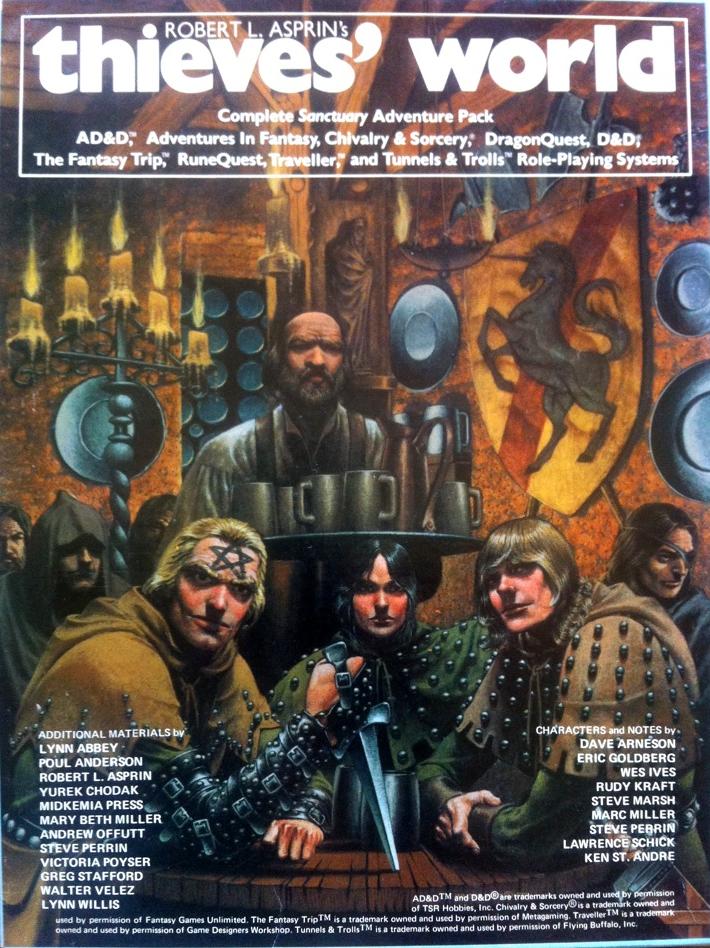
Thieve's World Chaosium-smallThere was a time when shared-world fantasy was brand new, and taking the genre by storm. That time was 1979, and the man at the helm was Robert Lynn Asprin, a midlist novelist who had never edited anything before in his life.

Robert Lynn Asprin was the guest of honor at one of the first science fiction conventions I ever attended, Maplecon 2 in Ottawa in 1979. He was a spirited and self-deprecating guest, telling stories of Joe Haldeman and Poul Anderson gently correcting his spelling and grammar (“These are the people I’m supposed to be editing?!”) as he midwifed the birth of what would become one of the most successful fantasy franchises of the 20th Century: Thieves’ World, the Ace paperback anthology that triggered an explosion in shared world fantasy over the next two decades. Thieves’ World eventually encompassed thirteen collections and over half a dozen original novels, published between 1979 and 2004.

It wasn’t the only new trend to emerge at the end of the 70s in fantasy fiction — in fact, it wasn’t even the biggest. The influence of Dungeons and Dragons was cresting at the same time, and with the publication of Margaret Weis and Tracy Hickman’s Dragons of Autumn Twilight, the first DragonLance novel, in 1984, the two genres finally collided, and neither would ever be the same again.

As fantasy fiction and gaming gradually blended throughout the 80s, it didn’t just mean that bookstores were flooded with gaming novels. Gaming stores likewise were invaded with a new generation of book-inspired titles, from Iron Crown’s Middle Earth Role Playing to Chaosium’s Call of Cthulhu, and TSR’s Conan and Lankhmar properties, just to name a few.

These two juggernauts of 20th Century fantasy, Thieves World and role playing, came together in 1981 with the release of the Thieves’ World boxed set from Chaosium, a singular accomplishment that has been called the “Rosetta Stone of early roleplaying.”

Read More Read More

The Guardian Selects the Best Young SF and Fantasy Novelists

The Guardian Selects the Best Young SF and Fantasy Novelists

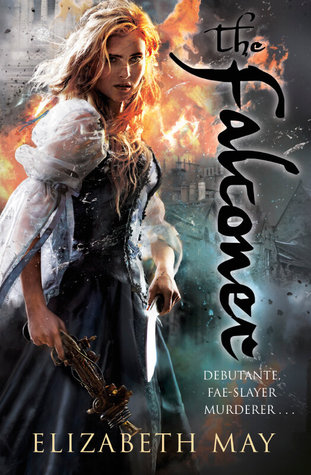
Elizabeth May The FalconerBack when I used to subscribe to Granta magazine, I enjoyed their semi-annual lists of Best Young Writers. This year’s list came out recently, and this morning I came across an article in The Guardian pointing out that no equivalent list for genre fiction exists, and asking, “If it did, who might be on it?”

The author, Damien Walter, endeavors to answer his own question, supplying an intriguing list of 20 SF and Fantasy authors under 40:

Joe Abercrombie is the self-proclaimed Lord of “grimdark” epic fantasy, whose writing displays a wit and style beyond the battle sequences and torture scenes that dominate the gritty world of grimdark. NK Jemsin brings an immense storytelling talent to the tradition of epic fantasy, with a series of beautiful stories that have garnered Hugo, Nebula and World Fantasy award nominations. The Throne of the Crescent Moon by Saladin Ahmed is notable for its middle-eastern fantasy setting, but the work’s real strengths are its deep sense of irony and dark humour. And of course British author China Miéville has re-worked the fantasy genre into many and varied weird forms from Perdido Street Station to Embassytown, though he is technically ineligible, as he turned 40 last year.

Catherynne Valente’s novels and stories range widely across the fantastic, but it is her dark urban fantasies such as Palimpsest that best showcase her baroque prose style. Tom Pollock’s debut The City’s Son marked the appearance of a powerful new imagination in SF, and hopes are high for the upcoming sequel. As they are for the debut novel of Elizabeth May, with The Falconer among the most anticipated fantasy novels of 2013.

This list fills me with hope for our genre, and simultaneously makes me feel very old at 48.

You can see the complete list here.

Barnes and Noble Calls Out the 20 Best Paranormal Fantasy Novels of the last Decade

Barnes and Noble Calls Out the 20 Best Paranormal Fantasy Novels of the last Decade

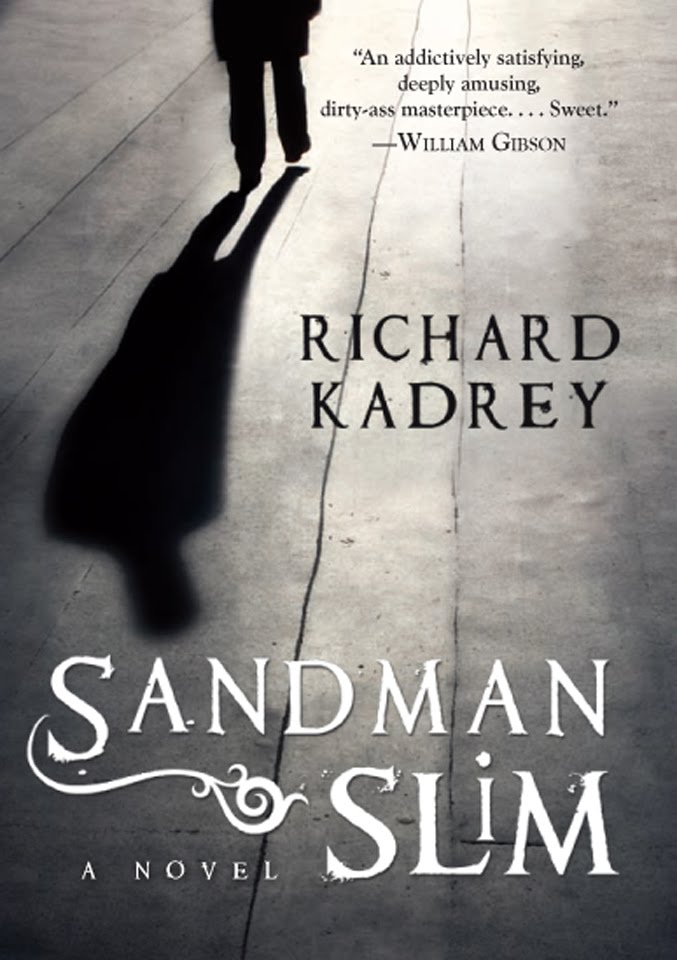
sandman slimPaul Goat Allen at Barnes&Noble.com has compiled a list of the Top 20 Paranormal Fantasy Novels of the last ten years.

What is “paranormal fantasy” exactly, as opposed to, say, “fantasy?” Paul seems to be using it to encompass contemporary fiction with supernatural elements, including horror, urban fantasy, and paranormal romance — but apparently not science fiction, or secondary world fantasy. Here’s Paul’s loose attempt at a definition:

We are in the midst of a glorious Golden Age of paranormal fantasy — the last ten years, specifically, in genre fiction have been nothing short of landscape-changing. The days of rigidly defined categories (romance, fantasy, horror, etc.) are long gone. Today, genre-blending novels reign supreme: narratives with virtually limitless potential that freely utilize elements of fantasy, romance, mystery, horror, and science fiction…

The list below includes 20 novels that are not only extraordinarily good, but have also dramatically influenced — and continue to influence — the course of the genre.

A bold claim, but I think he’s not far off. As the years go by, fantasy has seeped inexorably into the mainstream — witness the success of Game of Thrones, Harry Potter, Twilight, etc — and writers of all genres seem to be dipping into the fantasy pool with fewer reservations. The result is a public that accepts zombie westerns and modern-day vampire mysteries without batting an eye.

Regardless of how much you want to read into Paul’s list, you’ll find plenty of good reading on it, including books by Cherie Priest, Seanan McGuire, Patricia Briggs, Charlaine Harris, Laurell K. Hamilton, Kim Harrison, Kat Richardson, Marcus Pelegrimas, Stacia Kane, Jim Butcher, and Richard Kadrey.

Check out the complete list here.

The Fantasy of 47North

The Fantasy of 47North

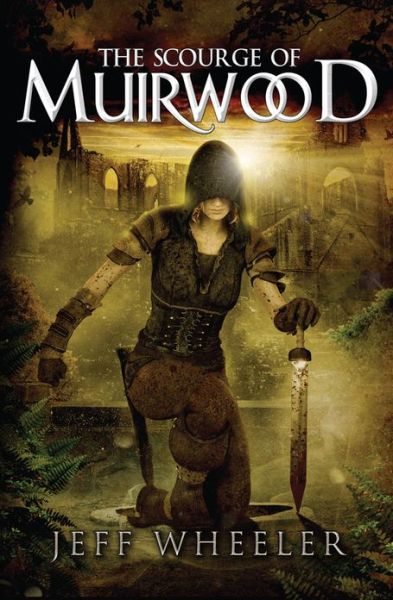
The Scourge of MuirwoodOver the last few months, 47North has become a publisher to be reckoned with.

Founded in October 2011 as the seventh imprint of Amazon Publishing, 47North — named for the latitude of Amazon’s headquarters in Seattle — publishes science fiction, fantasy, and horror. In just 18 months, they’ve created an extremely impressive catalog, including a lot of terrific fantasy.

Recent releases include Ania Ahlborn’s Seed, B.V. Larson’s Technomancer, Megan Powell’s No Peace for the Damned, the anthology Oz Reimagined: New Tales from the Emerald City and Beyond, edited by John Joseph Adams and Douglas Cohen, all three volumes in Jeff Wheeler’s Legends of Muirwood trilogy, and many others.

One of their most ambitious endeavors is The Foreworld Saga, a multi-volume historical fantasy epic chronicling the birth of Western Martial Arts by Neal Stephenson, Greg Bear, Mark Teppo, and an ensemble team of authors. Begun as a series of online stories, the complete saga has been re-packaged in three handsome novels and an ever-increasing number of shorter works.

47North has also heavily supported Amazon’s Kindle with Kindle Serials, a group of serial novels instantly delivered to readers as they’re published. So far they include Gooseberry Bluff Community College of Magic: The Thirteenth Rib by David J. Schwartz, The Outer Rims by Clint Morey, and The Scourge by Roberto Calas.

Near and dear to our hearts, 47North have also proven to be avid supporters of short fiction, publishes a fine assortment from a number of writers, including “Oz Reimagined: The Boy Detective of Oz: An Otherland Story” by Tad Williams and “Seer: A Foreworld Sidequest” by Mark Teppo.

Their website also highlights some very intriguing upcoming fantasy, including Romulus Buckle & the City of the Founders by Richard Ellis Preston Jr, the first volume in The Chronicles of the Pneumatic Zeppelin: Ania Ahlborn’s The Shuddering: and Mark T. Barnes’s The Garden of Stones.

With all the recent bad news in the publishing world, it’s good to see some innovative and exciting work coming from relatively new publishers. Try them out, support the writers you like, and help 47North have a long and storied career in fantasy.

Disney Shutters LucasArts

Disney Shutters LucasArts

LucasArtsBuilding on this week’s ongoing theme of death and dismay is the news that Disney has shut down legendary software house LucasArts.

LucasArts was founded in 1982, and released its first computer games in 1984. It published some of the finest and most admired games ever made, including Their Finest Hour (1989), The Secret of Monkey Island (1990), Star Wars: TIE Fighter (1994), Full Throttle (1995), Grim Fandango (1998), and Star Wars: Knights of the Old Republic (2003).

In an official statement the company said:

After evaluating our position in the games market, we’ve decided to shift LucasArts from an internal development to a licensing model, minimizing the company’s risk while achieving a broader portfolio of quality Star Wars games.

LucasArt offices were closed Wednesday by Disney, and about 150 employees were laid off. All current projects, including Star Wars: First Assault and Star Wars: 1313, have been canceled.

The closure is no surprise for industry observers, after recent ominous developments. Its last few releases, including Kinect Star Wars, were disappointments, and most recent hit Star Wars titles were developed by outside licensees. Several recent titles (such as Star Wars Battlefront III) were canceled before release, and the company announced a freeze on all hiring and product announcements in September.

Fans became more optimistic when Disney acquired LucasFilm in October, but it’s clear new management was unable to turn the struggling software house around. Additional details are at GameInformer and Wikipedia has a complete list of LucasArts releases over the last three decades.

Altogether, it’s been a rotten week for fans of SF and fantasy.

New Treasures: Without a Summer by Mary Robinette Kowal

New Treasures: Without a Summer by Mary Robinette Kowal

Without a SummerI attended the launch party for Mary Robinette Kowal’s Without a Summer here in Chicago this week. I don’t get to go to many launch parties — I  tend to eat all the hors d’oeuvres, and word gets around.

The venue was fabulous, the company and conversation were marvelous, and everyone pretended not to notice when I pocketed the leftover cheese. Best of all, my review copy of Without a Summer had just arrived, and Mary told me it was the first copy she had ever autographed. (She wrote a tidy “#1” and “Thanks for being my first” on the title page, which is the kind of thing which makes up for every party you’ve ever missed in your life.)

Without a Summer is the third novel in the Glamourist Histories, which began with the Nebula nominees Shades of Milk and Honey and Glamour in Glass.

Regency pair Jane and Vincent Ellsworth go to Long Parkmeade to spend time with Jane’s family, but quickly turn restless. The year is unseasonably cold. No one wants to be outside and Mr. Ellsworth is concerned by the harvest, since a bad one may imperil Melody’s dowry. And Melody has concerns of her own, given the inadequate selection of eligible bachelors. When Jane and Vincent receive a commission from a prominent family in London, they decide to take it, and take Melody with them. They hope the change of scenery will do her good and her marriage prospects — and mood — will be brighter in London.

Once there, talk is of nothing but the crop failures caused by the cold and increased unemployment of the coldmongers, which have provoked riots in several cities to the north. With each passing day, it’s more difficult to avoid getting embroiled in the intrigue, none of which really helps Melody’s chances for romance. It’s not long before Jane and Vincent realize that in addition to getting Melody to the church on time, they must take on one small task: solving a crisis of international proportions.

Without a Summer was published by Tor Books on April 2, 2013. It is 364 pages in hardcover, priced at $24.99 ($11.99 for the digital edition). Josh Wimmer reviewed the first book in the series, Shades of Milk and Honey, here.

An Open Letter from Jeremy Lassen at Night Shade Books

An Open Letter from Jeremy Lassen at Night Shade Books

Jeremy LassenThere’s been a great deal of debate among authors and editors over this week’s announcement from Night Shade Books regarding a sale to avoid bankruptcy.

SFWA sent an advisory note to members, advising them that the settlement is “likely in the best interest” of writers. Respected authors such as Michael Stackpole strongly disagreed, pointing out that the contracts offered by Skyhorse/Start cut ebook royalties in half and demand audio and second serial rights — whether or not NSB originally purchased them.

It’s a painful situation for all involved. For readers anxious to see Night Shade’s future releases — including several volumes of popular ongoing series — this sale is the only way to avoid the rights to those titles ending up in bankruptcy court (where the majority may well simply die).

There’s no question that Night Shade made mistakes and burned a lot of bridges over the past few years, and that this latest unpleasantness has brought out more than a few writers with an axe to grind. As a publisher who ran a fantasy magazine as a labor of love for over a decade, until the mounting losses simply became too great to bear, I know well the kind of pain owners Jason Williams and Jeremy Lassen are experiencing now. Night Shade was one of the most dynamic and exciting publishers in the genre, willing to take extraordinary risks buying and promoting work from many new writers, and it’s undoubtedly painful to see so many of those writers apparently delighted to dance on their corpse.

Jeremy Lassen has written an open letter to his writers, and the industry at large, articulating just what’s at stake with this offer from Skyhorse and Start. The complete text of Jeremy’s letter follows.

Read More Read More

Dominate Your Desktop with an Eye of Sauron Lamp

Dominate Your Desktop with an Eye of Sauron Lamp

Eye of Sauron Desk LampIt’s not that I need a new desk lamp. It’s just that, when you discover that there exists a desk lamp crafted as a scale model of Sauron’s fortress at Barad-dûr, your life is not complete until you have one.

ThinkGeek is offering these beauties, designed by Richard Taylor as 21-inch replicas of the 9-foot tall model used to film The Lord of the Rings.

The lamps are sculpted from polystone and finished with a protective layer of polyurethane. They weigh 22 pounds and, yes, include a roving eye mounted at the top. They are priced at $299.99.

You can order yours from ThinkGeek today.

One final detail: note that these went on sale on April 1, and be sure to click on the “Buy Now” button to see actual availability.

Night Shade Attempts to Avoid Bankruptcy with a Sale to Skyhorse Publishing

Night Shade Attempts to Avoid Bankruptcy with a Sale to Skyhorse Publishing

Night Shade BooksWord has begun to spread this morning that Night Shade Books is in negotiations with Skyhorse Publishing and Start Publishing in an attempt to avoid bankruptcy.

Night Shade has contacted authors to explain the situation, and excerpts from those letters have been posted online:

As you probably know, Night Shade Books has had a difficult time after the demise of Borders. We have reached a point where our current liabilities exceed our assets, and it is clear that, with our current contracts, sales, and financial position, we cannot continue to operate as an independent publisher. If we filed for Chapter 7 bankruptcy, or liquidation, the rights to your books could be entangled in the courts for years as could past or current unpaid royalties or advances. However, we have found an alternative, which will result in authors getting paid everything they are due as well as finding a future home for their books, subject to the terms and conditions stated in this letter.

The deal is not yet finalized and, in fact, hinges on how many authors approve changes to their existing contracts.

Some, including Jeff VanderMeer, have asked the publisher to revert rights back to authors prior to declaring bankruptcy. That’s not likely to be an option however, as its existing publishing contracts are Night Shade’s most valuable asset. As Harry Connolly points out on his blog, bankruptcy courts generally frown on publishers who do that, and such revisions are routinely overruled in court during bankruptcy proceedings.

The loss of Night Shade would be a real blow to the field. Known for taking risks on new writers, they’ve also published some of the most celebrated authors in the genre, including Paolo Bacigalupi, Iain M. Banks, Martha Wells, Manly Wade Wellman, Greg Egan, Glen Cook, Kage Baker, Jay Lake, Elizabeth Bear, Lucius Shepard, and many others. But there have been omnibus signs for the past several years, including a deep sale last April, authors leaving their stable, and others. Publishers Weekly has more detail on the potential sale here; io9‘s report is here.