Browsed by
Tag: Nat Schachner

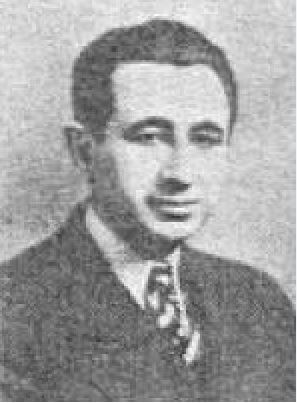
Forgotten Authors: Nat Schachner
Forgotten Authors: Nat Schachner

Nat Schachner

Nat Schachner was born on January 16, 1895 in New York. He earned a Bachelor of Science in chemistry from City College in 1915. He served in the U.S. Army during World War I in the chemical warfare service from 1917 to 1918 and, when he returned to New York he earned a Doctor of Jurisprudence from New York University in 1919, the same year he married Helen Lichtenstein. The couple would have a daughter.  He worked as an attorney until 1933 when he became a freelance writer.

On April 4, 1930, Schachner, along with G. Edward Pendray, David Lasser, and Laurence Manning, founded the American Interplanetary Society, which would be renamed the American Rocket Society four years later. The organization designed and launched liquid fueled rockets and in 1936 the organization was awarded the Prix a’Astronautique by the Société astronomique de France.

1930 also saw the start of his career as an author with the publication of “The Tower of Evil,” which he co-wrote with Arthur Leo Zagat. The two men collaborated on eleven stories published in 1931 before both turning to their solo careers as authors.
Read More Read More

Birthday Reviews: Nat Schachner’s “Ancestral Voices”

Birthday Reviews: Nat Schachner’s “Ancestral Voices”

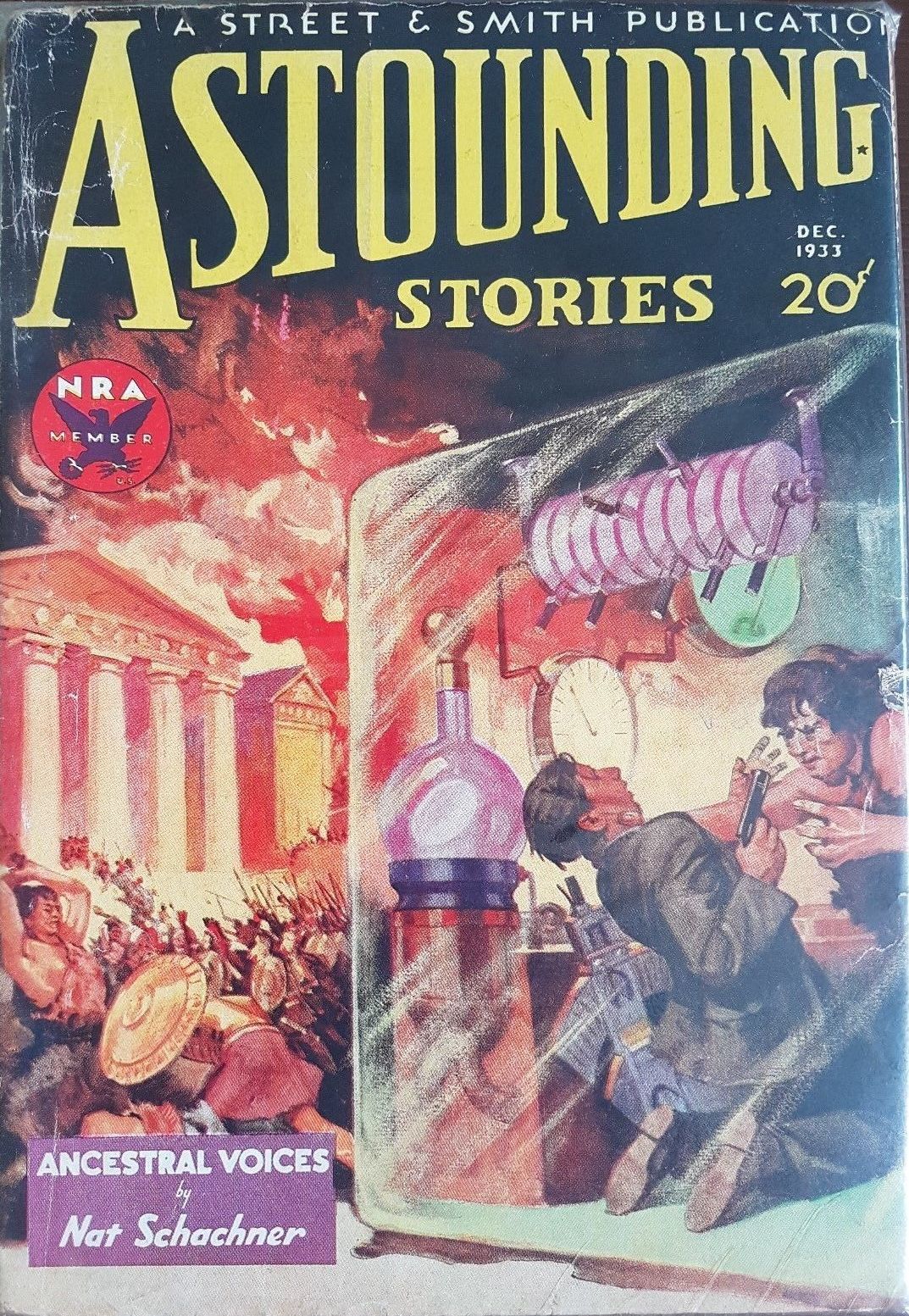
Cover by Howard V. Brown

Nat Schachner was born on January 16, 1895 and died on October 2, 1955. Schachner was an attorney who began writing in collaboration with fellow attorney Arthur Zagat. After about a year working together, each man began writing solo, but after publishing science fiction for a decade, Schachner turned his attention towards biographies, focusing on early Americans.

“Ancestral Voices” was a solo effort published by F. Orlin Tremaine in the December 1933 issue of Astounding Stories.It has never been reprinted in English, although a French translation appeared in 1973 and an Italian translation ten years later.

Schachner opens “Ancestral Voices” with a brief look at several people for whom their ancestry helps define who they are in a very basic way, from a Hitlerian dictator of “Mideuropa” (although Hitler is also mentioned) to the crème-de-la-crème of Boston society, to an accountant who is convinced of his superiority over his boss because he is Anglo-Saxon rather than Spanish. Schachner also posits a boxing match between an Aryan champion, Hans Schilling and a Jewish challenger, Max Bernstein, clear stand-ins for Max Schmeling and Max Baer, who fought in the year the story was published.

The main thrust of the story, however, is the arrogant scientist Emmet Pennypacker, who has created a time machine. Denying his assistant any part of the glory, Pennypacker travels backwards in time, without knowing when or where he’ll wind up. To his chagrin, he finds himself in Aquileia during the Hunnic attack of July 18, 452. Unable to return to his own time until the machine is ready to take him there, he winds up rescuing a Roman girl from her Hun rapist.

Although the idea of going back in time and stopping your parent from being born has become cliché, that is the scenario Schachner wrote. However, given the fifteen centuries that separated Pennypacker from his distant forebears, it means he eradicated the common ancestor of about 50,000 people living in the Twentieth Century.

Read More Read More