Birthday Reviews: Tad Williams’s “Go Ask Elric”
 |
 |
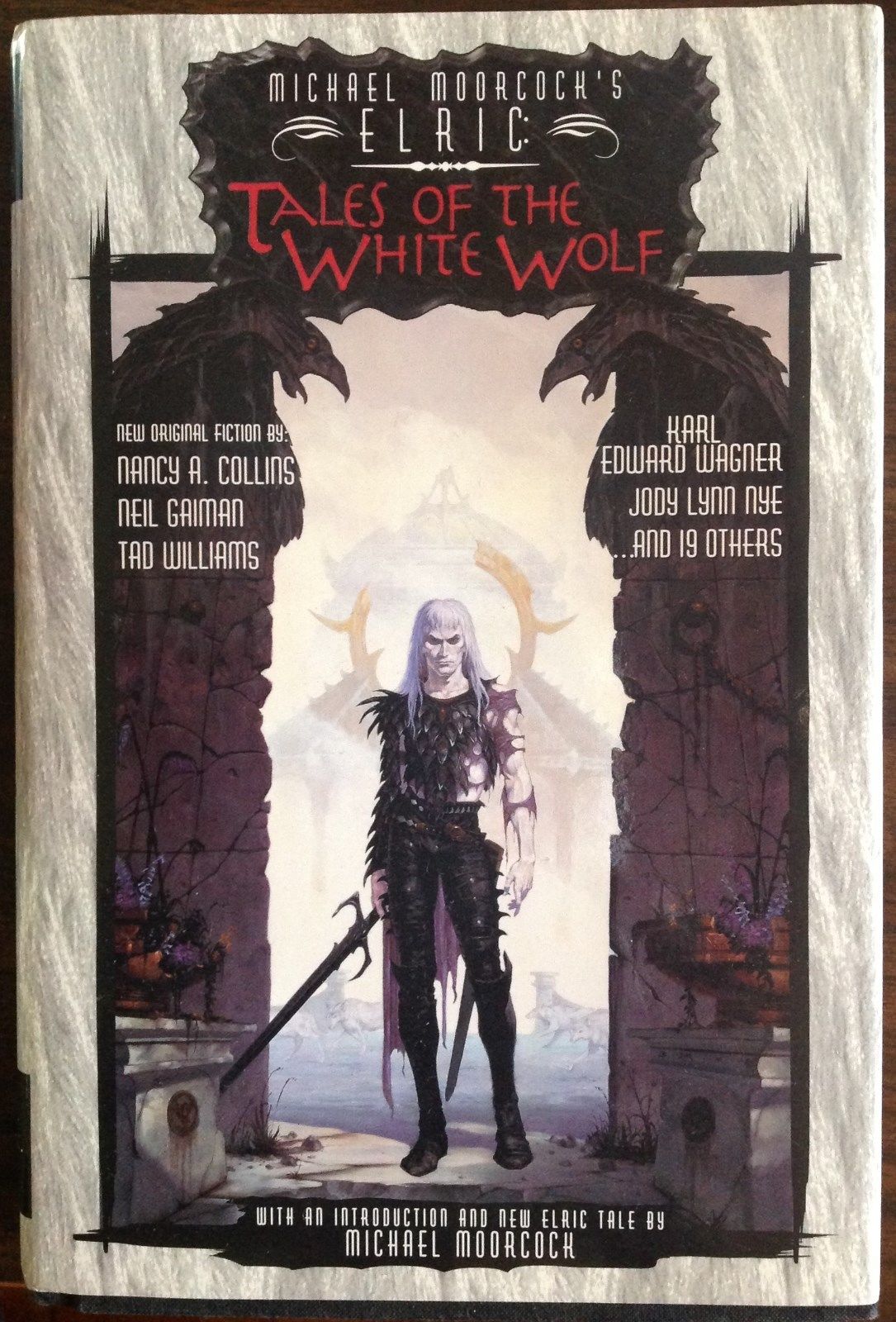
Cover by Brom
Tad Williams was born on March 14, 1957. He published the Memory, Sorry & Thorn fantasy series beginning in 1988 and followed up with the Otherland series in 1996 and Shadowmarch in 2004. Williams has also published a handful of stand alone novels, including Tailchaser’s Song and Caliban’s Hour. He collaborated with Nina Kiriki Hoffman on Child of an Ancient City.
Williams was a nominee for the John W. Campbell, Jr. Award in 1986 and the next year Tailchaser’s Song was a nominee for the William L. Crawford Award. Two of his novels have been nominated for Germany’s Phantastik Preis.
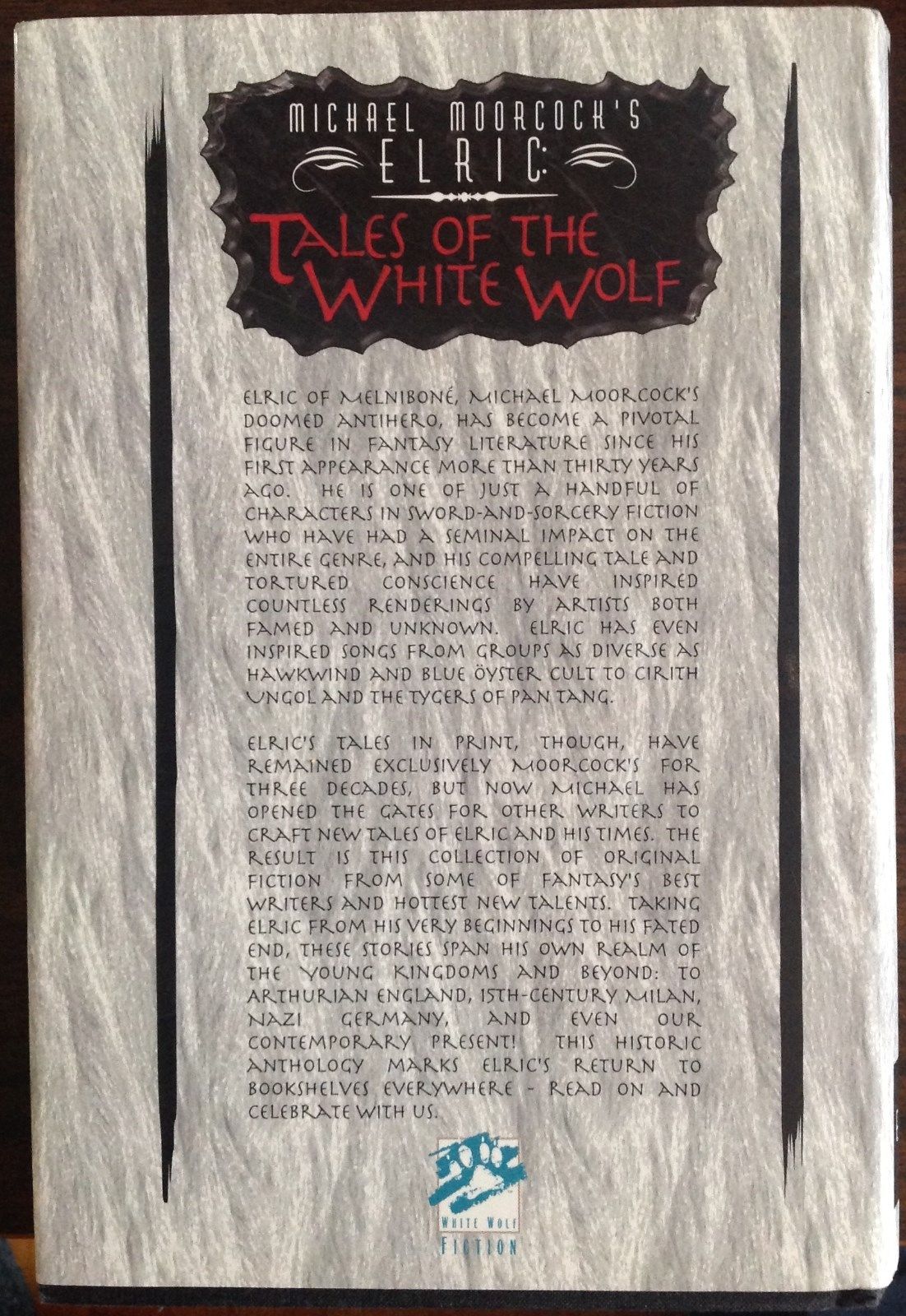
“Go Ask Elric” was published in 1994 in Elric: Tales of the White Wolf, a Michael Moorcock Festschrift which allowed other authors to play with Moorcock’s settings, characters, and themes. The story was translated into French for inclusion in an abridged version of the anthology as a whole. Williams later included it in his collection Rite: Short Work, which also included an essay Williams wrote as an introduction to Moorcock’s novel Gloriana.
Williams manages a successful homage to Michael Moorcock in “Go Ask Elric,” pulling in elements from Moorcock’s stories “Elric at the End of Time” as well as “the Vanishing Tower” and “Sailing to the Future.” Rather than focusing on Elric, William’s main character is Pogo Chapman, a young kid who worships Jimi Hendrix in the mid-1970s. During an acid trip, Pogo is sucked into the multiverse where he meets up with an imprisoned Elric and helps him escape. As Moorcock did in “Elric at the End of Time,” Williams switches between Elric’s point of view and Pogo’s, allowing the reader to see just how much Elric misreads the situations he is in.