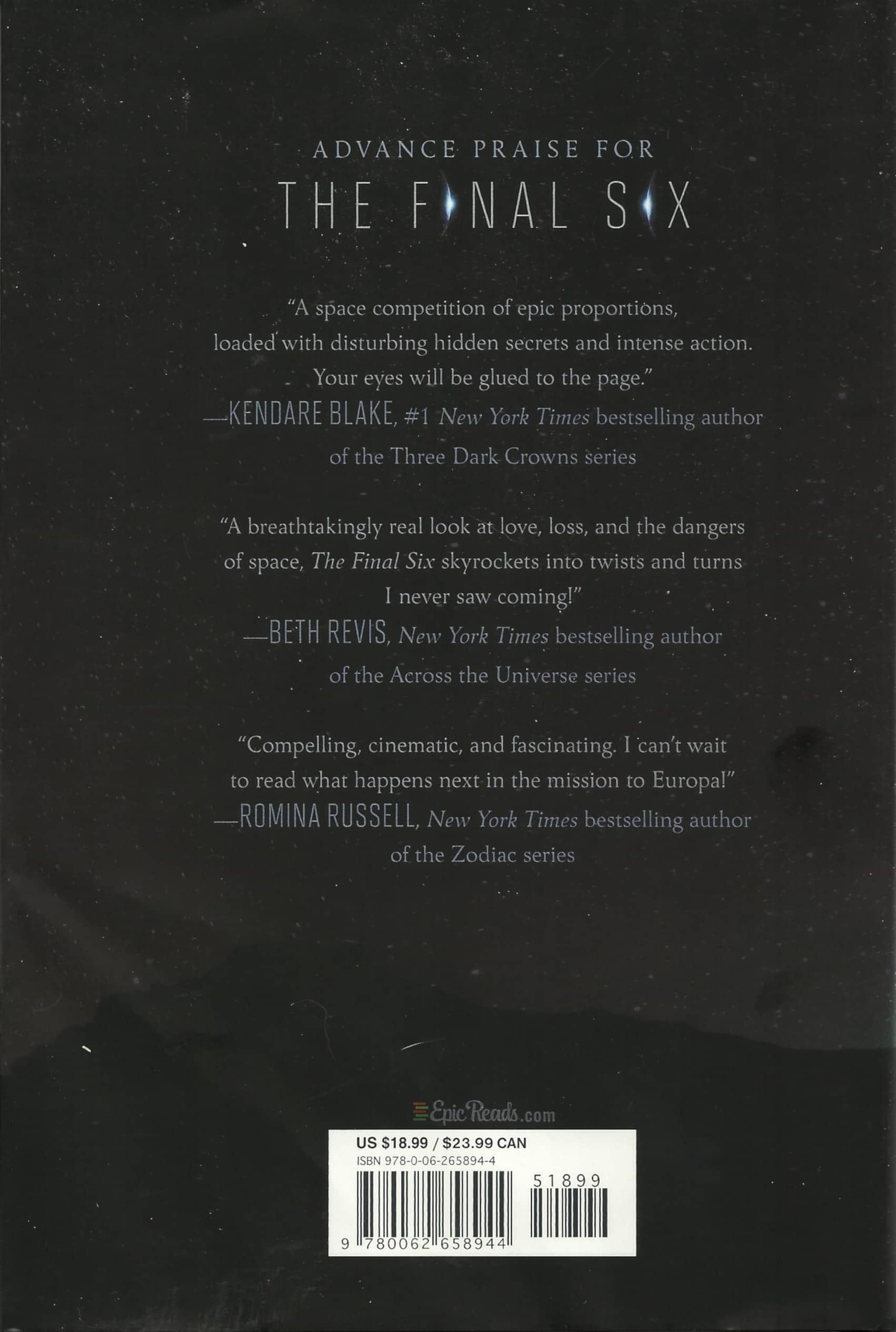
New Treasures: The Final Six by Alexandra Monir
 |
 |
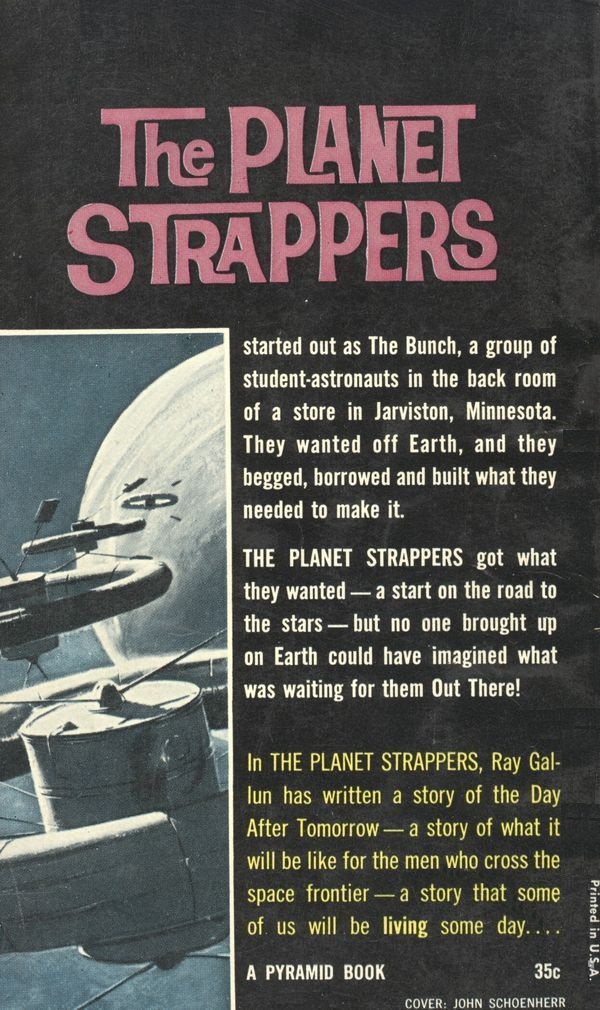
Two days ago I said Raymond Z. Gallun’s The Planet Strappers was an example of a long-dead sub-genre, the adventures of “space hobbyists,” in which enthusiastic amateurs, usually teens, were the ones to conquer space through pluck, courage and sheer inventiveness. While I still think that’s true, I don’t think the teen SF novel is dead at all. In fact, here’s a fine example, Alexandra Monir’s The Final Six, the tale of six teens sent on a desperate mission to Jupiter’s moon.
When Leo and Naomi are drafted, along with twenty-two of the world’s brightest teenagers, into the International Space Training Camp, their lives are forever changed. Overnight, they become global celebrities in contention for one of the six slots to travel to Europa — Jupiter’s moon — and establish a new colony, leaving their planet forever. With Earth irreparably damaged, the future of the human race rests on their shoulders.
For Leo, an Italian championship swimmer, this kind of purpose is a reason to go on after losing his family. But Naomi, an Iranian-American science genius, is suspicious of the ISTC and the fact that a similar mission failed under mysterious circumstances, killing the astronauts onboard. She fears something equally sinister awaiting the Final Six beneath Europa’s surface.
In this cutthroat atmosphere, surrounded by strangers from around the world, Naomi finds an unexpected friend in Leo. As the training tests their limits, Naomi and Leo’s relationship deepens with each life-altering experience they encounter.
But it’s only when the finalists become fewer and their destinies grow nearer that the two can fathom the full weight of everything at stake: the world, the stars, and their lives.
Alexandra Monir is the author of Suspicion (which I covered back in 2014) and the Timeless series. It was published by HarperTeen on March 6, 2018. It is 338 pages, priced at $18.99 in hardcover and $9.99 for the digital edition. The beautiful cover was designed by Erin Fitzsimmons, with art by Getty Images. Read an excerpt at HappyEverAfter.com.