Happy New Year, all you marvelous Black Gate readers! We love you, each and every one.
And to prove it, we continue to compile lists of overlooked and neglected books for you. While others are slowly straggling home from all-night revels, we’re up early combing through Best of the Year lists to find the titles we managed to miss in 2017. Case in point: The Barnes & Noble Sci-Fi & Fantasy Blog and their annual Best Science Fiction & Fantasy of 2017, a massive compilation of 25 top-notch novels (plus 12 “Alternate Universe” Picks), includes plenty of books we showcased for you last year, like The Bear and the Nightingale by Katherine Arden, The House of Binding Thorns by Aliette de Bodard, Sea of Rust by C. Robert Cargill, Kings of the Wyld by Nicholas Eames, and The Stars Are Legion by Kameron Hurley.
But it also contains a handful of titles we somehow overlooked, including novels by Neal Stephenson and Nicole Galland, Kim Stanley Robinson, Annalee Newitz, and James Bradley. We’re very sorry. To make up for it, here’s a look at three of the more intriguing novels we neglected from the B&N list.
Originally published in the Oxford and Cambridge Review
Most days in 2018, I’ll be selecting an author whose birthday is celebrated on that date and reviewing a speculative fiction story written by that author. To kick off the series, let’s wish a happy 139th birthday to an author not known specifically for his science fiction: E.M. Forster.
E.M. (Edward Morgan) Forster was born on January 1, 1879 and died on June 7, 1970. Not generally thought of as a science fiction author, he was active writing before science fiction was codified as a genre and some of his writing can be classified as falling under the genre’s rubric. Best known for novels that explore the class differences in British society such as A Room with a View, Howards End, and A Passage to India, Forster also wrote the future satire “The Machine Stops” published in November, 1909 in the Oxford and Cambridge Review. Forster included the story in his short story collection The Eternal Moment and Other Stories in 1928, and James Gunn included it in the second volume of his history of science fiction, The Road to Science Fiction: From Wells to Heinlein. The story has been adapted for television, stage, radio, and graphic novel. The story also inspired a concept album of the same name for the band Hawkwind. In 2012, “The Machine Stops” was inducted into the Libertarian Futurist Society Hall of Fame.
From the very beginning, “The Machine Stops” has a very contemporary feel. A woman is sitting in an almost empty room which could have been designed by Apple. Everything is white with light and music coming from invisible sources, but both of which respond to her voice commands. Her son calls her on a tablet in order to convince her to come visit him, while she doesn’t see the point in leaving her home since she has everything she needs, either virtually or in reality, within easy reach. The lecture series described could easily be a series of TED Talks.
Vashti is perfectly happy in her self-contained world, not needing to interact with anybody or experience anything directly, and that is the way most people feel. She is jostled from her bliss by her son, Kuno, who insists that she visit him, not virtually, as a normal person would, but physically. She eventually makes the arduous journey via air-ship, forcing herself to breath unfiltered air, interact with rude stewards who don’t have the decency to avoid speaking to her, and eventually visits her son. He tells her that he expects to be made homeless, evicted from the self-contained world and forced to live on the surface. Even more unsettling to Vashti is that Kuno doesn’t necessarily consider this punishment the end of the world.
2017 closes out with a splendid crop of new magazines, featuring fiction from Mary Robinette Kowal, Matthew Hughes, John Hornor Jacobs, Matthew Kressel, Gardner Dozois, Robert Reed, Octavia Cade, and a feature on one-shot vintage magazine digests by BG blogger Steve Carper. Here’s the complete list of magazines that won my attention in late December (links will bring you to magazine websites).
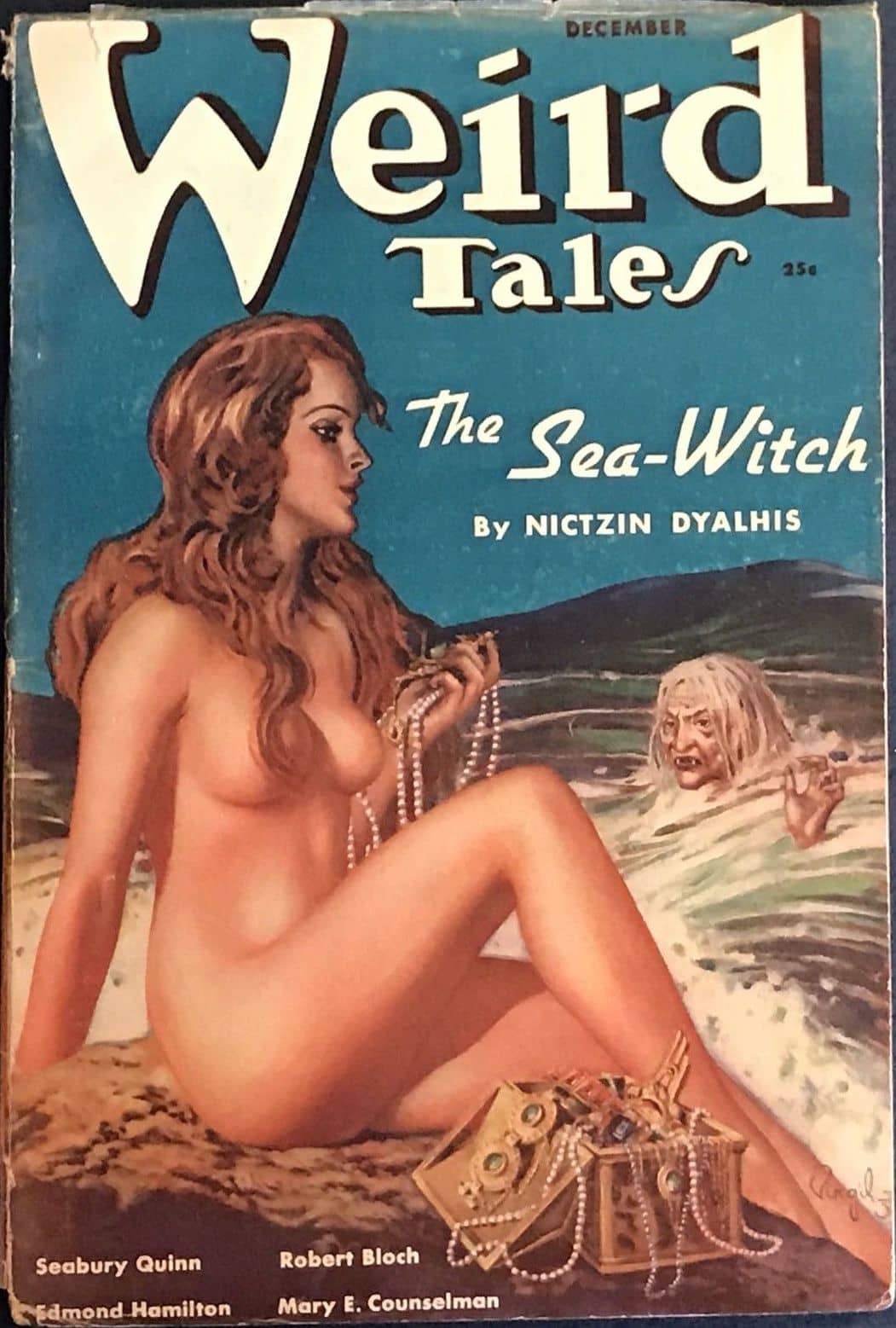
Cemetery Dance — the brand new December issue has an interview with Stephen King and Richard Chizmar, plus fiction by John Hornor Jacobs, Ray Garton, Jeremy C. Shipp, Aaron Worth, and many others Fantasy & Science Fiction — the big Jan/Feb double issue has new fiction from Matthew Hughes, Mary Robinette Kowal, Gardner Dozois, Robert Reed, Nick Wolven, Vandana Singh, and much more Knights of the Dinner Table — issue #249 of the long-running gaming comic features a Stranger Things tribute cover by Rick Hershey, plus strips by Jolly Blackburn, a horror-themed Solo Adventure by Mark Dowson, “Adventures Should Always Begin in Pubs,” by Shane Cubis, plus regular columns, reviews and cartoons Locus — interviews with Seanan McGuire and Mike Allen, reports from World Fantasy Convention and ICon, a feature on Borderlands Books 20th Anniversary, and reviews by Gardner Dozois, Rich Horton, Gary K. Wolfe, Faren Miller, Russell Letson, Adrienne Martini, and lots more Meeple Monthly — all the details on board games releases from Academy Games, Posthuman Studios, Tasty Minstrel Games, and Upper Deck Nightmare — original fiction from Nino Cipri and Matthew Kressel, plus reprints by Tamsyn Muir and Lisa Morton, and a movie review from Adam-Troy Castro The Digest Enthusiast — issue #7 of the magazine dedicated to vintage digest mags includes Joe Wehrle, Jr on James H. Schmitz’s Telzey Amberdon tales and Steve Carper on one-shot magazine digests, plus articles on Espionage Magazine, Manhunt, The Occult Digest, Future Publications, and reviews of Pulp Literature #15, F&SF Jul/Aug 2017, and lots more — including over 100 cover images Shimmer — issue #40 contains fiction by Naru Dames Sundar, Andrea Corbin, Octavia Cade, Lucia Iglesias, and more
Click any of the thumbnail images above for bigger images. Our early December Fantasy Magazine Rack is here.
With another year’s worth of Fantasia reviews now finished, I thought I’d take the time once again to look back at what I saw and write a general overview of the films as a whole. Doing so this year, though, leads to thoughts about film on a slightly larger scale than just Fantasia alone.
I saw a bit more than fifty movies this year at Fantasia. That includes films from a range of genres, but I want to write here about the fantasy and science-fiction movies I saw. And more than that, I want to write about what I’m seeing in the cinema of the fantastic in general.
What I want to observe, mainly, is this: it’s becoming increasingly clear to me that we’re in a golden age of fantasy and science-fiction cinema. Obviously there are any number of summer blockbuster films coming out of Hollywood. But there are also epics from China, and lavish manga adaptations from Japan. And more than that, from around the world there are intelligent, gripping and more-or-less independent genre films being made. There’s a flood of work out there to watch. What surprises me, given all this, is how little I hear about it.
Distribution and marketing still play a significant role in determining what films make it to theatres, and, perhaps more important these days, what films get written about online. It’s easy to hear about a Marvel movie, or even about a major Netflix original movie. But there’s a lot out there beyond those things. You can’t help but notice, for example, that Netflix doesn’t carry the Japanese adaptation of Death Note; use that service and you’re stuck with the whitewashed adaptation for American audiences.
Earlier this year, I talked about our attempts to raise funds to do another volume of Mysterion. That failed, but we had a backup plan: the brand new Mysterion webzine.
Rather than publishing a second anthology, we’ll be running a webzine, featuring reviews, interviews, and yes, new fiction, with the same theme as our first anthology: Christian characters, themes, and cosmology. As we’ve put it before, we’re not looking for Christian speculative fiction so much as speculative fiction about Christianity. In other words, less C. S. Lewis than Flannery O’Connor.
We open to submissions January 1st. If you’re interested, we offer six cents per word for speculative fiction stories up to 8,000 words long. See our submission guidelines for more information on how to submit, and our theme guidelines for more details about exactly the kind of stories we’re looking for.
We also have a Patreon to allow us to publish more stories and more art.
Here’s a look behind the curtain at the Black Gate World Headquarters in the Windy City:
I walked into the opulent penthouse office of Black Gate Global Headquarters. It was the first time I had been higher than the second floor mail room, where I mopped the floors every Thursday evening. I felt like Conan traversing the savannahs as I waded through the plush carpet.
I imagined myself as the mighty-thewed Cimmerian, searching for lions as I…
“BRYNE! Quit your daydreaming. I didn’t pull you out of the basement… errr…the journalist’s suite, to mash down the carpet in my office.”
“Yes sir, Mister O’Neill, sir!” I managed to reach his desk, where I silently waited for his shoe shine to finish.
“Have a seat, Bryne.”
I looked around, confused by the fact that there were no chairs. And the carpet was so thick that if I sat down I might be smothered. Short on options, I remained standing. He didn’t notice.
After the Fantasia festival had officially concluded I still had three movies to watch. During the festival I’d requested links to view screening copies of three films I couldn’t see in theatres due to schedule conflicts, but it wasn’t until Fantasia ended that I had time to sit down and watch them. These movies were a Japanese comedy-drama called Japanese Girls Never Die (also released under the English title Haruko Azumi Is Missing, in romanised Japanese Azumi Haruko wa yukue fumei); a Thai historical martial-arts movie called Broken Sword Hero (also Legend of the Broken Sword Hero, from the romanised original Thong Dee Fun Khao); and a Chinese blockbuster historical war movie called God of War (Dang kou feng yun, now on Netflix). They made for an interesting mix.
Japanese Girls Never Die was directed by Daigo Matsui (whose earlier film Wonderful World End I quite liked), from a script by Misaki Setoyama based on the 2013 novel by Mariko Yamauchi. I can find out nothing about the novel, but the film is wondrously, deliriously complex, bristling with different timelines, subplots, and minor characters who send the film spinning off in different directions. It’s quick, challenging, and engaging.
There is Haruko Azumi (Yu Aoi, of the Rurouni Kenshin movies), an office worker in her 20s who has an unrequited love for her neighbour. There are two young grafitti artists (Shono Hayama and Taiga), at a later point in time, who find a poster of the missing Haruko and make street art from it. There is a gang of teen girls who terrorise the same streets, so that men are advised not to walk those streets at night. There is an older woman at the office where Haruko works, mocked by the men there for not having children and not being young and not being their fantasy image of a woman. There is a girl who is involved with one of the graffiti artists, who in turn are using her more than she realises. There is a clerk at a convenience store. There is a park called Dreamland. There are characters who may or may not attain their dreams. There is an unexpected beginning.
As we continue the countdown towards New Years, here at Black Gate we continue to survey the best of the Best of the Year lists. Tonight I want to showcase British writer Adam Roberts’ Best Science Fiction and Fantasy of 2017, published in The Guardian. Roberts kicks off his list talking about Kim Stanley Robinson, “the unofficial laureate of future climatology, and his prodigious New York 2140,” and then pivots to another climate-apocalypse novel:
Just as rich, though much tighter in narrative focus, is Paul McAuley’s superb Austral (Gollancz), set in a powerfully realised near‑future Antarctica transformed by global warming.
Paul McAuley was Black Gate‘s first book reviewer; we recently covered his early novel Red Dust. Austral (a word which means “south”) was published by Gollancz on October 19, 2017 (288 pages, £14.99 in trade paperback).
Next on Roberts list is a novel and writer much less familiar to me — but no less fascinating for all that.
On the last day of the 2017 Fantasia film festival I planned to watch three movies. First, at the De Sève Theatre, Indiana: a movie about a pair of ghost-breakers in the Midwest who may or may not deal with actual paranormal events. Second, I’d go to the festival’s screening room, where I’d see a dark psychological thriller called Fashionista. Finally, I’d close out the festival with a screening of a restored version of Dario Argento’s classic 1977 horror film Suspiria.
Indiana began the day for me, a film directed by Toni Comas from a script by Comas and Charlie Williams. It follows Michael (Gabe Fazio) and Josh (Bradford West), two ghost hunters in early middle-age who travel the roads of the Midwest hunting for spirits and people suffering hauntings. They’ve carved out a level of fame for themselves as the Spirit Doctors, doing radio call-in shows and occasionally arguing with skeptics — which latter role the more extroverted Josh takes to more naturally than the quieter Michael. Michael’s got another higher-paying job and is thinking about quitting his ghostbusting days, while Josh is dedicated to the profession, and even takes his son Peter (Noah McCarty-Slaughter) on the road with them. Meanwhile, a parallel narrative track follows Sam, an old man on a seemingly-nefarious mission. What drives him, and how his story links up with the Ghost Doctors, becomes part of the mystery of the film.
I haven’t read much Jack London. He’s most famous of course for his novels of the Klondike Gold Rush, The Call of the Wild and White Fang, which are outside my field of speciality. But he also dabbled a bit in the genre, both at novel length (with his dystopian science fiction novel The Iron Heel) and especially with his short stories, which were routinely reprinted in places like Famous Fantastic Mysteries and The Magazine of Fantasy & Science Fiction. He had one posthumous SF collection, The Science Fiction Stories of Jack London (1993), a 211-page volume from Citadel Twilight.
But I’m more interested in his tales of terror, which include stories of death ships, spectres, the mysterious arctic, enormous wolves, and stranger things. Most of London’s tales of adventure were gathered in collections like Son of the Wolf (1900) and Children of the Frost (1902), but his supernatural fiction remained largely uncollected until it was gathered in Curious Fragments: Jack London’s Tales of Fantasy Fiction, a small press hardcover from Kennikat Press in 1975.
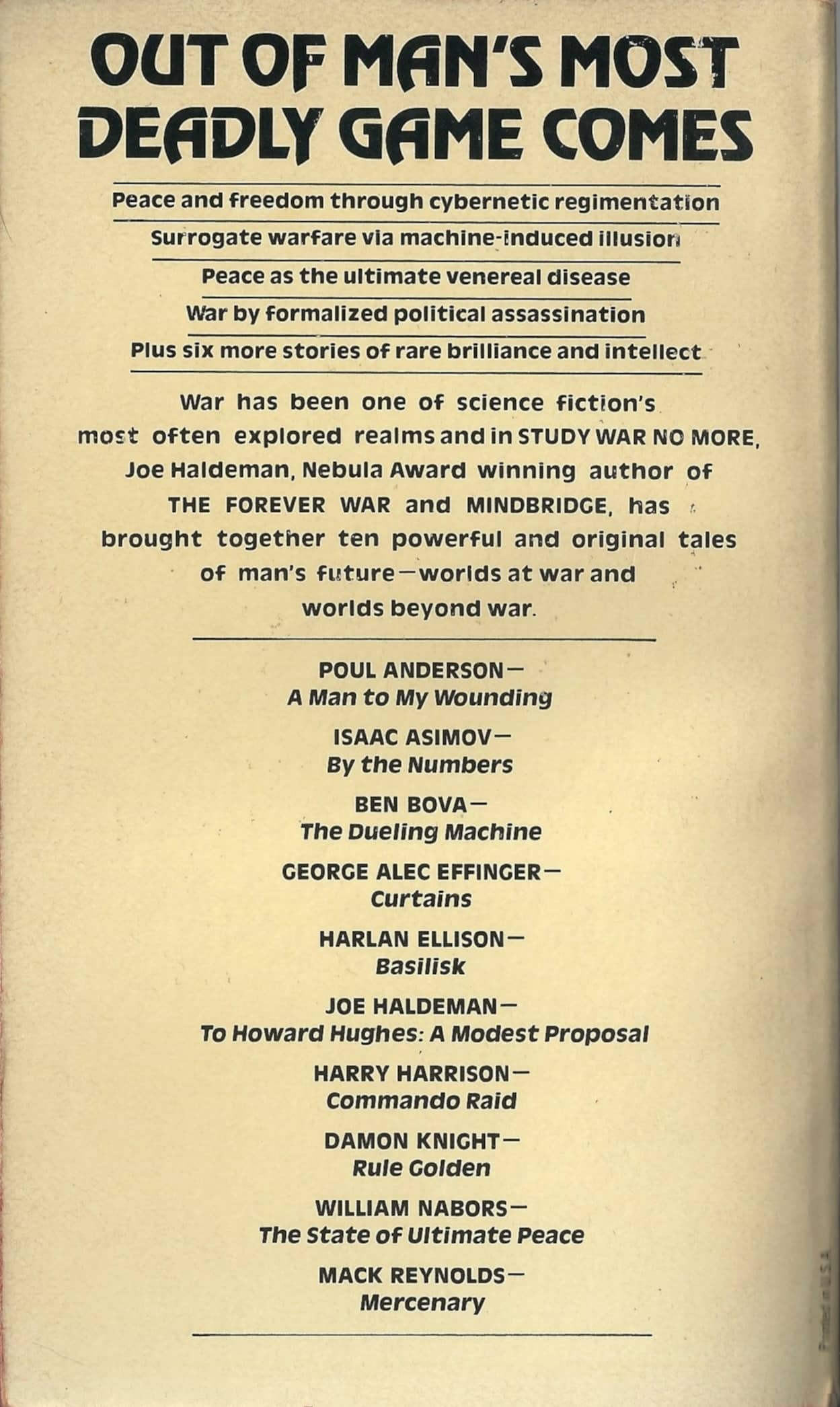
Three years later some of his most popular supernatural stories, like “A Thousand Deaths” (from The Black Cat, May 1899), and “Even Unto Death” (San Francisco Evening Post Magazine, 1900) were published in paperback for the first time, with several of London’s tales of suspense, in Thirteen Tales of Terror (Popular Library), edited and with an introduction by John Perry. Here’s a photo of the intriguing story teasers from the inside front cover.