A Heist in a Sword and Sorcery World: A Hazardous Engagement by Gaie Sebold
 |
 |
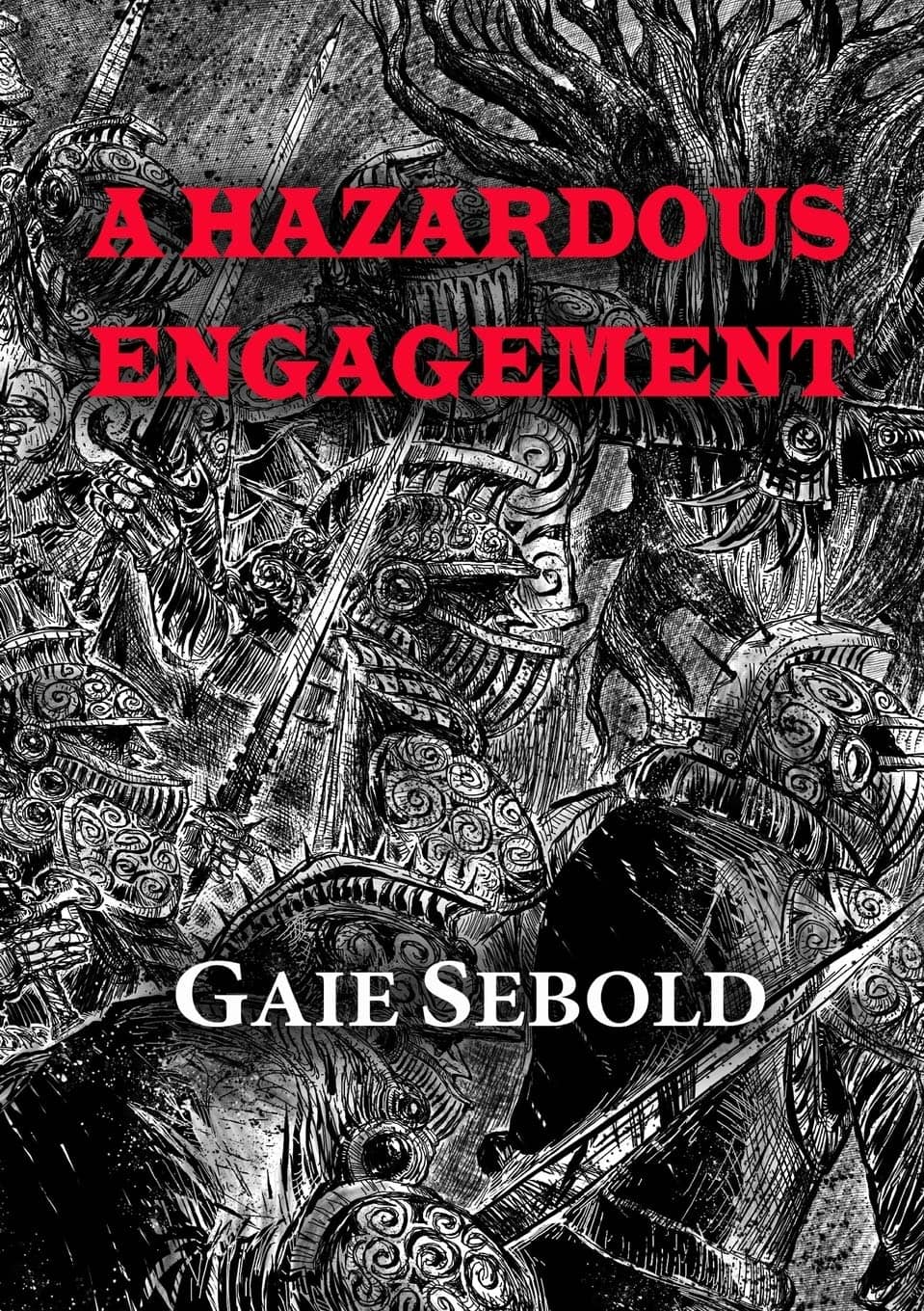
Cover by Duncan Kay
I’ve had my eye on Gaie Sebold ever since I bought her brilliant and funny short story “A Touch of Crystal” (co-written with fellow Brit Martin Owton), the tale of a shopkeeper who discovers some of the goods in her New Age shop are actually magical, for Black Gate 9.
She’s been well worth the watch. Her debut novel Babylon Steel (described as “Sword & Sorcery for the girl who wants to be Conan”) kicked off a successful 2-book series at Solaris; you can get both books in a giant 1,000-page omnibus, The Babylon Steel Adventures. Her 2014 effort Shanghai Sparrow was a Far Eastern steampunk tale of Espionage, Etheric Science, and Murder.
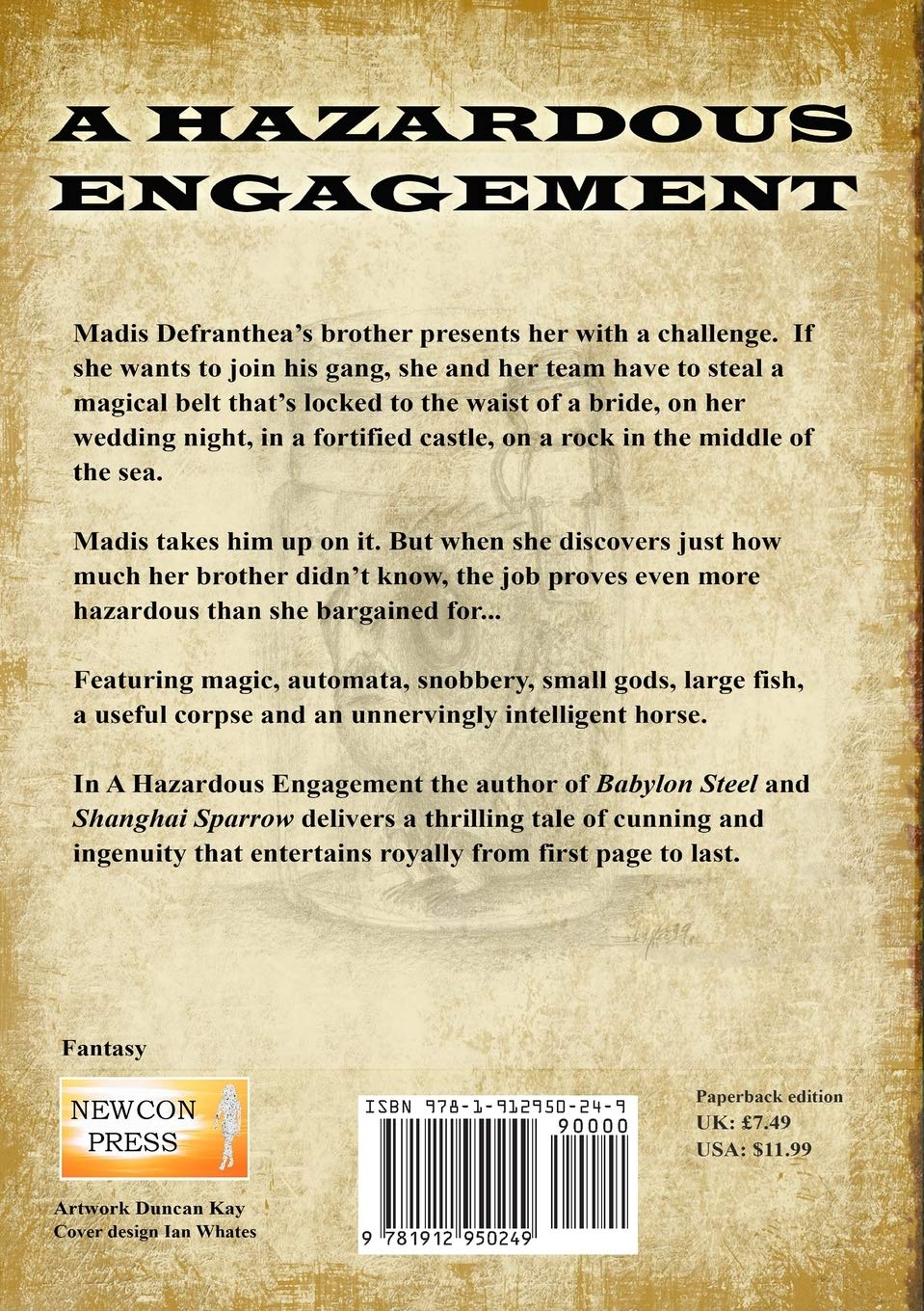
Her latest is A Hazardous Engagement, volume #6 in the NewCon Press Novellas line, a prestigious imprint that has published Alastair Reynolds, Tom Toner, Kari Sperring, Adam Roberts, Hal Duncan, Liz Williams, Simon Clark, Alison Littlewood, and loads more. My friend Arin Komins reviewed it on FB this week, saying:
A Hazardous Engagement novella from Gaie Sebold… Delightful heist story in a sword and sorcery world. From NewCon Press. Excellent and swift read, and quite good. Would make a good series of novellas or stories.
That’s all the endorsement I need…. I put it in my Amazon cart immediately. A Hazardous Engagement was published by NewCon Press on June 19, 2019. It is 120 pages, priced at $8.99 in paperback and $4.75 in digital formats. The cover is by Duncan Kay. See all the latest releases by Black Gate writers and staff here.