I love omnibus editions. It’s not just their convenience, the joy of having an entire trilogy packed into one hefty volume. I think it’s just as much the celebratory aspect. It’s like, Holy crap, we made it. The series is finished. Forget we charged you for the first two; look, here’s the whole damn thing in one volume. You’re welcome.
In the case of The Icarus Corps, the trade paperback containing a complete military science fiction trilogy by Zachary Brown, that’s actually more or less accurate, as the third book, Jupiter Rising, was never even published in paperback. If you enjoyed the first two, and don’t have an e-reader, this is your only option.
Still, it ain’t a bad option, all things considered. I bought the first book, The Darkside War, and I was still delighted to stumble on the omnibus edition of all three novels at Barnes & Noble last week, and I snapped it up immediately.
“The Fourth Book in the Hitch-Hiker Trilogy” proclaimed the cover blurb on the Pan version of So Long and Thanks for All the Fish, by Douglas Adams. And many smiled and thought this was very clever and funny. The fourth book in a trilogy wasn’t actually a new idea, even back in the 1984. Now a fifth book in a trilogy is a little more unusual, and indeed when one appeared (Mostly Harmless, in 1992) the updated blurb proclaimed: “The Fifth Book in the Increasingly Inaccurately Named Hitchhikers Trilogy”.
What has Douglas Adams got to do with Jane Gaskell?
Well, she did the same thing. She wrote a pretty good trilogy – albeit one which some publishers stretched into four books – and then, by all appearances, decided to tack on another volume some years later. This is of course my opinion, but if you’ll indulge me a bit you will see why I reached that conclusion.
Now there are plenty of authors who have tacked books on to a successful trilogy — and some who have even added a whole follow up series. To be fair to Mr Adams, his additional books were pretty good, though not up to the standard of the original series. To me, they still felt like they were more of an afterthought than a specifically planned and executed conclusion.
Some Summer Lands also does not quite fit. Sadly, that is not the only issue. I cannot in honesty give this book the same recommendation I gave to the other books in the Atlan Saga, which were pretty good, with occasional flashes of brilliance. Some Summer Lands was published in 1977, roughly ten years after The City. My Orbit Futura edition weighed in at 360 pages split into three parts of varying length.
Some Summer Lands is not pretty good. Dismally disjointed, maybe. Rambling, definitely. Misguided, certainly. One of the few positives I had from the experience was that it helped me realize why I had taken on re-reading the series with such trepidation. The first three (or four) books surprised me, as I did not have fond memories of the series when I read it in my youth.
Anyone who has read my earlier reviews may remember me marveling at certain aspects and wondering why I had disliked them as a teenager. Now I know why! It’s this last book which casts a dark shadow.
One of the reasons I love Angry Robot is their enthusiasm for new authors. Paired with their commitment to mass market, they’ve allowed me to take a chance on dozens of new writers over the last few years, and all for the price of a few $7.99 paperbacks. That’s a rare and precious thing these days, and it’s worth supporting.
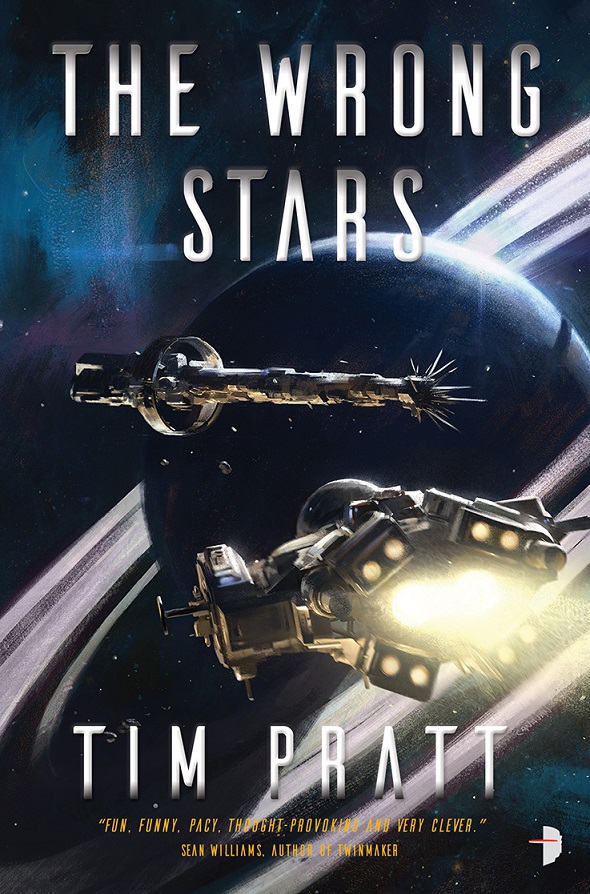
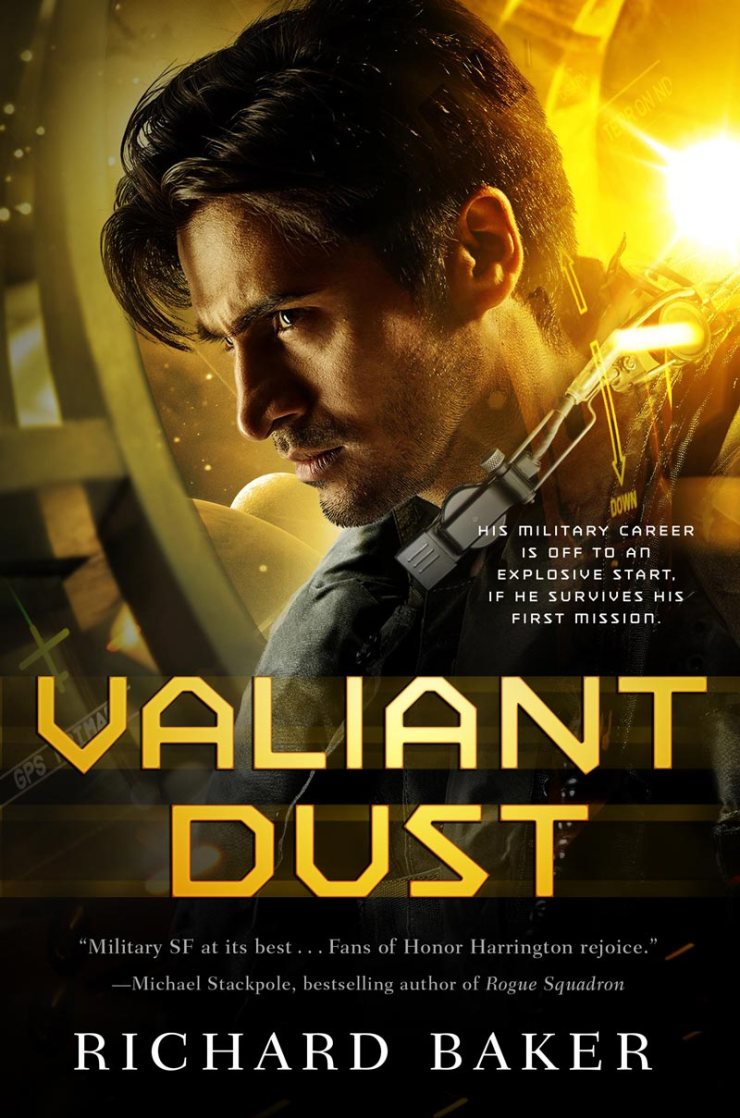
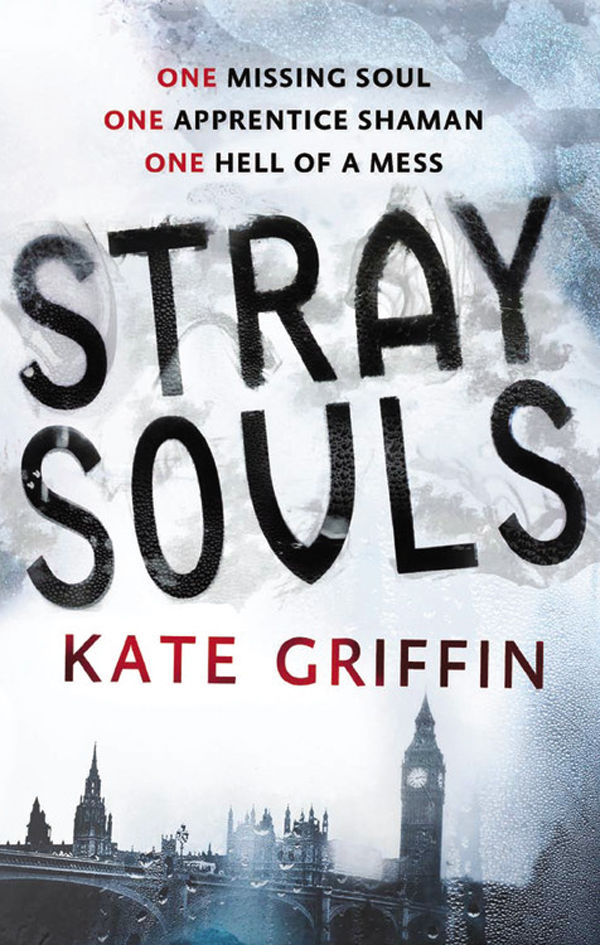
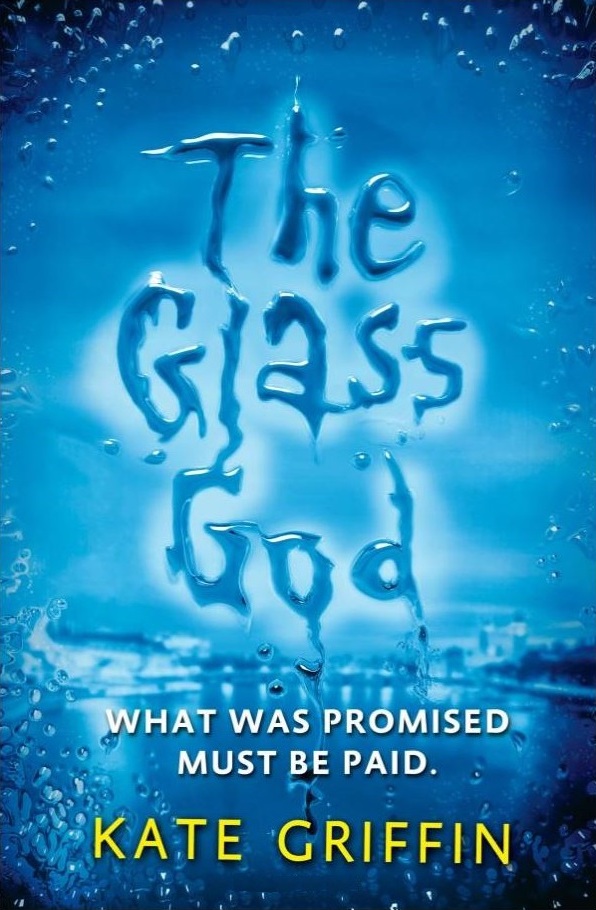
John DeNardo tipped me off to a trio of great-looking Angry Robot paperbacks arriving September 5. Here’s all the deets.
By the western wall of Klavenport on the Sea of Autumn Mists — but you do not want a bard’s beginning to my tale, Goodmen? Well enough, I have no speak-harp to twang at all the proper times. And this is not altogether a tale for lords-in-their-halls. Though the beginning did lie in Klavenport right enough.
— from “Legacy from Sorn Fen”
I’ve written before that Andre Norton’s Witch World books is a series I avoided for way too long. There were two things that kept me away from them over the years. The first, when I was younger, was their name: Witch World. It seemed a little too twee. When I was older there were so many other things I wanted to read that it never crossed my mind to investigate Andre Norton’s catalogue. If she ever occurred to me at all, it was as the author of Starman’s Sonand several other books shelved in the children’s section at my local library. Later, I found a few scattered Norton volumes in the boxes of paperbacks my dad kept in the attic but, again, nothing prompted me to read them. At the time, the cover of “Witch World” turned me off. (Today I love the goofy looking thing.)
Not until I started contemplating blogging about swords & sorcery did I actually read anything by Andre Norton. When I started expanding my library of S&S books, there were several anthologies I finally picked up, one being Flashing Swords #2, edited by Lin Carter. I had read some of its stories before, but not Norton’s Witch World story, “The Toads of Grimmerdale.”
I was surprised by the darkness of the story. Like I said, I had assumed the Witch World stuff was light and airy and my first encounter with it was a story of revenge for rape, set in a country savaged by years of war. Well I was hooked, and I scanned my shelves for any other Witch World stories. I found “Spider Silk” in Flashing Swords #3, and “Falcon Blood” in Amazons!, edited by Jessica Amanda Salmonson. I rooted through boxes in the Vredenburgh attic and dug out my dad’s ancient copy of the first novel, Witch World, and devoured it. Its inventiveness, fast pacing, and the sheer fun of it made me an instant fan.
Our Friday blogger Violette Malan, author of the Dhulyn and Parno fantasy novels, has just launched an ambitious new series, the Faraman Prophecy, under the name V. M. Escalada. Violette talked about writing under a pseudonym in her most recent article for us, “What’s in a Name?”
I have to admit that when my agent first suggested I use a penname, my immediate reaction was unfavourable. There are all kinds of reasons for such a suggestion, however, some of which I touched on in a previous post. Today, I’d like to talk about the actual, practical experience…
My first concern? What explanation do I give people who know me, personally? After all, people who have never met/heard of Violette Malan, aren’t likely to ask for any. The short answer, by the way, is “it’s a marketing thing.” The long answer we don’t have time for. Buy me a beer sometime at a con and I’ll tell you.
Which brings me to my second concern: Who am I in public? At a con, for example? The easy answer is: I’m whoever was invited. That’s the name that will go first on the con badge. It’s not unusual, at cons, to see people with two names on their badges, the one who was invited, and (in brackets? smaller print?) the other one. If you weren’t invited as a special guest? If you’re just registered as a regular panelist? That’s when it gets tricky. Do you use the established, familiar name first? or the new one?
Halls of Law, the first book in the Faraman Prophecy, introduces a world of military might and magical Talents on the brink of destruction. Julie E. Czerneda cals it a “fresh, engaging new fantasy series set in a world of marvelous texture and magic.” It’s available now in hardcover from DAW.
Nova
By Margaret Fortune
DAW (320 pages, $24.99 hardcover, $7.99 paperback, June 2015)
My first time at the Nebulas weekend in May, I was given this massive bag of complimentary books (apparently this is standard, but hey, I’m new) – so many books, in fact, that my friend Derek Künsken and I were detained by Canadian Border Services on our way back to Ottawa. It’s taken me time to go through the bag and see what appeals to me, but I’ve finally been able to start reading them so I can review a few here.
I started with Nova, the first novel in the Spectre War series by Margaret Fortune. The back cover description piqued my interest: a former prisoner of war is returned home, except that she’s not actually a former prisoner of war – she’s a genetically-engineered bomb that’s supposed to explode in thirty-six hours.
The first few chapters lived up to my expectations, as the character Lia mentally prepares to “go Nova” and destroy a massive space station operated by her designers’ enemies. That in and of itself is a neat concept, especially when things obviously go wrong (if they didn’t, this would be a short story) and Lia faces the fact that she’s going to be around for a lot longer than she expected.
Unfortunately, after about 100 pages of Nova … I just got really bored. Every encounter sees Lia struggling to understand emotions she was never meant to feel, and connect with people who knew the person she’s designed to imitate. That sort of slow character development can be really effective, but in this case it got old really quick as Lia’s reactions became too repetitive.
A Court of Wings and Ruin A Court of Thorns and Roses, Book 3
Sarah J. Maas
Bloomsbury USA Childrens (720 pages, $18.99 hardcover/$12.99 digital, May 2, 2017)
According to GoodReads voters, Sarah J. Maas’s A Court of Wings and Ruin (known as ACOWAR to YA readers) was the most hotly anticipated 2017 YA release of any genre. The third volume in a series that was launched by New York Times bestseller A Court of Thorns and Roses and propelled to the #1 slot by its sequel, A Court of Mist and Fury, ACOWAR seemed poised to dominate the YA hardcover market after its publication on May 2nd. But even after promising sales in its first few weeks, the book has not cleared the same high bars as its predecessors.
ACOWAR delivers a satisfying conclusion to Feyre Archeron’s story. A classic high fantasy, it’s got vicious faeries, spiteful queens, hot lords, and – ahem – plenty of graphic sex. So what went wrong?
The book gets off to a promising start. Feyre has gone undercover in the Spring Court, ruled by her abusive ex Tamlin, who allied with the evil King of Hybern to wrench her away from her true love, Rhysand. She must hide her true emotions, her magical powers, and her standing as High Lady of the Night Court in order to lull Tamlin into underestimating her. The pace is quick during these early chapters, as readers enjoy Feyre’s stratagems to undermine Tamlin’s court from within. Likewise, we spin through the pages as she makes her escape, longing to reunite her with her mate.
But when that happens much sooner and more easily than expected, the plot shifts focus to defeating Hybern, who wants to enslave humanity. Since the relationships (called “ships” in the YA world) among Feyre, Rhys and Tamlin served as the engine that drove the previous two tomes, ACOWAR’s momentum slows when these issues seem resolved. If you do keep reading, however, the last third of the book will reward you with lots of action and a twist that brings tears to the eyes.
In the wider world, C. Robert Cargill is probably best known for his Nebula-nominated script for the movie version of Doctor Strange, and for the uber-creepy Sinister (brrrr). But around these parts, he’s known for his pair of novels about the Austin wizard Colby: his debut Dreams and Shadows (2013) and the sequel Queen of the Dark Things (2014). In her Tor.com review, Emily Nordling said, “Dark, comedic, and unsettling, Dreams and Shadows is everything an urban fantasy sets out to be.” I bought both books last year and put them near the top of my to-be-read pile.
But now along comes his third novel, Sea of Rust, a robot western set in a post-apocalyptic landscape in which humans have been wiped out in a machine uprising. This doesn’t just one threaten to replace his previous two in my TBR pile; it’s likely it will move right to the top. It arrives in hardcover from Harper Voyager on September 5.
It’s been called the greatest science fiction novel of all time. Maybe, maybe not, but it’s one of the best I’ve ever read. Published all the way back in 1965, it’s the best-selling science fiction novel of all time. The first half of Dune made its debut as “Dune World,” starting in the December 1963 Analog. The second half, “The Prophet of Dune,”began in the January 1965 issue.
I read Dune for the first time in 1981, at the age of 14. From the very first pages I was hooked. I was house sitting for my grandfather, and the only things I had to do were let the dog out and feed her and myself, and that meant I barely put the book down all day. Like Dune’s hero, Paul Atreides, I was wondering what the heck is a gom jabbar? Who are the Bene Gesserit? What is melange? My dad’s paperback, at 544 pages, is one of the longest books I’ve read in a single day (beat only by Terry Brooks’ The Sword of Shannara).
I’m not sure what triggered it, but something called out from the depths telling me it was time to reread Dune again. The last time (which was the fourth time) I read it was nearly 20 years ago. A friend wanted to get into science fiction, so a few of us started rereading the classics and tossing them his way. Among the books I revisited were Asimov’s Foundation Trilogy and The Gods Themselves, Clarke’s Rendezvous With Rama, Heinlein’s Orphans of the Sky, and Herbert’s Dune.
By my count, there are two days left in July. If I don’t sleep for the next two days, and ignore e-mail and the phone, I may be able salvage some of my July reading plan.
Of course, that assumes I don’t discover a new batch of enticing July titles. And with Andrew Liptak on the job, chances of that are slim. Over at The Verge, he’s compiled a list of 16 science fiction, fantasy, and horror books to read this July, featuring space operas, superheroes, and fantasies. It includes a new novel from one of the most popular authors to appear in Black Gate, the marvelous Martha Wells, a Nazi superhero thriller from Kay Kenyon, the opening novel in a new trilogy from Nancy Kress, a post-apocalyptic murder mystery from the brilliant Carrie Vaughn, and the saga of a San Francisco superheroine by Sarah Kuhn.