Browsed by
Category: Movies and TV

Ellsworth’s Cinema of Swords: Beyond Captain Blood: Three by Sabatini

Ellsworth’s Cinema of Swords: Beyond Captain Blood: Three by Sabatini

The Sea Hawk-poster

The Sea Hawk (Warner Bros, 1940)

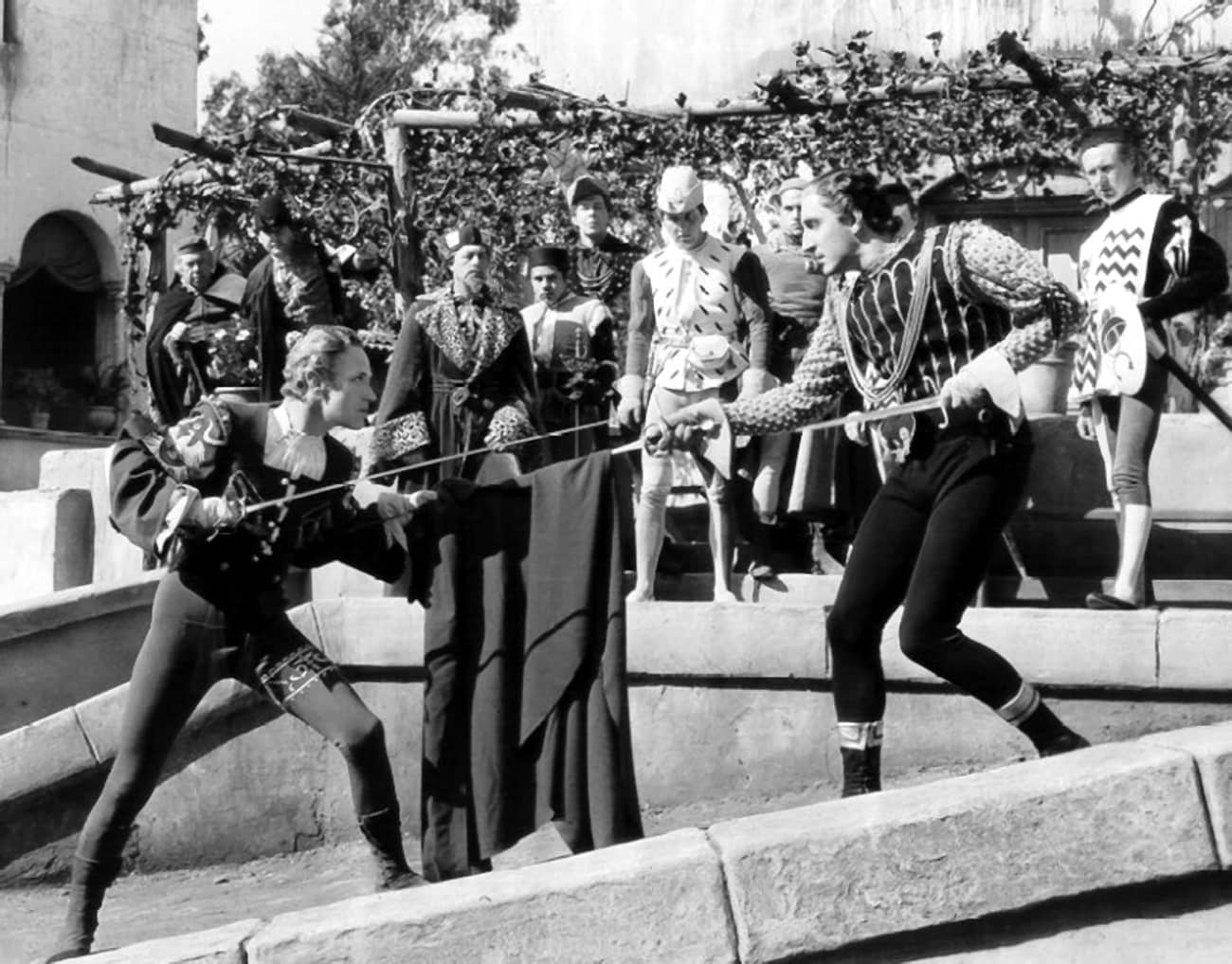
We’ve already covered Errol Flynn’s breakthrough swashbuckler Captain Blood (1935) in this series, and you’ve probably seen and savored it, but you might not be familiar with Rafael Sabatini, the author who wrote the novel it was so memorably adapted from. In the Nineteenth Century Alexandre Dumas père was the king of historical adventure, but in the Twentieth Century that crown passed to Rafael Sabatini (1875-1950). Born in Italy, Sabatini was raised and schooled in Britain, Italy, and Switzerland, and was fluent in at least five languages. He settled in England in the early 1890s and in 1902 published The Suitors of Yvonne, the first of thirty-one historical novels, pretty much all of which can be classified as swashbucklers. In fact, in the early twentieth century the name Sabatini practically defined the genre. (He’s the only author who’s included twice in my Big Book of Swashbuckling Adventure anthology.)

Sabatini’s novels were perfect film fodder; a half-dozen of them made it to the screen in the silent era, and after the success of Flynn’s Captain Blood Hollywood revisited Sabatini’s backlist for another round in the forties and fifties. The three covered below are the best of the lot — and two of them are as good as it gets!

The Sea Hawk

Rating: ***** (Essential)
Origin: USA, 1940
Director: Michael Curtiz
Source: Warner Bros. DVD

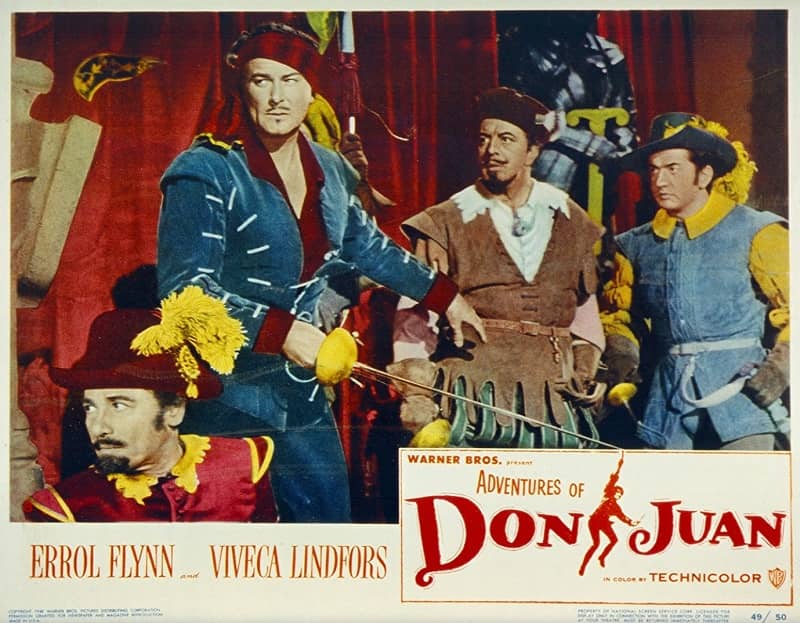
Shortly after the success of Captain Blood (1935), Warner Bros. optioned Blood author Rafael Sabatini’s The Sea Hawk as a follow-up vehicle for Errol Flynn; but production was postponed, partly because the plot of Hawk was too similar to that of Blood. Several years passed, war between Britain and Germany began to appear inevitable, and the British production of Fire Over England (1937) provided a model for an American approach to the same historical events.

Read More Read More

The Public Life of Sherlock Holmes: Psych of the Dead

The Public Life of Sherlock Holmes: Psych of the Dead

Psych_CastEDITEDI could not figure out what to write about today. I re-watched Paul Newman’s Harper, and thought about a post on that – especially since I recently re-read the autobiography of screenwriter William Goldman. And I saw Unholy Partners, a good hardboiled newspaper flick with Edward G. Robinson and Edward Arnold. I re-watched three versions of The Hound of the Baskervilles (Ian Richardson, Peter Cushing, and Jeremy Brett), and Bruce Campbell’s My Name is Bruce. I read Mark Latham’s Sherlock Holmes – Van Helsing novel, Betrayal in Blood. I started Robert E. Howard’s Cormac Mac Art stories, which I’d not read yet. I even started typing about Fortnite, the phenomenon with over 350 MILLION registered accounts – I play as a way to connect with my soon-to-be teenage son. But none of those subjects ‘clicked’ for this week.

I was sitting, looking at the well over a thousand books in my home office drawing a blank. I had a case of writer’s malaise. For Halloween, I watched a couple episodes of Psych, and I’ve decided to write about that. This isn’t one of my in-depth series’ looks, like I wrote for Leverage, and Hell on Wheels. But we’ll still talk about one of my favorite detective shows.

The premise of Psych is that Shawn Spencer (played by James Roday) has Sherlock Holmes-like powers of observation. Growing up, his dad (a terrific co-starring performance by Corbin Bernsen) was a hard-nosed cop who taught his son by locking him in the trunk of the car, challenging him in a restaurant to close his eyes and tell him how many diners are wearing hats, and the like. In the pilot, circumstances force Sean to pretend those observational skills are actually psychic revelations. He has to continue the charade to avoid jail. It sounds ridiculous, but they make it work well enough in the pilot.

Read More Read More

Ellsworth’s Cinema of Swords: Eleven Samurai: Early Chambara Classics

Ellsworth’s Cinema of Swords: Eleven Samurai: Early Chambara Classics

Rashomon-small

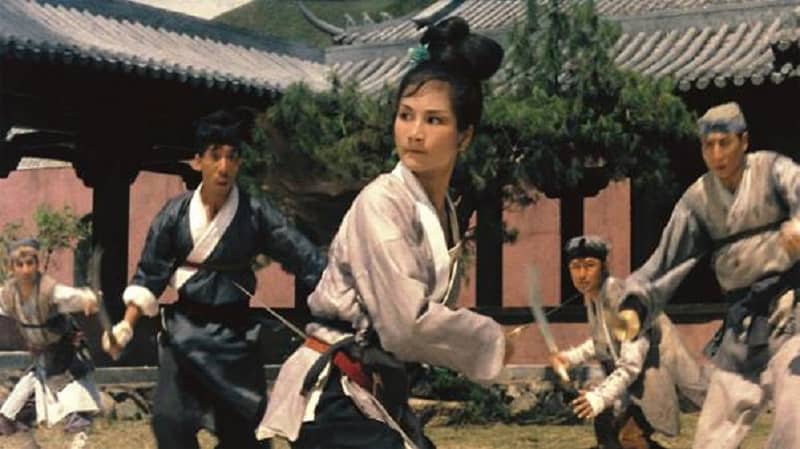
As the Japanese economy recovered from the disaster of World War II, its film industry rebounded as well, though under the American occupation the kinds of films that could be made were strictly limited. Censorship on themes of nationalism and warfare was in force until 1952, but once the ban was lifted the industry returned to the popular genre of historical dramas, making some of the finest films ever produced in Japan.

Rashomon

Rating: *****
Origin: Japan, 1950
Director: Akira Kurosawa
Source: Criterion Collection DVD

Although this is director Akira Kurosawa’s first samurai film, it arguably doesn’t belong in the Cinema of Swords as it’s not really a chambara — a swordplay movie — but rather a historical crime tale. You probably have a general idea of what it’s about even if you’ve never seen it, as its title has come to stand for the principle of the unreliable narrator, the same story told differently from several different viewpoints. In this case it’s the history of a crime, a rape and a murder in a lonely grove on a remote wooded mountain. The tale is told from four different points of view, and the viewer is left to tease out the truth for themselves.

Read More Read More

19 Movies Presents 13 Lucky Movies for Halloween Viewing

19 Movies Presents 13 Lucky Movies for Halloween Viewing

Curse 2

Here’s thirteen movies in five groups suitable for double, or, if you have the stamina, triple feature viewing. Have a safe and fun Halloween!

British Films

We begin with two British films which couldn’t be more diverse in their approach.

Curse of the Demon/Night of the Demon

One movie, with two titles, this 1957 film starring Dana Andrews was directed by Jacques Tourneur who also directed Cat People and I Walked With A Zombie. The U. S. version, (Curse of the Demon) is an 83 minute version of the original 95 minute British release, which is the better film.

Andrews plays an American psychologist who travels to England to attend a scientific conference and gets caught up in investigating the death of a colleague, possibly at the hands (or claws) of a satanic cult. Andrews is so superciliously smug that you may find yourself rooting for the cultists. The screenplay is based on the classic M. R. James short story, “The Casting of the Runes.” Commonly and cheaply available on DVD (one release contains both versions), the truncated version is also available to rent on Prime Streaming.

Read More Read More

Barbarians at the Gates of Hollywood by P. J. Thorndyke

Barbarians at the Gates of Hollywood by P. J. Thorndyke

Barbarians at the Gates of Hollywood by P. J. Thorndyke-small Barbarians at the Gates of Hollywood by P. J. Thorndyke-back-small

Let me start with a story from when I was fifteen and had yet read only the Lancer Conan the Warrior, but was friends with several serious Conan (and Kull, and Solomon Kane) readers. They learned that Creation Con in Manhattan would include a presentation about the upcoming movie Conan the Barbarian featuring Valeria actress Sandahl Bergman, and they quickly convinced a bunch of us to get tickets. On a Saturday afternoon, we made the drive into the city. My memories of the convention itself are pretty hazy, but the movie preview is etched in my brain. Bergman was beautiful and funny. Any teenage boy would want to see the movie after seeing her. The rest of the presentation, though — woohoo, it stank. It was a slide show, just a batch of lifeless stills that, if they didn’t kill our enthusiasm for the movie, they definitely dimmed it. Nonetheless, we all saw it as soon as we could.

All these years later, I can’t speak to how my friends felt, but I hated the movie. I just rewatched it and now, having read all of Howard’s original stories several times, I hate it even more. But that’s a conversation for another day. My opinion, sadly, didn’t matter, and Conan the Barbarian became a cult success, helped make Arnold Schwarzenegger a star, and set the stage for an explosion of barbarian-themed movies. It’s that eruption of films starring loin-clothed, overly-muscled warriors that is the subject of  Barbarians at the Gates of Hollywood by P.J. Thorndyke.

When I stepped back from reviewing at Black Gate (almost two years ago — holy shlamoley!) I knew there could always be something to lure me back. Clearly, John O’Neill knew what that something was when he saw it. He e-mailed me a copy of Barbarians at the Gates of Hollywood, I scanned it and immediately knew I had to read it.  It opens with a solid history of sword & sorcery and closes with a brief explanation of why the film genre died. The heart of the book are synopses of dozens, if not all, of swords and sorcery movies of the eighties. If you’ve ever had any interest in movies like Thor the Conqueror or how Richard Corman came to produce such fare as Deathstalker II: Duel of the Titans in Argentina, this is the book for you.

Read More Read More

What I’m Watching: 2020 (Part Two)

What I’m Watching: 2020 (Part Two)

Campbell_Name1EDITEDA couple weeks ago, I talked about some of the shows I’ve watched during this Pandemic-plagued 2020. Well, I have a few more to talk about – along with some movies. So, awaaaay we go!

My Name is Bruce

In the first essay, I mentioned that I did a complete rewatch of The Adventures of Brisco County Jr, which is my second-favorite show of all time. Along with listening to Campbell read both of his autobiographies (highly recommended), I re-watched My Name is Bruce. It is an amusing parody of both his own career and his low budget B-movies. Campbell has a fantastic sense of self-deprecating humor (trust me on the autobiographies: great reads, and great fun to hear him narrate his own life story), and this movie is all about him poking fun at himself.

He filmed the whole thing up in Oregon on his own property, and the cast is full of old friends, including several folks from The Evil Dead. Ted Raimi plays no less than three different parts. And he’s funny in all of them. I quite enjoy this silly movie. The in-jokes are fun to look for.

The Expanse

I mentioned this one in the earlier post, and I’ve since completed seasons two through four, so I’m all caught up. Season three was a disappointment, but I liked season four well enough that I’m looking forward to the fifth installment, which should drop on Prime in December.

Based on a series of novels by James S. Corey, this is intellectual scifi. There’s action, but the show is more about political intrigue, genetics, national expansionism, and evolving character relationships. I felt this was a better version of the Battlestar Galactica remake. That show just plodded along, weighed down by its own gravitas. I was more bored than intrigued and I gave up on it.The Expanse has the same heft, but moves along more smoothly and kept my interest.

Read More Read More

Ellsworth’s Cinema of Swords: Charming and Dangerous: Douglas Fairbanks, Jr.

Ellsworth’s Cinema of Swords: Charming and Dangerous: Douglas Fairbanks, Jr.

The Prisoner of Zenda

Ronald Colman and Douglas Fairbanks, Jr. in The Prisoner of Zenda (1937)

Douglas Fairbanks, Jr. was a fine actor with a considerable range, but he never got out of the shadow of his more famous father. Douglas Fairbanks Sr., after all, was more than a fine actor, he was a force of nature who single-handedly established the conventions of the cinematic swashbuckler in a series of grand, albeit silent epics. Doug Jr.’s parents divorced when he was young, and against his father’s wishes he was raised in the movies, starting in the silent era as a child star with his own studio contract. He played mostly romantic and dramatic roles as he matured, but inevitably he made some swashbucklers of his own, showing that he had, unsurprisingly perhaps, a natural talent for them. His Rupert of Hentzau is certainly one of the most memorable portrayals in all swashbuckler cinema.

The Prisoner of Zenda

Rating: *****
Origin: USA, 1937
Director: John Cromwell
Source: Warner Bros. DVD

David Selznick bought the rights to The Prisoner of Zenda as a starring vehicle for Ronald Colman, who was at the height of his fame coming off Lost Horizon (1937). Colman played the dual role of Rudolf Rassendyll and King Rudolf, and Selznick surrounded him with a first-rate cast, including the glowing Madeleine Carroll as Princess Flavia, and C. Aubrey Smith and his whiskers as the king’s loyal Colonel Zapt. But best of all were the villains: Raymond Massey, looming and ominous as the would-be usurper Black Michael, and Douglas Fairbanks, Jr., as the raffish rogue Rupert of Hentzau, who stole every scene he appeared in (as Rupert does in every version of Zenda).

Read More Read More

Fantasia Extra: Lost Girls: The Phantasmagorical Cinema of Jean Rollin

Fantasia Extra: Lost Girls: The Phantasmagorical Cinema of Jean Rollin

Lost GirlsFor my last Fantasia post of 2020, I’m again going back to cover something I was too fatigued to get to in a previous year. In 2017 publisher Spectacular Optical put out Lost Girls: The Phantasmagorical Cinema of Jean Rollin, a collection of essays by women scholars. The book launched at Fantasia and I asked for a pdf, then was too wiped out after the festival and for some time beyond to write a review. Although the book’s currently sold out, I’m reflecting on it now for three reasons. The first is simply because I dislike yielding to fatigue permanently. The second is that I think it’s worth writing a bit about Rollin, who I had not heard of in 2017, who does not seem to have been previously mentioned on this web site, and whose films of the fantastic are (to judge by this book) worth covering here. The third is to consider more generally the experience of reading about film, especially films one has not seen.

Let me start with Lost Girls. Edited by Samm Deighan, it’s 437 pages long, with a foreward, 16 essays, and an afterword. The tone’s academic but still accessible to a general audience — there are references and lists of works cited, and a general interest in placing Rollin within a broader cultural and intellectual context, but the essays tend to avoid the intricately theoretical and recondite. The book’s lavishly illustrated, with stills from Rollin’s films sometimes sharing a page with text they’re illustrating, and at other times assembled into two-page spreads.

Given the nature of Rollin’s work, there’s a lot of blood and nudity in the pictures. From this book and what I’ve read elsewhere I gather that while Rollin made low-budget films across a number of genres he’s best known for a cycle of movies in the 70s that combined horror, erotica, and arthouse surrealism. Ostensible exploitation films had their genre conventions undermined by ambiguity and mythopoeic imagery. Women were leads, heroes and villains and both in one; thus the idea of a book about Rollin by women, examining a male filmmaker whose work was ostensibly gazing upon often-nude young women but who also gave those characters unusual agency and range.

The essays in Lost Girls are generally respectful of Rollin. The book moves in a roughly chronological arc across his career, perhaps focussing especially on his early vampire films: Le viol du vampire (The Rape of the Vampire, 1968), La vampire nue (The Nude Vampire, 1970), Le frisson des vampires (The Shiver of the Vampires, 1971), and Requiem pour un vampire (Requiem For A Vampire, 1971). Recurring imagery in Rollin’s films is considered, as are his influences from the serial form, and fable-like or fairy-tale characteristics of his stories.

Read More Read More

Goth Chick News: Revisiting Hemlock Grove for Halloween

Goth Chick News: Revisiting Hemlock Grove for Halloween

Hemlock Grove-small Hemlock Grove-back-small

Hemlock Grove by Brian McGreevy (FSG Originals, April 16, 2013)

When Netflix first premiered Hemlock Grove back in April 2013, it was originally aimed at an audience of teenage horror fans. The cast was ridiculously good-looking, twenty-somethings playing high schoolers living in an insanely quaint and beautiful New England town. It might have been The Addams Family meets 90210, or at the time, a darker alternative to the anxiety-ridden vampires du jour of the Twilight series.

What we got instead, at least in Season 1, was an intricate and blood-soaked modern retelling of pretty much every classic monster imaginable. Hemlock Grove is a tale well worth you visiting (or revisiting) this Halloween season.

An American horror/thriller from executive producer Eli Roth (Grindhouse and Hostel) and developed by Brian McGreevy and Lee Shipman, Hemlock Grove is based on McGreevy’s 2012 novel of the same name. It examines the strange happenings in a fictional town in Pennsylvania where a teenage girl is brutally murdered, sparking a hunt for her killer. Roman Godfrey, heir to the town’s wealthy Godfrey family, befriends the town’s newcomer and gypsy outcast, Peter Rumancek and the two work together to shed light on the case while also concealing their own dark secrets.

I managed to find Hemlock Grove’s one and only red band trailer which should make you at least a little curious to check it out.

Read More Read More

Fantasia Extra: 1BR

Fantasia Extra: 1BR

1BRLast year I almost reviewed a movie at Fantasia called 1BR. But exhaustion got to me as the festival wore on, and I passed on the film. I’m never happy about having to compromise with fatigue, though, and since 1BR recently came to Netflix — where for a while it was among their 10 most-streamed movies, at one point even reaching the top 5 — I decided to rectify last year’s omission and take a look at it now.

Written and directed by David Marmor, his first feature film, it follows Sarah (Nicole Brydon Bloom), a young woman who feels estranged from her father (Alan Blumenfeld). Working in Los Angeles as a temp with aspirations to become a costume designer, she finds her first apartment as the film opens. Though the plumbing makes strange noises, her neighbours seem nice and Sarah befriends an old former actress named Edie (Susan Davis) while being drawn to the handsome Brian (Giles Matthey). But creepy one-eyed Lester (Clayton Hoff) keeps trying to push a weird old book about community. And Sarah’s got a secret: she moved in with her cat, Giles, even though building manager Jerry (Taylor Nichols) told her there were no pets allowed.

In fact things are worse than Sarah imagines. It turns out the book about community’s a bible for the apartment block — and that all the residents are part of a cult-like group prepared to force Sarah to join them. Acts of physical and psychological torture follow. Sarah is broken down and slowly builds herself back up, and it all builds remorselessly to a powerfully symbolic final shot.

The movie works because it pays so much attention to Sarah’s character, as well as the people around her. Bloom brings out Sarah’s flaws as well as her strengths. She is thoughtless enough to sneak the cat into a pet-free building without thinking about other people’s allergies. And she is weak-willed, unformed in certain ways as the film starts. The story has a strong subtext investigating her feelings about her father and unconscious search for replacement father figures; it’s a horror-thriller as bildungsroman, building to an overtly Freudian choice with an icepick.

The movie’s tone and visuals bring this out quite nicely. The film’s drenched with warm sunlight in its exterior shots, presenting a kind of warmth that echoes the self-image of the residents of the apartment block. Interiors of Sarah’s apartment emphasise bare white walls and wooden floors, the unyielding emptiness of unfurnished rooms. There’s a lovely moment early on as Sarah tries to sleep in her new apartment, which I think captures the dislocation of the experience of the first night in a new home. Conversely, later in the film all the homier scenes become unreal, as the rules and philosophy of the community become more detailed. The imagery of the building interiors ironically underscore the extreme rejection of the outer world and the unreality of the residents’ world-view, the willed aversion to external fact they push on Sarah.

Read More Read More