Browsed by
Category: Mystery

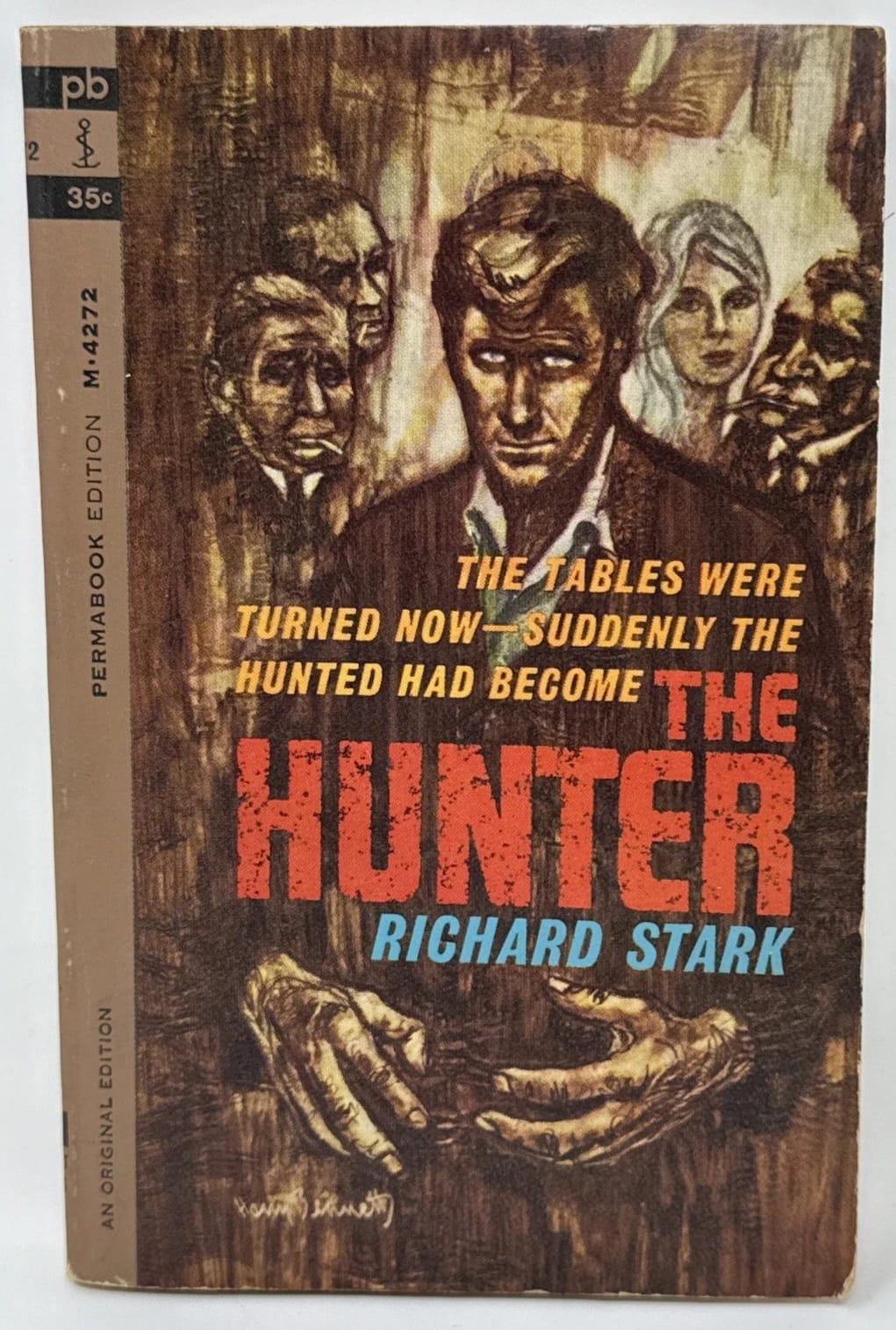
Richard Stark’s Parker, Part 2: Parker the Barbarian!

Richard Stark’s Parker, Part 2: Parker the Barbarian!

Richard Stark’s Parker by Darwyn Cooke

Last time we discussed the character of Parker, Donald E. Westlake’s master thief and heist planner.

This time, we’ll look at why we’re talking about Parker at all, here in the hallowed spaces of this fine magazine.

Parker might seem like an odd fit. Allow me, however, to draw some parallels that will help to illustrate how and why the master criminal Parker fits in with classic sword and sorcery characters like Conan the Barbarian. For these two gentlemen have far more in common than one might guess.

Read More Read More

A (Black) Gat in the Hand – Words of Wisdom from Black Mask‘s Joe Shaw

A (Black) Gat in the Hand – Words of Wisdom from Black Mask‘s Joe Shaw

BlackMask_May1934EDITED“You’re the second guy I’ve met within hours who seems to think a gat in the hand means a world by the tail.” – Phillip Marlowe in Raymond Chandler’s The Big Sleep

(Gat — Prohibition Era term for a gun. Shortened version of Gatling Gun)

I closed on a house a week ago Thursday and immediately began moving in, which is a long process for me. And I then had to go to Chicago for a work conference, doubling up my stress. So, today, you get an encore from season one of A (Black) Gat in the Hand. As a hardboiled fan, I find this essay from the legendary Black Mask editor, Joe ‘Cap’ Shaw. It offers his insights into writing for the Pulps. And it’s from an issue of Writer’s Digest, not Black Mask. I add some comments throughout. I think it’s a good read. 

The hardboiled school was born in the page of Black Mask Magazine under the editorship of George W. Sutton, with Carroll John Daly’s “Three Gun Terry” (which I wrote about here…) and “Kings of the Open Palm,” and Dashiell Hammett’s “Arson Plus,” appearing in 1923. In 1924, Sutton resigned and circulation editor Phil Cody replaced him.

Cody pushed for more stories featuring Race Williams and the Continental Op, encouraged Erle Stanley Gardner to develop Ed Jenkins (‘The Phantom Crook’), and added Frederick Nebel and Raoul Whitfield to the magazine. Cody was spread too thin managing multiple publications, and he handed the reins to Joseph Shaw, a former bayonet instructor in the Army and an unsuccessful writer with zero editorial experience (I mean, sure, why not?).

Read More Read More

A (Black) Gat in the Hand: A Terrific Little Noir – After Dark My Sweet

A (Black) Gat in the Hand: A Terrific Little Noir – After Dark My Sweet

You’re the second guy I’ve met within hours who seems to think a gat in the hand means a world by the tail.”

— Phillip Marlowe in Raymond Chandler’s The Big Sleep

1990 was quite the year for hardboiled and Noir on the big screen. Pacific Heights (Michael Keaton) came in as the 41st highest grossing movie of the year, with Revenge (based on the novella from the uber-talented James Harrison) was 83rd. Those are both solid Noirs.

At 107th was The Two Jakes – the long-delayed sequel to Chinatown. At 109th was Miami Blues, with Fred Ward as Charles Willeford’s Hoke Mosely. I’ve read the books several times, but not seen the movie.

The 135th highest grossing movie is probably second only to The Maltese Falcon in the harboiled genre for me. It’s the Coen Brothers’ Miller’s Crossing. Starring the tastefully-last named Gabriel Byrne! At 155th is a remake of a Bogart flick, Desperate Hours. Mickey Rourke delivered a pretty good Noir.

Read More Read More

Richard Stark’s Parker, Part 1: The Master Criminal

Richard Stark’s Parker, Part 1: The Master Criminal

All 16 original series Parker Novels by Richard Stark in 15 paperbacks (Avon and Berkely editions). Deadly Edge is a double volume also containing The Sour Lemon Score

This week we kick off an occasional new series of reviews of the Parker crime novels by Richard Stark.

If you know Parker, you understand. If you aren’t familiar with him, trust me: You are in for a treat.

In installment two, I’ll explain why he’s worthy of being discussed in this august forum.

But first, let’s chat a bit about the character, his creator, and why he matters.

Read More Read More

A (Black) Gat in the Hand: Ten Things I Think I Think (Gat Edition)

A (Black) Gat in the Hand: Ten Things I Think I Think (Gat Edition)

You’re the second guy I’ve met within hours who seems to think a gat in the hand means a world by the tail.”

— Phillip Marlowe in Raymond Chandler’s The Big Sleep

I don’t think I’ve done a Ten Things I Think I Think, for A (Black) Gat in the Hand. Huh. I guess we can rectify that today.

As I write this, all 2,000+ books which I own are boxed up. They will be moving to the house I close on later this week. They made up 55 boxes of books. There’s a loft that will be my writing room/home office, with bookcases spread out across a few other rooms.

It’s weird not being able to grab a book to read, or look something up. I feel like I’m in a book version of homelessness. Definitely strange. So, I think:

1 – PHILIP MARLOWE HAS STAR POWER

Philip Marlowe was born in 1939, when Raymond Chandler cobbled together parts from short stories featuring other detectives (I’m not exaggerating, I believe he used he word ‘cannibalized’), and wrote The Big Sleep. Marlowe novels were used for movies starring The Falcon, and Mike Shayne. But the character of Marlowe has compelled some big Hollywood names to play him. Such as Dick Powell, Humphrey Bogart, James Garner, Elliot Gould, Robert Mitchum, Powers Boothe, James Caan, and Liam Neeson.

These are heavyweight male stars playing a character often from decades before.  For the most part they’re good, though I definitely like them to varying degrees. Sam Spade, Race Williams, The Continental Op: similar big names in hardboiled fiction don’t have nearly the ongoing screen impact of Philip Marlowe. I ruminated on various Marlowe incarnations here.

Read More Read More

A (Black) Gat in the Hand: Rory Gallagher and the Continental Op

A (Black) Gat in the Hand: Rory Gallagher and the Continental Op

Gat_GallagherBlindsYou’re the second guy I’ve met within hours who seems to think a gat in the hand means a world by the tail.” — Phillip Marlowe in Raymond Chandler’s The Big Sleep

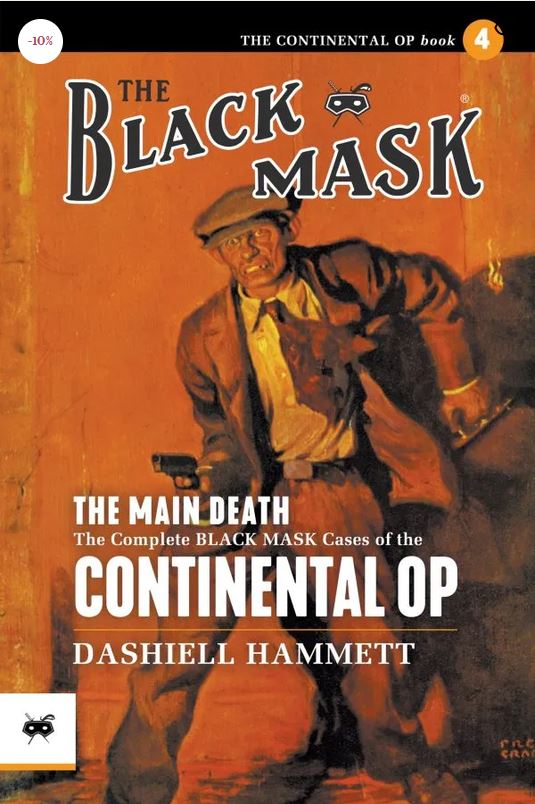
I just finished the intro for Volume 4 of Steeger Books’ The Continental Op series. I’ll post it here after the book comes out, of course. But being in an Op mood, I wanted to bring back an Op mashup post which I did waaaay back in 2018.

Rory Gallagher passed in 1995. Wow – that’s 31 years ago now. An Irish blues-rock guitarist and singer, he is still revered throughout Europe. I don’t mean ‘popular.’ Think Eric Clapton status. There are statues of, and public spaces named after, him, in Ireland.

Of course musicians in America know of him. But he is not popularly-remembered here. Ask someone to name their ten favorite guitarists, and I don’t think you’ll hear his name very often.

Read More Read More

A (Black) Gat in the Hand: Elliot Gould’s Better Philip Marlowe

A (Black) Gat in the Hand: Elliot Gould’s Better Philip Marlowe

“You’re the second guy I’ve met within hours who seems to think a gat in the hand means a world by the tail.”

– Phillip Marlowe in Raymond Chandler’s The Big Sleep

Back in the Summer of 2020, A (Black) Gat in the Hand looked at some screen and radio productions for Raymond Chandler’s private eye, Philip Marlowe. Two months before, I had done a separate post on Powers Boothe’s terrific series for HBO. That series was really the impetus to move me from not liking Raymond Chandler, to being a fan.

There was a second thing which brought me all the way in to being a Chandler guy. Now, I cannot abide Elliott Gould’s The Long Goodbye. My attempts to ‘try again’ inevitably lead to me quitting the re-watch. I don’t like my Marlowe in 1973, and it’s my least favorite Marlowe on screen.

However, as with Powers Boothe, I wouldn’t be a fan of Raymond Chandler if not for Gould. He recorded all the Marlowe novels, as well as several of Chandler’s non-Marlowe short stories, as audiobooks. This was way back in cassette days, and I was smart enough to pick up several of the CDs, even though I wasn’t into Chandler then.

Read More Read More

A (Black) Gat in the Hand: All My Steeger Books Intros

A (Black) Gat in the Hand: All My Steeger Books Intros

It’s mid-May, and I’ve been in something of a hardboiled mood lately. So with Summer looming, here’s a Black (Gat) in the Hand. More Pulp is coming, like a gumshoe with a gasper and a rod.

I am fortunate to be part of a star-studded roster of writers who provide intros to Pulp reprints from Steeger Books. More and more classic, and forgotten, Pulp is continually being brought back to print – and electronically as well. I just finished my tenth intro, and that will roll out with number eleven, later this year.

Below you can find links to all nine of the intros that have been printed so far. Plus a bonus one that didn’t quite make it. If you like what I had to say, you might be interested in checking out the books themselves. You’ll likely recognize at least a couple of the names below. But I cannot praise the Max Latin stories by Norbert Davis, enough. I have the audiobook, and that’s my bedtime listening multiple times a week, all year long. Love those stories.

FAST ONE (Paul Cain)

Lead Party has all of Paul Cain’s short stories, as well as his lone novel, Fast One. Mine is one of five essays in this deluxe hardback. And I got to write about Fast One!

Raymond Chandler referred to it as “some kind of high point in the hardboiled manner.” I think this is a nearly flawless book, and it rivals The Maltese Falcon as my favorite Hardboiled novel. If you haven’t read it, you’re missing out on one of the best works in the genre.

Cain had somewhat of a mysterious life, and he wrote screenplays under the name Peter Rurik. While his legal name was George Sims. He died living quietly, his past largely buried.

Read More Read More

Murder and Courtship: Strong Poison by Dorothy Sayers

Murder and Courtship: Strong Poison by Dorothy Sayers

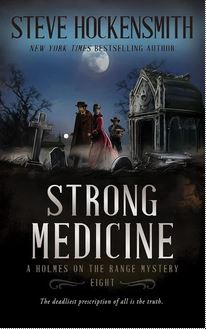
Strong Poison, by Dorothy Sayers (Avon Books #328, 1951)

In Strong Poison, Sayers gives Peter Wimsey a love interest, and makes this central to the story. Traditional mystery writers had avoided this kind of plot (Irene Adler, for example, was clearly not romantically involved with Sherlock Holmes, however profound an impression she made on him).

Not all of her readers welcomed the innovation. In particular, Harriet Vane, a successful author of detective stories, was sometimes looked at as what fan fiction readers now call a “self-insertion” by Sayers — a view that gains plausibility from Vane’s involvement in a love affair, given what we know now about Sayers’s life story.

We first meet Vane in a courtroom, where she is being tried for the murder of her former lover, Philip Boyes, a less successful but more artistically pretentious novelist (what little is said of his books suggests Aldous Huxley’s early novels, before Brave New World made him immortal).

Read More Read More

John Cleese Does Sherlock Holmes (and better, the first time)

John Cleese Does Sherlock Holmes (and better, the first time)

I reinstalled Elder Scrolls Online, which is a rabbit hole I jump down periodically. I usually do side, and zone, quests. But when I decide to follow some of the main storyline, I am delighted to come across John Cleese’s Sir Cadwell. He is the a rather mad soul shriven who guides the characters in Cleese’s inimitable style. Every scene with Cleese is fun, and he also plays a part in one of the large DLCs.

Here’s a short ‘official’ video on the creation of the character. I think you’ll get the feel of this erratic character. Includes Cleese talking about it.

It’s a blessing he is still with us; active at 86.

Some folks are aware of his The Strange Case of the End of Civilization as We Know It (discussed at the end of this post). I set out to write about that awful Sherlock Holmes parody movie. I wrote this essay instead. And ten years later, I still have no interest in re-watching and writing an essay on Strange Case. It is just too dumb.

However, I do think folks who like Cleese, should give a watch to a better Sherlock Holmes project he did four years before Strange Case. It’s out there on YouTube. And while it’s not brilliant, I found it entertaining Cleese. And I will always watch something John Cleese, which makes me smile. He’s genuinely a feel-good kind of guy. So, read on about Elementary: My Dear Watson.

John Cleese is best known, of course, as the sardonic Q opposite Pierce Brosnan’s James Bond in Die Another Day. He’s not as well remembered for his role in the British comedy troupe, Monty Python. I’m kidding!

On January 18, 1973, the final episode of Python’s third season aired. It was Cleese’s last episode with the group, which would continue on for one more season. That very same day, Cleese’s next project aired – Comedy Playhouse Presents: Elementary, My Dear Watson. It was produced by Barry Took, who had brought the Python members together.

Read More Read More