Browsed by
Category: Editor’s Blog

The blog posts of Black Gate Managing Editor Howard Andrew Jones and Editor John O’Neill

Celebrate the Holidays with A Cosmic Christmas, edited by Hank Davis

Celebrate the Holidays with A Cosmic Christmas, edited by Hank Davis

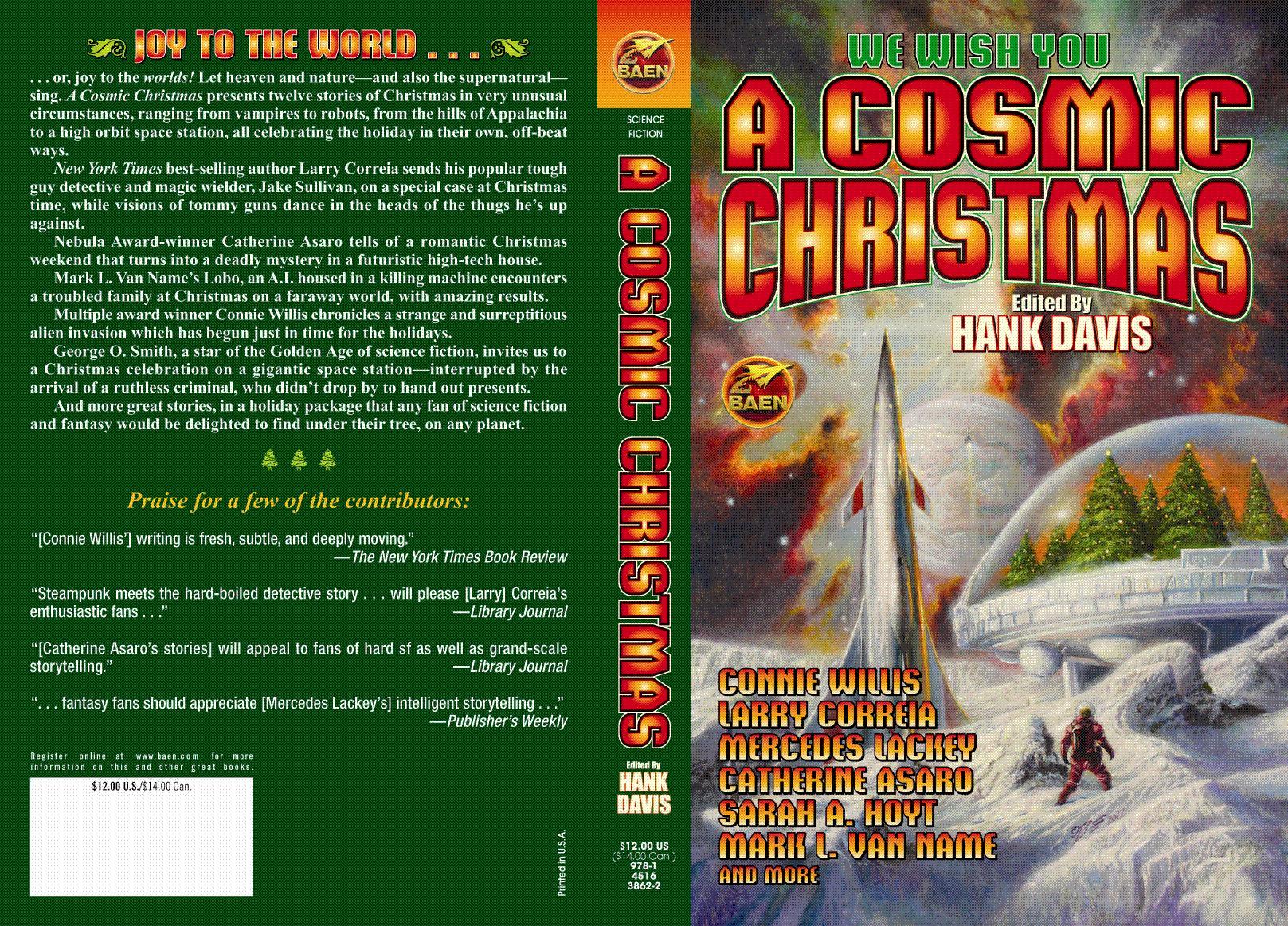
A Cosmic Christmas-smallI admit it — I love Christmas stories. Some of the finest fantasies ever told — including Charles Dickens’s A Christmas Carol and Frank Capra’s It’s a Wonderful Life — have been Christmas stories. It’s a great time of year to curl up in my big green chair with a cup of hot chocolate, a cat in my lap, and a Christmas fantasy in hand.

One of the better Christmas anthologies I’ve stumbled on recently is Hank Davis’s 2012 A Cosmic Christmas, which celebrates twelve cosmic days of Christmas with a dozen tales of vampires, robots, A.I’s, alien invasions, and stranger things, from the hills of Appalachia to a high orbit space station. It includes a novella by Catherine Asaro, a Jon & Lobo story by Mark L. Van Name, a John the Balladeer tale from Manly Wade Wellman, a Venus Equilateral story by George O. Smith, a Grimnoir Chronicles novelette by Larry Correia, a Technic History story by Poul Anderson — and a brand new novelette by Sarah A. Hoyt.

Joy to the world… or, joy to the worlds! Let heaven and nature — and also the supernatural — sing. A Cosmic Christmas presents twelve stories of Christmas in very unusual circumstances, ranging from vampires to robots, from the hills of Appalachia to a high orbit space station, all celebrating the holiday in their own, off-beat ways.

New York Times best-selling author Larry Correia sends his popular tough guy detective and magicwielder, Jake Sullivan, on a special case, while visions of tommy guns dance in the heads of the thugs he’s up against. Mark L. Van Name’s Lobo, an A.I. housed in a pocket battle starship, drops his usual cynical pose when challenged by a troubled family at Christmas time. Nebula Award-winner Catherine Asaro tells of a romantic weekend that turns into a mystery in a futuristic high-tech house — all that and Christmas, too. Mercedes Lackey delivers a ghost story with a not-so-friendly visitation from the beyond, and George O. Smith, a star of the Golden Age of science fiction, is on hand with an episode from his classic Venus Equilateral series, in which a Christmas celebration on a gigantic space station is interrupted by the arrival of a ruthless interplanetary criminal, who didn’t drop by to hand out presents. And much more, in a holiday package that any fan of science fiction and fantasy would be delighted to find under their tree, on any planet.

Read More Read More

Embrace the Odd: The Fantasy Catalog of ChiZine Publications

Embrace the Odd: The Fantasy Catalog of ChiZine Publications

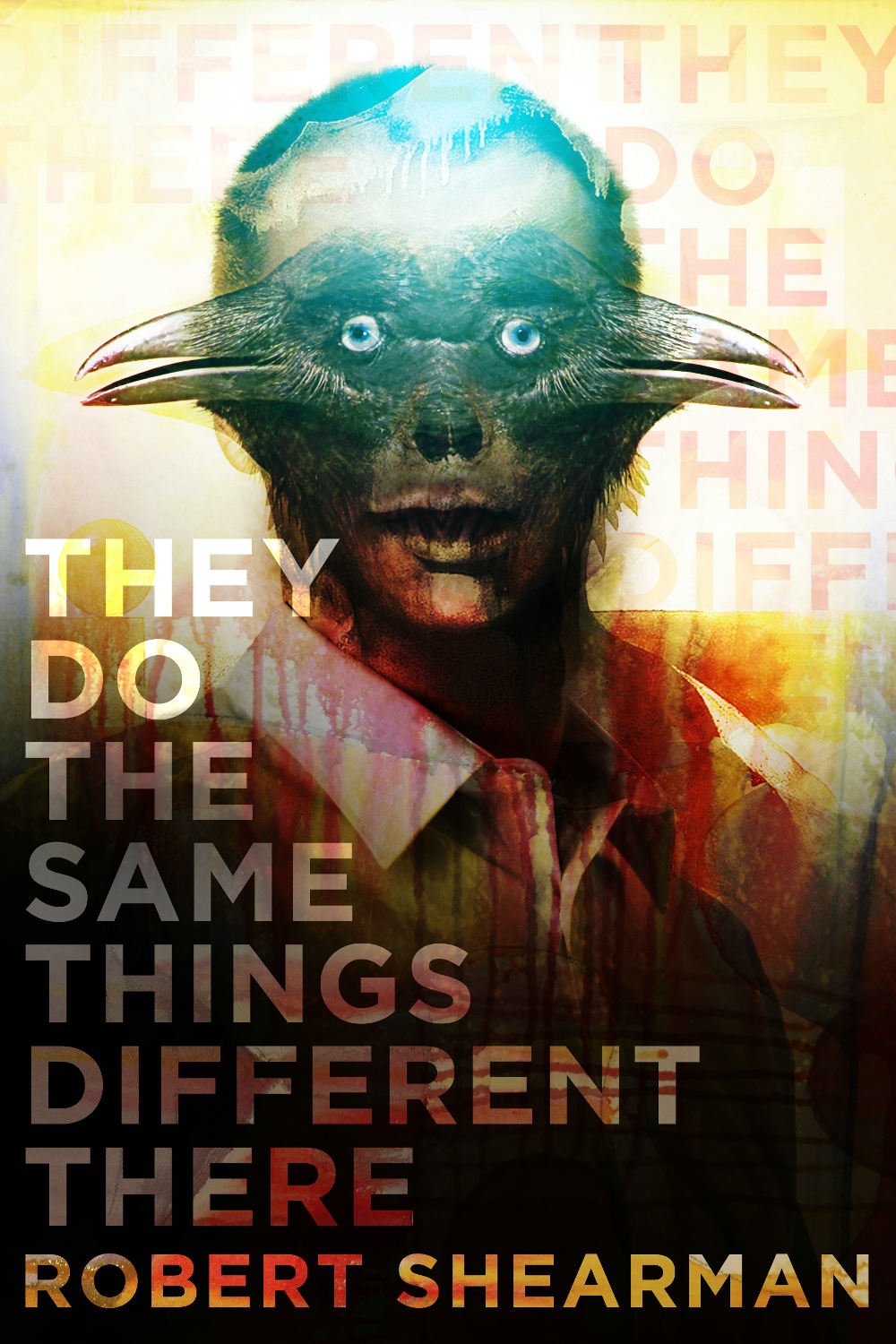
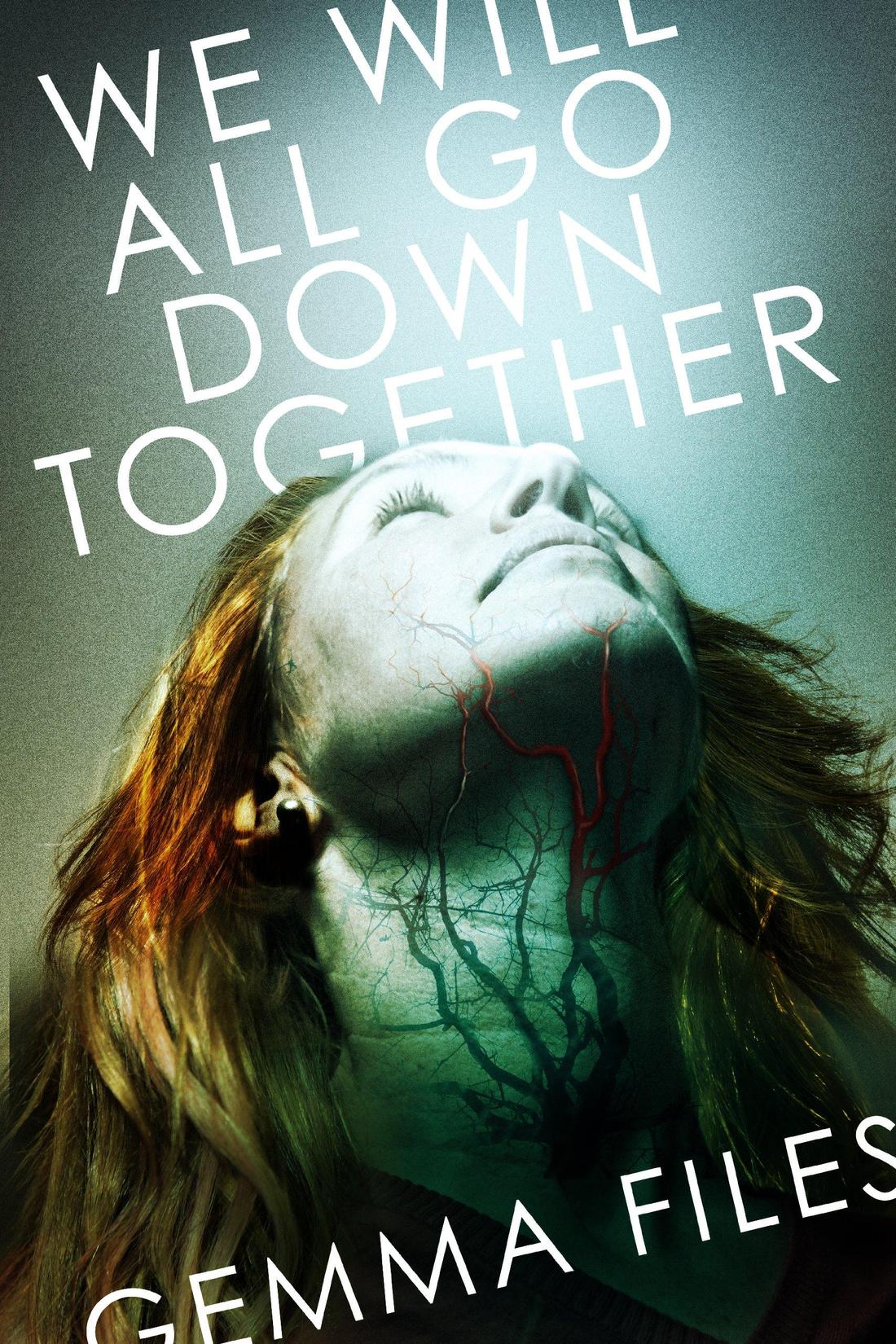
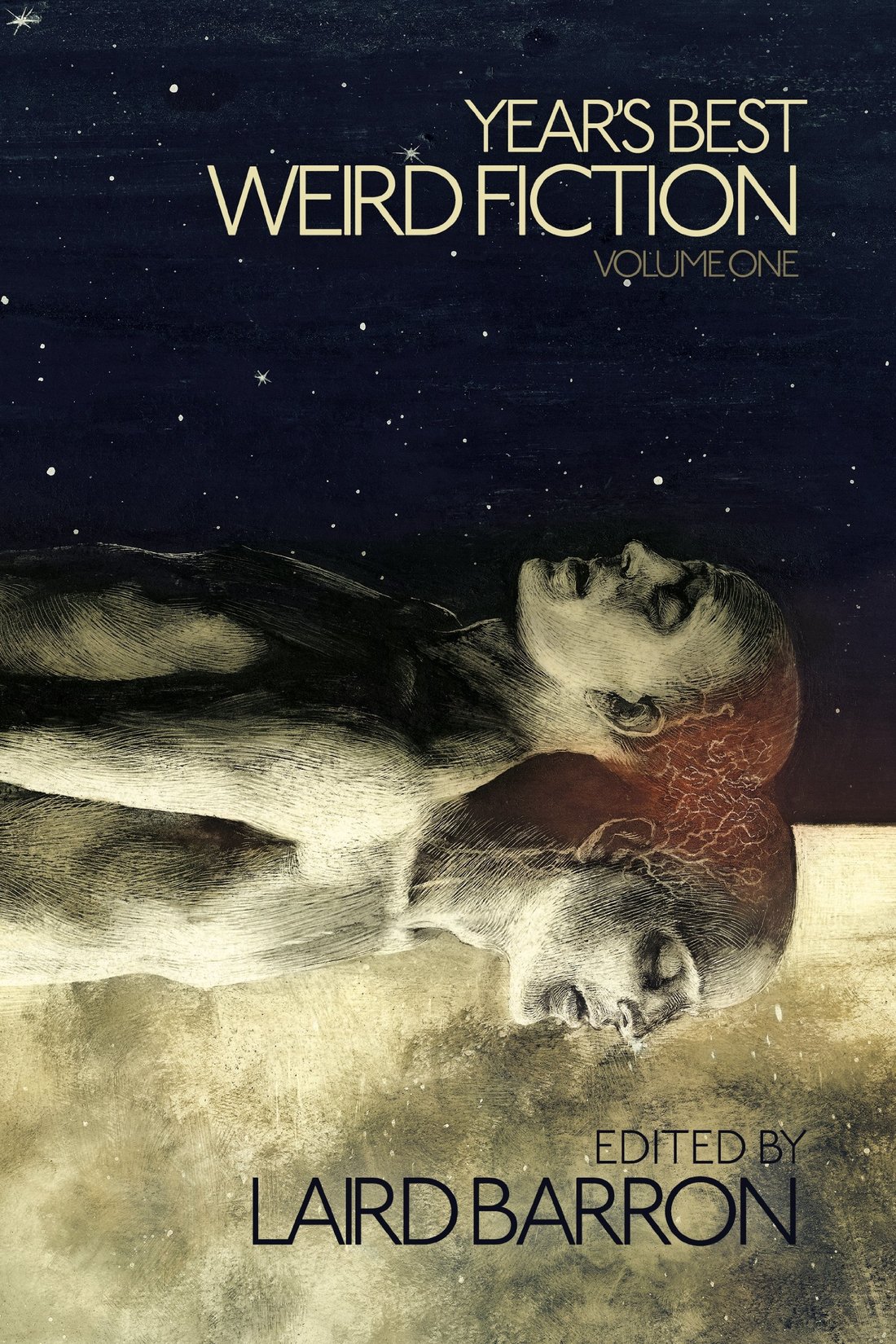
They Do the Same Things Different There-small We Will All Go Down Together-small Year's Best Weird Fiction-small

Last month, I attended the World Fantasy Convention in Washington D.C. (my first trip to the city) and had a marvelous time. I attended readings by over a dozen writers, sat in on terrific panels, and reconnected with close friends I haven’t seen in far too long.

But I probably spent the most time in the Dealers Room, where publishers and collectors laid out their wares on closely packed tables. We talk about a lot of new books here at Black Gate, and I’m proud of our coverage of the industry, but let me tell you — there’s nothing like wandering past stacks of newly-published fantasy titles from dozens of publishers to make you realize how woefully you’ve underrepresented the cavalcade of new books that have arrived in just the last few months.

I vowed that when I returned to our rooftop headquarters here in Chicago, I’d showcase those publishers that most impressed me — and not just with a book or two, but by trying to show you what it was like to stand in front of their tables in that room, with the full range of their current books on display. I’ve done that once already, with Valancourt Books; today I’d like to focus on one of the most innovative small press publishers in the field, the brilliant ChiZine Publications.

Read More Read More

Keep Your Blaster Close: The Many Horrors of Outbreak: Deep Space

Keep Your Blaster Close: The Many Horrors of Outbreak: Deep Space

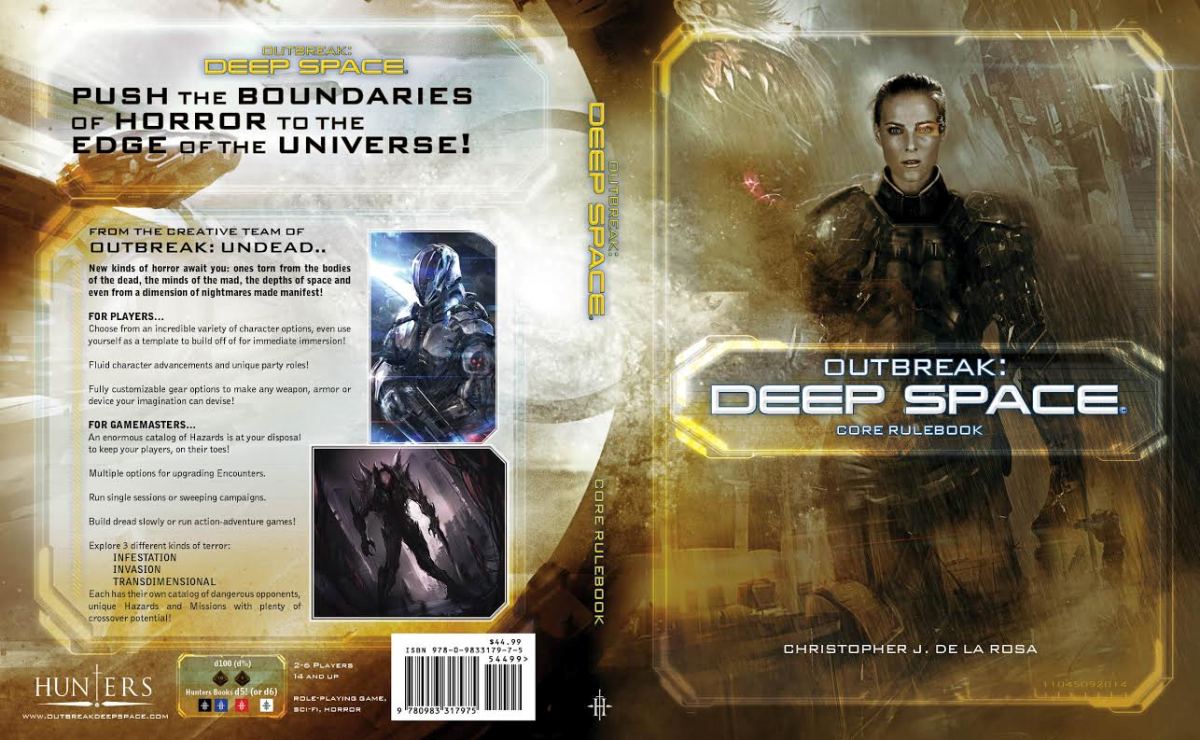
Outbreak Deep Space-smallBeing at the Games Plus Fall Auction can be an exhilarating experience. Take my discovery of Outbreak: Deep Space, just as an example.

There I am, sitting in the second row of the auction on October 4th, ninety minutes into the auction, wondering if I’ve blown my budget already. I’ve just made the decision to add up my purchases when the auctioneer holds up a brand new copy of Outbreak: Deep Space and starts the bidding at $5.

What the heck is that?, I think. And then, I have no idea, but it looks fantastic.

I immediately hold up my bidding card. Unfortunately, I’m not the only one to be intrigued by this strange gaming artifact. About a dozen bidders have their cards in the air, and the auctioneer quickly runs the price up to ten bucks. This is how you get in trouble, I remind myself. Bidding like mad on a book when you have absolutely no idea what it is. 

But my card stays in the air. The bidding hits 15 bucks, then blows past it. The cards around me are starting to waver and drop.

This thing could be on sale at Amazon for $10. Just because you’ve never seen a copy doesn’t mean it’s hard to find.

But I keep my card in the air. It’s a sharp-looking and professional bound hardcover — my instincts tell me it’s going to cost a lot more than 10 bucks to track down a copy if I miss out on this one. And besides… there’s more going on now than just bargain hunting. It looks like a science fiction horror RPG, and a very professional one. I’m deeply curious and willing to pay more than $15 for the opportunity to find out what it is.

Read More Read More

C. S. E. Cooney Joins Uncanny Magazine as a Podcast Reader

C. S. E. Cooney Joins Uncanny Magazine as a Podcast Reader

C. S. E. Cooney has hair like Medusa seriously it's amazing-smallThe brand new fantasy magazine Uncanny — which we discussed excitedly last month when its first issue went on sale — has shown uncanny good sense by hiring our very own C.S.E. Cooney as a podcast reader. Here’s a bit cribbed from the press release:

Uncanny Magazine is thrilled to announce that the marvelous C.S.E. Cooney has agreed to join us as the second reader on the Uncanny Magazine Podcast! Ms. Cooney is a Rhode Island writer and actor… She loves to read aloud to anyone who will sit still long enough to listen. Some of her narration work can be found on Podcastle and Tales to Terrify. With her fellow artists in the Banjo Apocalypse Crinoline Troubadours, C. S. E. Cooney appears at conventions and other venues, singing from their growing collection of Distant Star Ballads, dramatizing fiction, and performing such story-poems as “The Sea King’s Second Bride,” for which she won the Rhysling Award in 2011.

Ms. Cooney will make her debut as an Uncanny Magazine Podcast reader in Episode 3 this January.

So much exciting C.S.E. Cooney news! Just last month, we reported on Amal El-Mohtar’s review of her short story “Witch, Beast, Saint,” and our roving reporter Mark Rigney interviewed her in late October. The two C.S.E. Cooney short stories we published here at Black Gate, “Godmother Lizard” and “Life on the Sun,” consistently rank among the most popular pieces we’ve ever published. Her most recent blog post for us was Book Pairings: Queen Victoria’s Book of Spells and Royal Airs, published last Sunday. She is a past website editor of Black Gate, and the author of How to Flirt in Faerieland and Other Wild Rhymes and Jack o’ the Hills.

In other C.S.E. Cooney news, today is her birthday. Happy Birthday, Claire!!

Fantasy Keeps You Young

Fantasy Keeps You Young

John O'Neill at Capricon 2014 (photo by Patty Templeton)
John O’Neill at Capricon 2014 (photo by Patty Templeton)

Some years before I started Black Gate magazine, I was editing a science fiction fan site called SF Site. It’s still going strong today, managed by my old partners Rodger Turner and Neil Walsh in Ottawa. It was nominated for a Hugo award in 2002, and a World Fantasy Award in 2006; in 2002, it won the Locus Award for best webzine.

Anyway, before all that fame and glory, I was still struggling to get the damn site off the ground. That meant a lot of hard work, writing and posting articles that nobody read, late into the night. Around 1997 or so, I hit on an idea to give my site a higher profile: offering free hosting to the major SF and fantasy magazines, none of which had websites at the time. This worked splendidly, and over the next few years, Rodger and I launched sites for Analog, F&SF, SF Chronicle, and many others (meaning that I made a lot of phone calls, and Rodger did all the actual work.)

In 1998, shortly after we launched the Asimov’s SF site, I wrote A Brief History of Asimov’s Science Fiction Magazine, to celebrate the magazine coming on board. I wrote about finding the second issue in 1977, the summer I discovered SF magazines. In my first draft, I said something about Asimov looking elderly and distinguished on the cover.

I ran the draft past Sheila Williams, then Executive Editor of Asimov’s, and received a very cranky note in return. She strongly objected to my wording, saying “Isaac was barely fifty when that photo was taken — hardly elderly!” I puzzled over that for a long, long time. What did she mean, exactly? It didn’t make any sense. Finally, I had an epiphany. Sheila was probably really old, too. She might even be approaching 50 herself! And as everyone knew, old people shouted at everybody, and didn’t make much sense. I tweaked my wording enough to pacify her and we published the article.

I’ve thought about that exchange a few times since I turned 50, just a few months ago.

Read More Read More

The Classic Games of Metagaming: Ogre

The Classic Games of Metagaming: Ogre

Ogre Metagaming-smallLast week, I wrote about discovering early Metagaming advertisements in copies of Analog and Asimov’s SF, as well as other science fiction magazines I read in the late 1970s. The ads — for tiny science fiction games I could carry around in my pocket — fired my imagination.

I was already gaming with my friends over lunch at school and the thought of playing games featuring giant robot tanks and wizard duels instead of another round of chess was too much to resist. I mailed off my check and waited impatiently for my treasures to arrive.

Now, ask most young folks how they felt when the magical item they ordered from the back of a comic or magazine finally came in the mail and you’ll hear some pretty sad stories. Those X-ray spectacles? A crushing disappointment. That family of sea monkeys? In reality, tiny frozen shrimp. And don’t even ask about the Polaris Nuclear Submarine.

But Metagaming microgames were not disappointments. Quite the opposite.

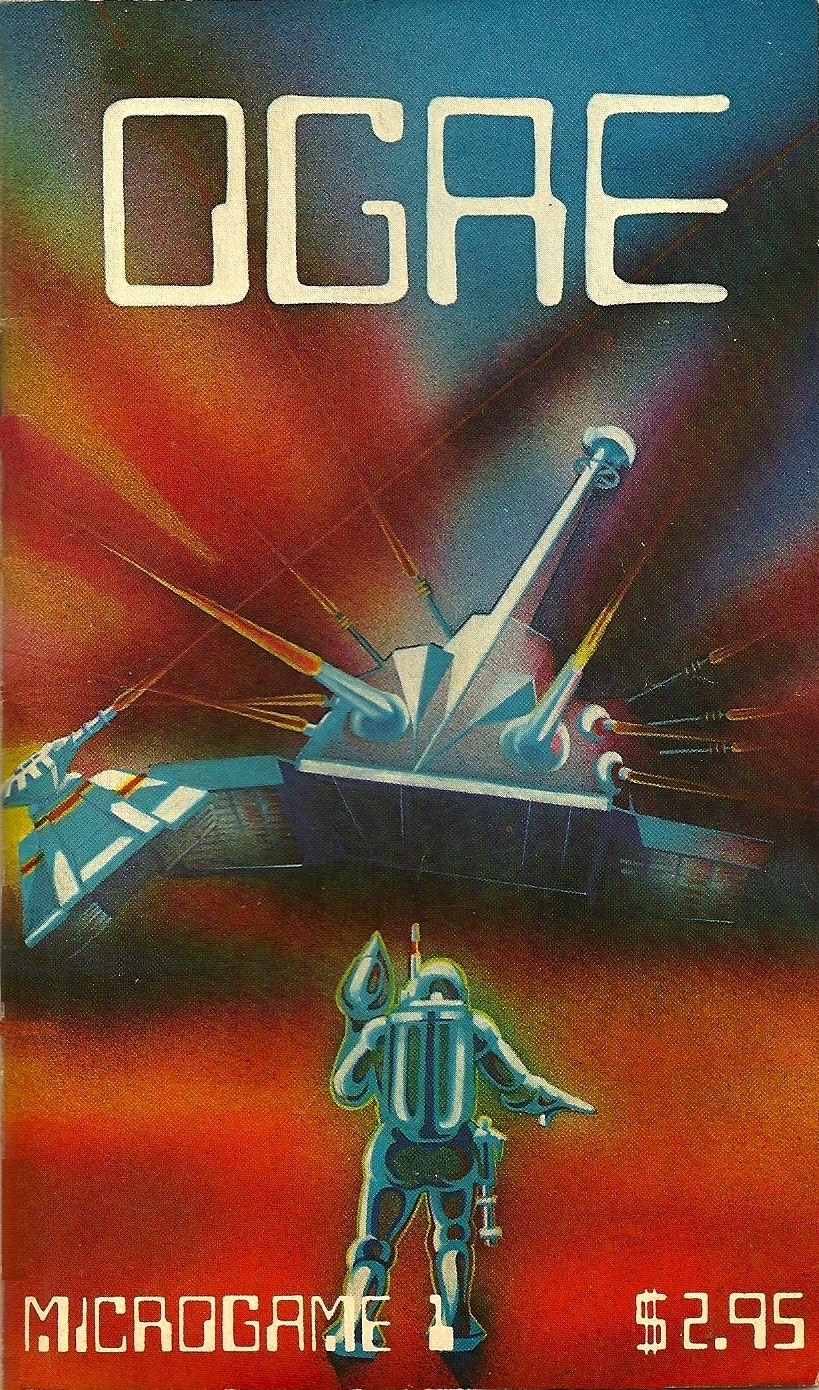
Microgame #1: Ogre was one of the first games I ordered from Metagaming. It was not the last. I still remember the first trial games I played with my brother Mike; the thrill of moving my Ogre cybertank relentlessly across the heavily cratered map board. Ogre was a wonderful game — brilliantly simple in design, easy to set up, and lightning fast to play.

It became, in fact, one of the most successful science fiction board games ever published, selling hundreds of thousands of copies. It went through numerous editions, and is still in print and available today — in both a no-frills reprint of the original 1977 edition and a limited edition deluxe version with multiple giant mapboards, more than 500 oversized full-color unit counters, and 3-D models, which will run you over $150 (if you can find a copy).

Read More Read More

The Top 50 Black Gate Posts in October

The Top 50 Black Gate Posts in October

Dragon34-KenRahmanSometimes people critique Black Gate by looking over the site, noting our focus on books and magazines, and proclaiming us “books snobs.”

That’s not true at all, I argue calmly. Look — you know what the most popular article on the Black Gate website was just last month? It was Scott Taylor’s Art of the Genre post, “The Top 10 Dragon Magazine Covers of the 1970s & 80s.”

You see? We’re not merely book snobs. We’re also art snobs.

This is Scott’s second month at the top of the charts — back in September, he claimed the top spot with his article on the Top 10 TSR Cover Paintings of All Time, a nostalgic look at the finest artwork from the Golden Age of roleplaying. Scott certainly knows his stuff when it comes to fantasy art — and our readers love him for it.

The next few articles at the top of the charts don’t do much to help my thesis that we’re not book snobs, however. The #2 article for the month of October was M. Harold Page’s “Four Books on Historical European Martial Arts.” Hard to argue that you’re not just all about books, when your most popular posts are all about books.

The #3 article for the month was my look at The Fantasy Roots of Fan Fiction, an argument that the modern fan fiction phenomenon grew largely out of the tradition of the pastiche novel, and especially the long-running success of the Conan pastiche, and the success of writers like Lin Carter, who wrote pastiches for most of his career.

Read More Read More

The Top 20 Black Gate Fiction Posts in October

The Top 20 Black Gate Fiction Posts in October

The Black Fire Concerto-smallMike Allen continues to dominate the top of our charts for a second month, with the exclusive excerpt from his first novel The Black Fire Concerto. Mike’s breakout collection Unseaming was released on October 1st from Antimatter Press. Check it out here.

Surging back into second place are Janet Morris and Chris Morris, with an excerpt from their heroic fantasy novel The Sacred Band. They also claimed the #3 slot with “Seven Against Hell,” an exclusive sample from their new anthology, Poets in Hell.

Knocked out of the #2 slot was “The Find,” Part II of The Tales of Gemen by Mark Rigney, which settled at #4 this month. “The Keystone,” Part III of the series, also made the list. Check out Mark’s first novel, the popular Check-Out Time, released on October 7 from Samhain Publishing.

Rounding out the Top Five was Ryan Harvey’s sword & sorcery story “The Sorrowless Thief,” a tale of intrigue and dinosaur beasts, part of his popular science-fantasy set series on the continent of Ahn-Tarqa.

Also making the list were exciting stories by Joe Bonadonna, John C. Hocking, David C. Smith and Joe Bonadonna, Judith Berman, Michael Shea, C.S.E. Cooney, Aaron Bradford Starr, Jason E. Thummel, Steven H Silver, Martha Wells, Sean McLachlan, Harry Connolly, Howard Andrew Jones, and John R. Fultz.

Read More Read More

Robert Silverberg on the Tragic Death of John Brunner

Robert Silverberg on the Tragic Death of John Brunner

The Great Steamboat Race John Brunner-smallSix months ago, I wrote about an unusual find I made online: The Great Steamboat Race, an enormous and ambitious historical novel written by none other than John Brunner. Brunner, of course, was a highly regarded SF and fantasy writer, beloved even today for Stand on Zanzibar, The Complete Traveller in Black, and many other novels. He died in 1995, at the World Science Fiction convention.

The Great Steamboat Race was an enigma. I’d never seen a copy before, never run across one in dozens of years of haunting bookstores. The copy I found online was very inexpensive — less than the $7.95 cover price for a brand new copy, for a book published over 30 years ago — so I bought it. I wrote it up as a Vintage Treasures curiosity, and then more or less forgot about it.

At least until this week, when I was browsing through a collection of Asimov’s SF magazines from the late 90s I recently acquired. Before I packed it away in the Cave of Wonders (i.e. the basement), I plucked one out of the box at random, and settled back in my big green chair to read it.

It was the March 1996 issue, with stories by Tony Daniel, Suzy McKee Charnas, Steven Utley, and the late John Brunner. I always take the time to read Robert Silverberg’s Reflections column, and I flipped to that first. The title was “Roger and John,” and it was a tribute to two recent deaths that had shaken the SF community: Roger Zelazny and John Brunner. Silverberg had been friends with both men for decades and said “Their deaths, for me, illustrate the difference between a tragedy and a damn shame. Let me try to explain.”

Silverberg portrays Zelazny’s death as a damn shame, saying “Roger was the happy man who led a happy life… By the time he was twenty-five he had begun what was to be a dazzling career in science fiction.” Zelazny’s career, Silverberg observes, had been filled with a series of triumphs, and his death by cancer at the age of 58 had robbed the field of future great work from a master.

Brunner, Silverberg observes, was a tragic figure. And central to the tragedy was the novel The Great Steamboat Race.

Read More Read More

The Roots of Microgaming: The Classic Games of Metagaming

The Roots of Microgaming: The Classic Games of Metagaming

Metagaming ad Analog 1978-small

I’ve been writing a lot about board gaming recently. It’s been a big part of my life ever since the late 70s, when I responded to an ad for a line of new “microgames” from a company called Metagaming.

I saw the above ad on the inside cover of Analog magazine, which I started reading with the April 1997 issue, when I was 12 years old. Responding to ads in comics and magazines was something you did in the 70s; don’t look at me like that. Honestly, it was perfectly normal. You mailed a check to some address in Texas, and four weeks later a tiny package arrived in the mail containing X-ray glasses, sea monkeys, or a Polaris Nuclear Submarine. Seriously, the US Postal Service and your mother’s checkbook were all you needed to access all the wonders of the world in the 1970s.

Well, the wonder that attracted my attention in the Fall of 1978 was an advertisement for SCIENCE FICTION GAMES from a company called Metagaming (click on the image above, from the inside cover of the October 1978 Analog, for a high-res version). I’d already taken my first steps into the hobby games market with the classic wargames of Avalon Hill, including Panzer Leader and Starship Troopers. But they were massive, requiring half an hour or more of set-up, and four to six hours to play. These mini-games looked portable and promised to be “fast-playing and inexpensive… a classic wargame that you can put in your pocket and play over lunch.”

Read More Read More