Short Fiction Beat: Story Discussions
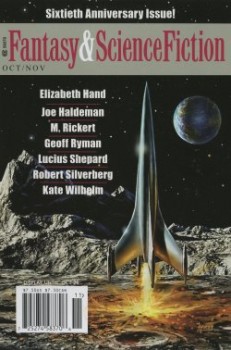
Over at Torque Control, the blog of the editorial staff of the British Science Fiction Association journal Vector, there’s a weekly short story roundtable discussion. This week’s subject is Ken McLeod’s “A Tulip for Lucretius”. As I write this, I haven’t read the whole story, but it certainly has an attention-getting opening paragraph.
There’s also a discussion about the relative utility of book reviews, inspired by a Huffington Post proclamation that, if I understand correctly, it will blog about books, but not “review” them. Given that blogging in general is conversational, highly opinionated (often without substantive argumentation, let alone sophisticated discussion), and neither edited nor fact-checked, I fail to see why this is an improvement. Though, yeah, I know you could say the same thing about some reviews.
 Fans of Tom Waits are often divided into two camps: those who favor the early boozy Kerouac, be-bop inspired crooner of life’s derelicts and losers up until he transmogrified beginning with the “Heartattack and Vine” album and “crossed over” into Kurt Weill cacaphonous orator of the absurd; fans of the later period sometimes disdain the earlier, and vice versa, despite the obvious connections. Me, I’m in the third camp as a huge admirer of both milieus. (I suppose there’s a further quarter of people who can’t stand Waits at all, but, much like the folks who still tiresomely maintain Dylan hasn’t done anything since his protest days, aren’t worth serious attention.)
 The much anticipated — and feared — “reimagining” of Patrick McGoohan’s classic cult TV series The Prisoner is scheduled for release on AMC in November. One good sign is that Ian McKellen is cast as Number Two (a role which, unlike the original series, will not revolve among multiple actors) and is (like the original) of fixed duration. James Caviezal is Number 6 and there are some interesting parallels here. Caviezal played Jesus in Mel Gibson’s (who was rumored to be a candidate for Number 6 in the various movie proposals over the year) The Passion of the Christ, controversial for its brutal, some would say sado-masochistic, portrayal of the Gospel stories. Like McGoohan, Caviezal is an observant Cathloic. Caviezal has made public stands on such issues as stem cell research and it is not inconceivable this might have affected his career in an industry that for the most part tilts left; McGoohan reportedly turned down the role of James Bond for moral reasons and insisted in his contract that he would not kiss women on-screen, particularly ironic given that The Prisoner was embraced by the sexual liberation advocates of the Sixties counter-culture for the program’s non-conformist ethos.
 Intriguing premise — and something quite different from his previous work, which is always good to see in a favorite novelist — where two presumably East European cities somehow physically co-exist, with the inhabitants following strict protocols to avoid one another whenever their separate realities intersect. Grossman would be happy that it has compelling plotting; however, as a “police procedural,” Miéville doesn’t quite play fair. Part of the game in these kind of things is to at least give the reader a chance of figuring out the mystery of “whodunnit,” which I doubt anyone would be able to, although I’m guessing this isn’t Miéville’s concern here. I think he’s aiming at something more metaphorical along the lines of the existential spaces we all tread among the various realms of social interaction. Nonetheless, the unfolding of the mystery struck me as a little forced. Potentially, this could be the start of a series.
 I tend to go through my “to be read pile” looking for themes as an approach to wend my way through and choose what I want
 to attack next. These two are about the realities of war and the casualties of those who manage to survive. The first, Denis Johnson’s Tree of Smoke is a novel about the Vietnam war fiasco; the other is non-fiction, The Forever War
 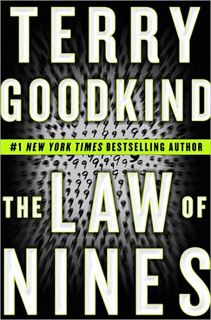 Regarding two earlier posts:
 So, here’s the bad news/goods news. First the bad news. A little while ago,