Browsed by
Author: Matthew David Surridge

Into the Weird: Weird Times 1 — Architecture and Housing

Into the Weird: Weird Times 1 — Architecture and Housing

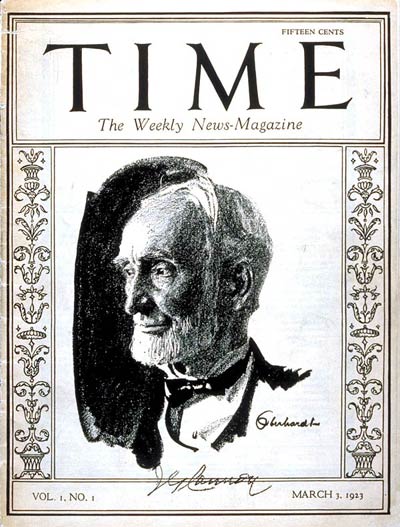
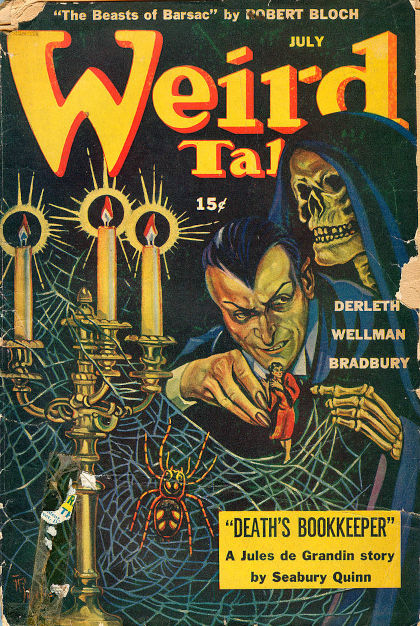
The first issue of Weird Tales went on sale in late February of 1923. It was cover-dated March, but that was a sell-by date. The issue would have arrived in stores on or about February 18, roughly a week before the first issue of Time magazine. In writing about early Weird Tales, I found it useful to think about that kind of context, and to look into that moment in history.

Partly that was because some aspect of a story would occasionally become clear once I understood specific terms or references or background. Mostly, though, I found an immersion in the time helped themes become clearer and habits of thought more obvious. In the hope that exercise might be useful for anyone else reading early Weird Tales or other fiction of the 1920s, I’ll be putting up a series of posts looking at different aspects of the era, reflecting on things I’ve learned or think I’ve learned. I hope these posts will also be useful as references I can link to in my reviews, rather than having to take the time to explain some 1920s-specific detail in a story.

…

Read More Read More

Into the Weird: Weird Tales, March 1923 (Volume 1, Number 1) Part 1

Into the Weird: Weird Tales, March 1923 (Volume 1, Number 1) Part 1

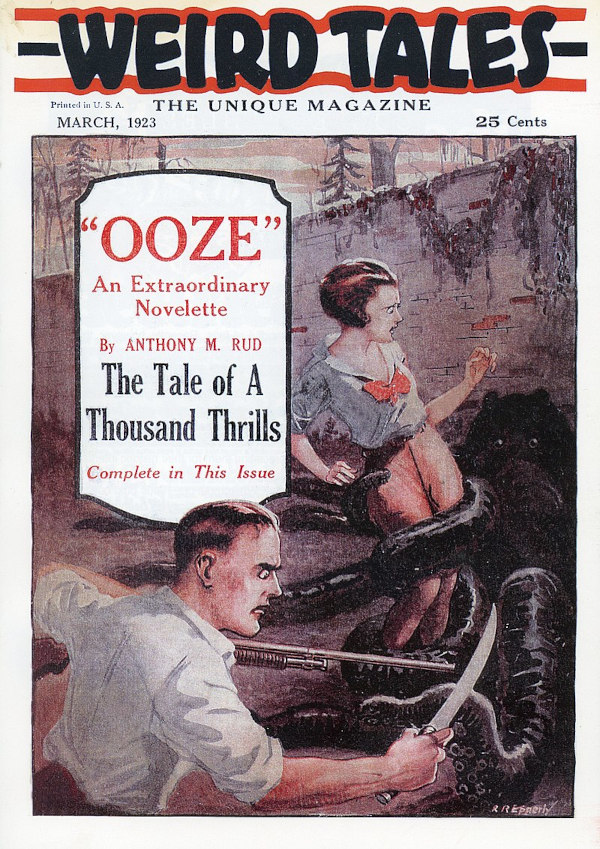
Weird Tales March 1923. Cover by R. R. Epperly

The first issue of Weird Tales landed on newsstands in late February of 1923. 192 pages long, it measured about 6 inches by 9, a standard size for a pulp fiction magazine. There were two different versions of the cover, perhaps due to a printing error; the illustration’s the same, a man with knife and gun fighting a shadowy tentacled monster which has grabbed a nearby young lady, but the colouring’s different. Either way, the cover advertised “‘OOZE’ / An Extraordinary / Novelette / by Anthony M. Rud / The Tale of A / Thousand Thrills.” Perhaps most intriguing, though, was the subhead below the logo: “The Unique Magazine.”

Thanks to modern technology it’s possible for anyone with an internet connection to flip through issue 1 of Weird Tales, if in a virtual format. In a later post I’ll write about the fiction the issue holds, but today I want to consider the magazine as an object (to the extent that’s possible working from a PDF). What do we see as we page through it? What signs of its times stand out? And what can be deduced about the editorial team’s vision?

…

Read More Read More

Into the Weird: An Introduction

Into the Weird: An Introduction


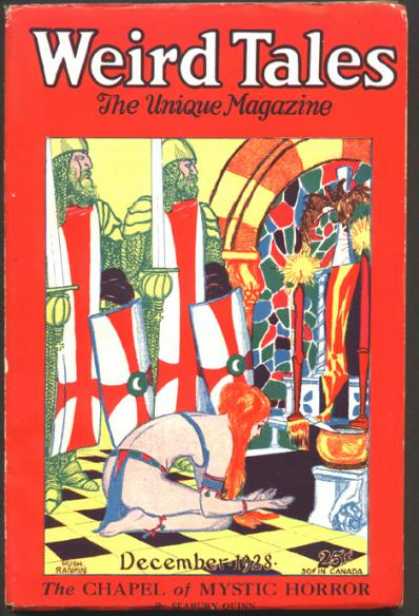
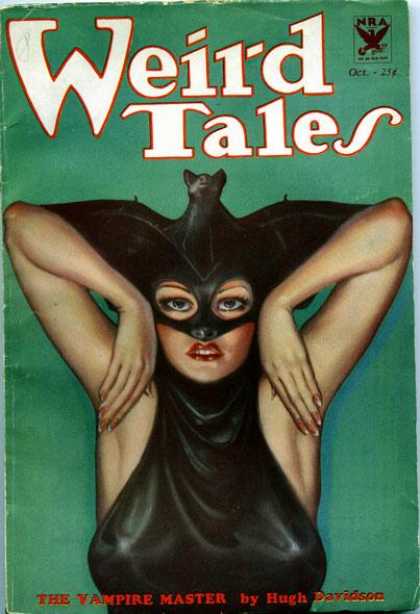
Weird Tales
, December 1928, October 1933, and July 1944. Cover
art by Hugh Rankin, Margaret Brundage, and A. R. Tilburne

A bit more than 103 years ago, the first issue of Weird Tales reached newsstands across North America. The magazine would be published consistently for over three decades, with the title revived sporadically ever since. The original Weird Tales would become a significant influence on the development of the fantasy and horror genres, and would lend its name to a subgenre of fantasy and a certain tone in fiction: the weird tale.

That entire first run of Weird Tales, ‘the unique magazine,’ is available at the Internet Archive. I thought it’d be an interesting project to look at it issue by issue, reading the magazine as it was published and discussing each issue as a whole. It was the venue for much of the fiction of H.P. Lovecraft and Clark Ashton Smith and Robert E. Howard, as well as a home for work by Robert Bloch, C.L. Moore, and Ray Bradbury, among many others. I wondered what it would be like to read those stories in the context of the other tales in the magazine by lesser-known writers; and to consider each issue as a package, a collection, with its cover and editorials and letters. And its ads; to look at the magazine holistically is to consider the many irruptions of its era into the experience of the fiction.

…

Read More Read More

Fantasia 2021, Part LXXII: Final Thoughts

Fantasia 2021, Part LXXII: Final Thoughts

I saw more movies at Fantasia 2021 than at any previous iteration of the festival. By my count, I watched 96 short films from 25 countries and 69 features from 19 countries, with a total of 32 different countries represented in my viewing this year. The quality was there, too. I don’t have any metric to track these things, but it felt like both the number of exceptional films and the overall quality of the movies in 2021 was higher than in the past.

Before going on with a look back at this year’s Fantasia experience, I want to thank, as every year, Fantasia’s organisers and programmers and volunteers, and generally everyone involved with the festival. It is always in many ways the highlight of my year. I also want to thank John O’Neill for hosting these reviews here, and for keeping Black Gate up and running. And I want to thank everyone who takes the time to read and comment. Fatigue issues have tended to keep me from replying here as much as I’d like, but every comment is noted and valued.

The Fantasia experience this year was similar to last year’s; there was just more of it. There was a notable improvement in the way scheduled movies played — last year you had to start watching within five or ten minutes of the scheduled start time, while this year the films were available for a three-hour window beginning at a given time. That made things a lot easier, and the fact that almost all of them were also available for 24 hours two days after their first showing helped a lot as well.

…

Read More Read More

Fantasia 2021, Part LXXI: Woodlands Dark And Days Bewitched: A History Of Folk Horror

Fantasia 2021, Part LXXI: Woodlands Dark And Days Bewitched: A History Of Folk Horror

When I first saw the schedule for Fantasia 2021, none of the films playing the final night of the festival struck me as something I wanted to review here. I therefore decided I’d pick one of the movies available on-demand throughout Fantasia as my personal closing film. Which then raised the question of which of those movies felt like enough of an event to mark the end of a three-week revel in the weirdness of genre cinema. And the answer to this question was clear at once. My big finish for Fantasia 2021 would be the three-hour-plus documentary Woodlands Dark and Days Bewitched: A History of Folk Horror.

Right beforehand I watched the short bundled with it. “Saudade” is a 20-minute film from Singapore written and directed by Russell Morton, presenting stories and rituals of the Kristang people, a community of mixed Eurasian ancestry that arose in the area of Malacca four or five hundred years ago. The film, in the Kristang language, is structured around three sequences. The first is a folk dance, the second’s a conversation between a fisherman and his wife about stories and the shrimp that have vanished from the seas, and the third is a meeting with a mythic entity called the Oily Man — a human who sold his soul to the Devil. The film’s very concerned with ghosts and the survival of stories; the title’s a Portuguese word that refers to a kind of melancholic nostalgia for a desired thing that will not come again, and there seems a connection there with the film’s interest in history and culture. The movie’s photographed well, with a colourful shot at the end reminiscent of a dance of death, and it’s evocative, though the connections are elliptical to me. That may be deliberate, as I’m not sure whether the movie’s meant to present the Kristang culture to others, to speak to the Kristang people, or to record some pieces of Kristang culture. Or all of the foregoing. Either way, there’s a tone of longing and distance here that, so far as I can tell, bears out the promise of the title.

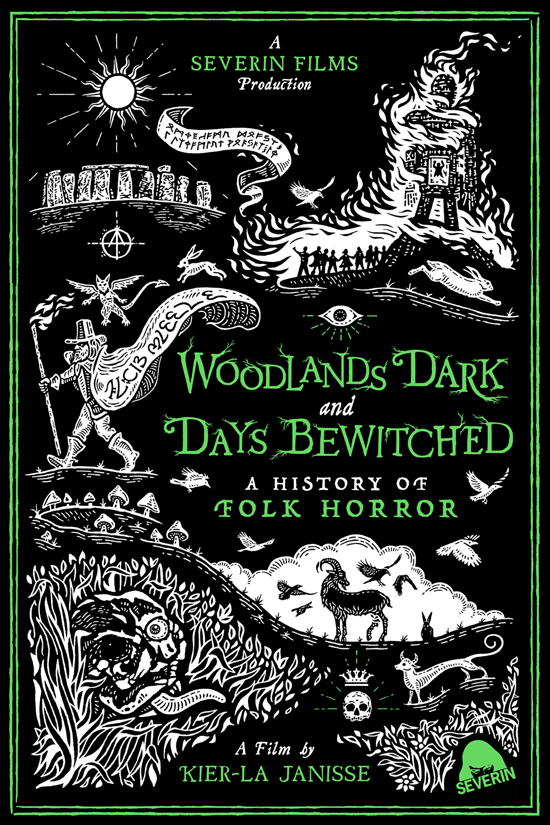
Woodlands Dark and Days Bewitched: A History of Folk Horror is directed by Kier-la Janisse, the founder of The Miskatonic Institute of Horror Studies. Janisse has written several books on horror, and her micropress Spectacular Optical has published several more (including Lost Girls: The Phantasmagorical Cinema of Jean Rollin). Woodlands Dark is her first feature, and it has more than 50 interviewees discussing folk horror films from around the world. It’s coming on blu-ray from Severin Films on December 7, available on its own or as part of a 15-disc collection called ‘All the Haunts Be Ours’ which includes 20 of the movies mentioned in the documentary.

…

Read More Read More

Fantasia 2021, Part LXX: The Unknown Man of Shandigor

Fantasia 2021, Part LXX: The Unknown Man of Shandigor

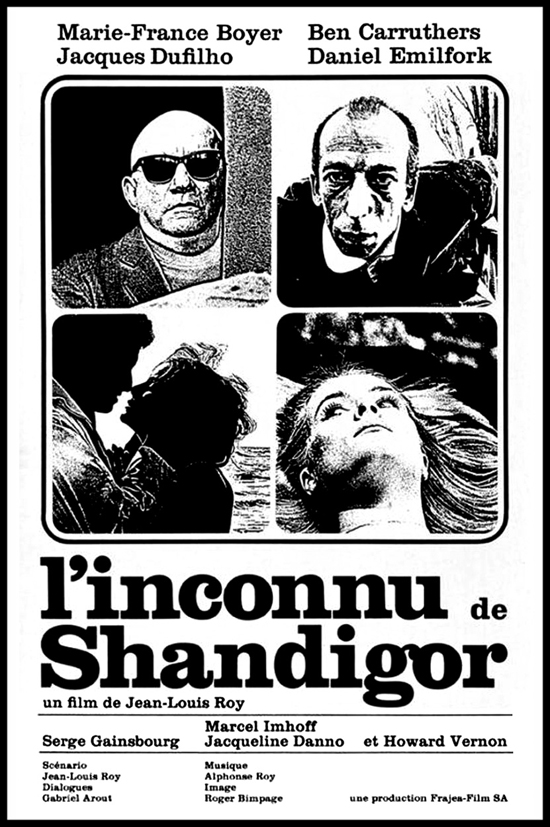
In the waning hours of the 2021 Fantasia Film Festival I sat down to watch The Unknown Man of Shandigor (L’inconnu de Shandigor), a 1967 Swiss spy film directed by Jean-Louis Roy, who collaborated on the script with Gabriel Arout and Pierre Koralnik. The film’s got a new 4K restoration by the Cinematheque Suisse; I’d never heard of the movie, but the description was intriguing, a black-and-white mod odyssey through the weirdness of the 1960s, with nods to Dr. Strangelove and Alphaville, and including Serge Gainsbourg as the leader of a group of bald turtleneck-clad assassins. Was this a lost classic, or an eccentric curiosity? Or both?

The plot of the film concerns one Doctor Von Krantz (Daniel Emilfork, who would go on to feature in The City of Lost Children), an admirer of Dracula prone to observations such as: “I don’t like humanity. Or, I do, but in a jar of arsenic.” The good doctor has invented the Canceler (or Annulator), which can nullify a nuclear explosion. As this is the height of the Cold War, his fortified home has now become the target for spies from multiple different nations. American agent Bobby Gun (Howard Vernon) races with the dastardly Russian Shostakovich (Jacques Dufilho) to get their hands on the device — but the key may lie with Von Krantz’s young and idealistic daughter Sylvaine (Marie-France Boyer), who dreams of a man she once knew (Ben Carruthers), a mysterious man in the city of Shandigor.

…

Read More Read More

Fantasia 2021, Part LXIX: Dear Hacker

Fantasia 2021, Part LXIX: Dear Hacker

I wrote a little while ago about watching three documentary films bundled together at the 2021 Fantasia Film Festival, centred around the short feature You Can’t Kill Meme. There was another set of three documentaries at Fantasia this year, and as the festival drew to a close, I sat down to watch them as well. These two shorts and the short feature Dear Hacker were a bit more diverse in subject matter, but shared themes of technology and power.

First was writer-director Aleix Pitarch’s “Orders,” a disturbing animated short based on a true story. The movie re-creates a horrific phone call that was made to a fast-food restaurant by a man claiming to be a police officer, using actors and an edited transcript of the call (I am not sure where the transcript is supposed to have come from, but the events are clearly based on a deeply disturbing reality). Without going into detail, the story’s a dark working-out of something like Stanley Milgram’s experiments about authority and what ordinary people can be ordered to do. As we hear bits of the phone call, and hear things getting worse and worse, we see everyday images of the day’s work at a fast-food restaurant.

…

Read More Read More

Fantasia 2021, Part LXVIII: Midnight In A Perfect World

Fantasia 2021, Part LXVIII: Midnight In A Perfect World

“Aquatic Bird” is an 18-minute short film from Chinese writer-director Zhang Nan. It weaves together the stories of three interrelated characters — a prostitute (Bird), a man who admires her from a distance (Aqua), and one of her regular clients. The first two are brought together by the light of a green laser pointer; there is a lot of surrealism in this film. It looks very nice, and the script’s very taut — but given the weirdness of the film, I wonder if maybe a bit too taut. To the extent I was able to follow it, the structure worked and built to a solid conclusion. But there’s a lot I did not understand, notably the use of a dream scene, and a peculiar egg of surprising plot significance.

Bundled with it was Midnight In A Perfect World, from the Philippines. Directed by Dodo Dayao, who co-wrote the script with Carljoe Javier, the feature takes place in a near-future Manila where infrastructure’s been upgraded to near-utopian levels. But there are strange blackouts that hit parts of the city after midnight, and you must not be caught out in those places at those times. People disappear, leaving behind only wild rumours about what’s happened to them. Luckily there are safehouses, in which one can take shelter. But there are stories about the dangers of those safehouses, too. The movie follows a group of young friends caught in one blackout, and follow them as they take refuge in a safehouse — then find out one of the group didn’t make it inside.

The first thing to say about this movie is that it captures a striking note of cosmic terror, with a strong inflection of the New Weird (there’s an interesting interview where Dayao mentions being influenced by China Miéville). There are science fiction influences here, certainly, but not in the form of clearly-defined technologies operating in an easily knowable world. Dayao’s said that he worked out the reasons beyond all the unreal elements in the story, but chose not to include them in expository lumps at the expense of breaking up the flow of a scene. In part because of that, the film creates a world which we believe is operating according to rules, however alien, but rules which may be beyond understanding. It’s a little like Lovecraft by way of Laird Barron.

…

Read More Read More

Fantasia 2021, Part LXVII: Hand Rolled Cigarette

Fantasia 2021, Part LXVII: Hand Rolled Cigarette

Hand Rolled Cigarette (手捲煙), from Hong Kong, had its Canadian premiere at the 2021 Fantasia Film Festival. It’s the first film from director Kin Long Chan, who co-wrote the movie with Ryan Ling, and stars Ka Tung Lam (also known as Gordon Lam, a veteran actor and the screenwriter of Time, also at Fantasia 2021) as Kwan, a former member of the British armed forces in Hong Kong. After the British turn Hong Kong over to China, Kwan retires and falls in with organised crime. In 2019, he’s scheming with a turtle smuggler named Pickle (Ying-gor To) to convince his boss Tai (Ben Yuen) to take a deal for black-market turtles — and then a South Asian immigrant thief named Mani (Bipin Karma), who ripped off Tai, stumbles into Kwan’s home desperate for sanctuary. Mani pays well to get a temporary hiding place from Tai’s goons in Kwan’s home. But Tai’s after Mani’s accomplice, his cousin Kapil (Bitto Singh Hartihan), and then there are those turtles to worry about. Violence escalates throughout the movie, and it’s clear that at any moment the bloodthirsty Tai could turn on Kwan.

A story of crime and brutality, the drama and conflict of Hand Rolled Cigarette emerge not just from character but from the society the characters struggle with and against. Most obviously, Mani faces blunt hostility because of his race. The movie’s sharp enough to show some of that coming from Kwan, our protagonist and the closest thing to a sympathetic figure in the film. Kwan’s past in the military, meanwhile, comes into play in a number of ways — to start with, as an instance of a broken promise, as he and his men were not granted citizenship by the country they served.

…

Read More Read More

Fantasia 2021, Part LXVI: It’s A Summer Film!

Fantasia 2021, Part LXVI: It’s A Summer Film!

“School Radio to Major Tom” (“こちら放送室よりトム少佐へ”, “Kochira Housoushitsu yori Tom Shosa e”) is a bittersweet story that becomes a tearjerker by the end. A 10-minute short written and directed by Chisaka Takuya and set in 1989, it follows Eisuke (Tokuma Kudo), a teen who broadcasts and records his own science-fictional radio drama about a certain Major Tom every morning at his school; one day he comes in to find a girl (Chika Arakawa) who attends night classes has added a part of her own to his story. He responds, incorporating what she’s done, and then she responds to that, and the story takes flight without them ever meeting except by voice. Graduation looms, when Eisuke assumes they’ll finally see one another, but viewers who remember the song that gives the film its title may well expect things to go differently. The movie captures the atmosphere and technology of its era very well (shot on actual analog 16mm film), but more importantly it captures character. And it finds effective parallels between the story the two characters tell and their own lives. It’s a tremendously effective piece of work.

With it was bundled It’s A Summer Film! (サマーフィルムにのって), the debut directorial effort from Sôshi Masumoto, who also wrote the script with Naoyuki Miura. It’s a movie about a film club at a Japanese high school, which is divided in two. Which is to say, club president Karin (Coda Mahiru) is revered by almost all the club as a genius auteur, who loves the romance genre — but the outsider named Barefoot (Marika Itô, who had a supporting role as a punky outsider in the first Kakegurui movie) loves her samurai cinema, and has a script ready to go to make her own samurai film even though the rest of the club’s ready to pitch in to make Karin’s newest crowd-pleasing epic. This is the story of Barefoot’s journey to realising her dream, along with her friends and fellow outsiders, science-fiction fan Kickboard (Yumi Kawai) and aspiring swordswoman Blue Hawaii (Kirara Inori).

Before Barefoot can make her film, she needs a star, somebody just right for the role. She’s mentally rejected everyone she knows — but then a new boy named Rintaro (Daichi Kaneko) turns up, and it clicks for her. She pursues him for the role (literally, in an engaging chase scene), and then gathers a supporting cast and crew to help her make the film she dreams of. There are complications: Rintaro has a secret. And there’s the one-sided rivalry between Barefoot and Karin — Barefoot’s aggrieved by Karin’s success, while Karin hardly notices the existence of Barefoot. Will Barefoot’s movie come together in the end?

…

Read More Read More