Browsed by
Category: Series Fantasy

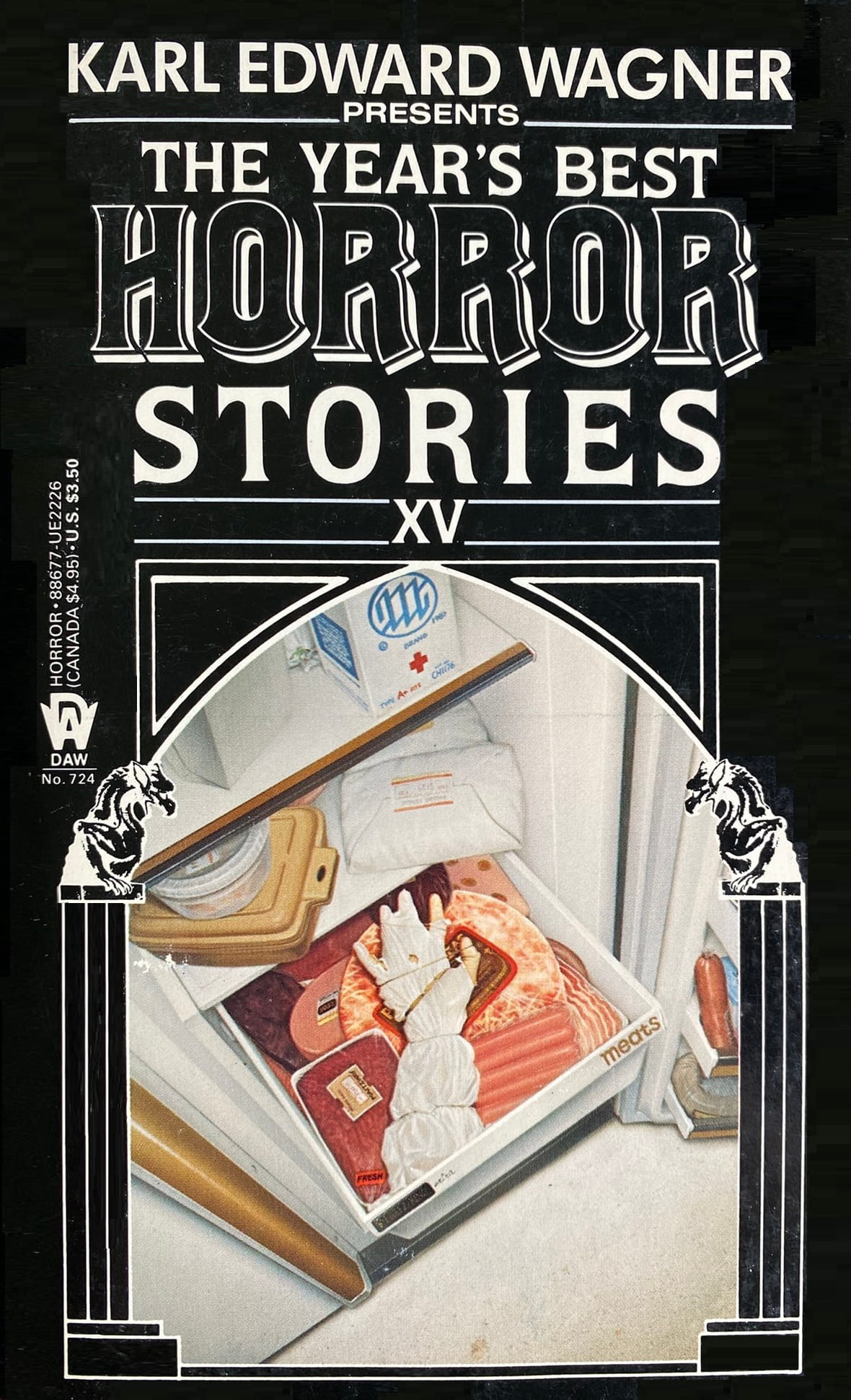
Lin Carter’s Year’s Best Fantasy Stories

Lin Carter’s Year’s Best Fantasy Stories

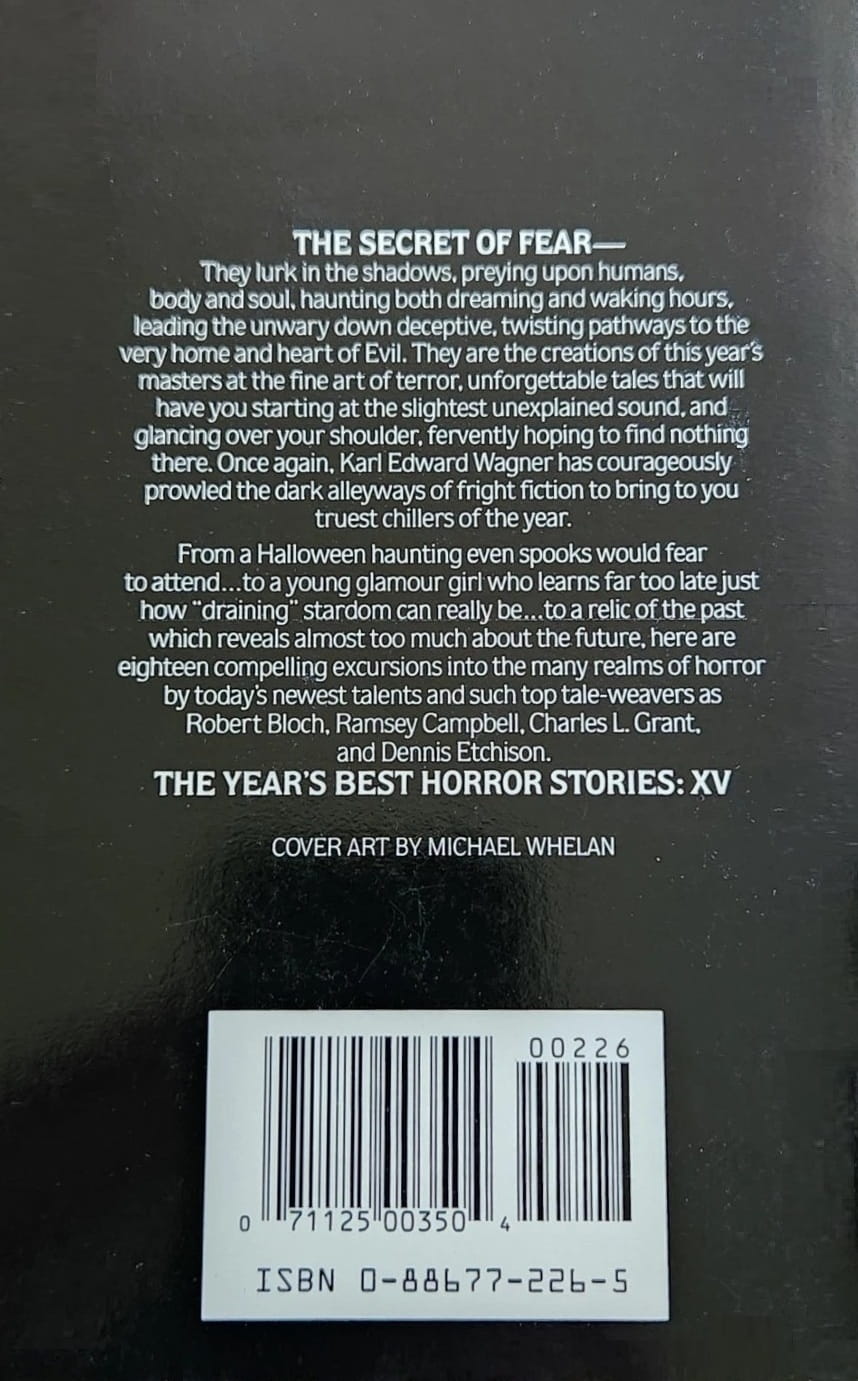
The Year’s Best Fantasy Stories, volumes 1-9, edited by Lin Carter and Arthur Saha (DAW Books, 1975-1983)

While people disagree on the quality of Lin Carter’s writing, most people agree he was a fine editor and tireless supporter of the fantasy field. Volumes edited by Carter brought quite a few new authors to my attention, as well as feeding me a steady diet of works by writers I already loved.

From 1975 to 1988, DAW books presented a yearly anthology called The Year’s Best Fantasy Stories. Lin Carter edited the first six and I own and have read all but #3, which I ordered recently but was sent the wrong book.

Arthur W. Saha took over as editor after that. I only have one of his volumes. I don’t know why the editorial switch, but Carter may have been suffering from ill health around that time. He died in 1988. I first read the three with Robert E. Howard content, but later read a couple of others. Here are my thoughts.

Read More Read More

High Fantasy in the Tolkien tradition: The Iron Tower Trilogy by Dennis L. McKiernan

High Fantasy in the Tolkien tradition: The Iron Tower Trilogy by Dennis L. McKiernan


The Iron Tower Trilogy: The Dark Tide, Shadows of Doom, and The Darkest Day
(Signet, August 1985, September 1985, and October 1985). Covers by Alan Lee

I recently posted some of my thoughts about High Fantasy. I haven’t read a large amount from that field but I did read Dennis L. McKiernan’s first trilogy of books, the Iron Tower trilogy, which is definitely High Fantasy written very strongly in the Tolkien tradition.

Here’s my review of those three books, which I read in an omnibus edition.

Read More Read More

An Obscure 70s Fantasy: The Vanishing Tower, by Michael Moorcock

An Obscure 70s Fantasy: The Vanishing Tower, by Michael Moorcock


The Vanishing Tower (DAW Books, June 1977). Cover by Michael Whelan

Here’s another in my series of reviews of “mostly obscure” 1970s/1980s books — the last one was of Evangeline Walton’s The Children of Llyr. That book was published in 1971, and so was the original edition of The Vanishing Tower (first titled The Sleeping Sorceress.)

And already I can hear people asking “Obscure? Obscure?! Evangeline Walton’s Mabinogion retellings were not really obscure, and Michael Moorcock’s Elric novels are not remotely obscure!”

And I apologize — because you’re right. This novel in particular is part of one of the major sword and sorcery series of all time. Yet — as with the The Children of Llyr — it’s a book I myself didn’t read until just now, over 50 years after it first appeared.

Read More Read More

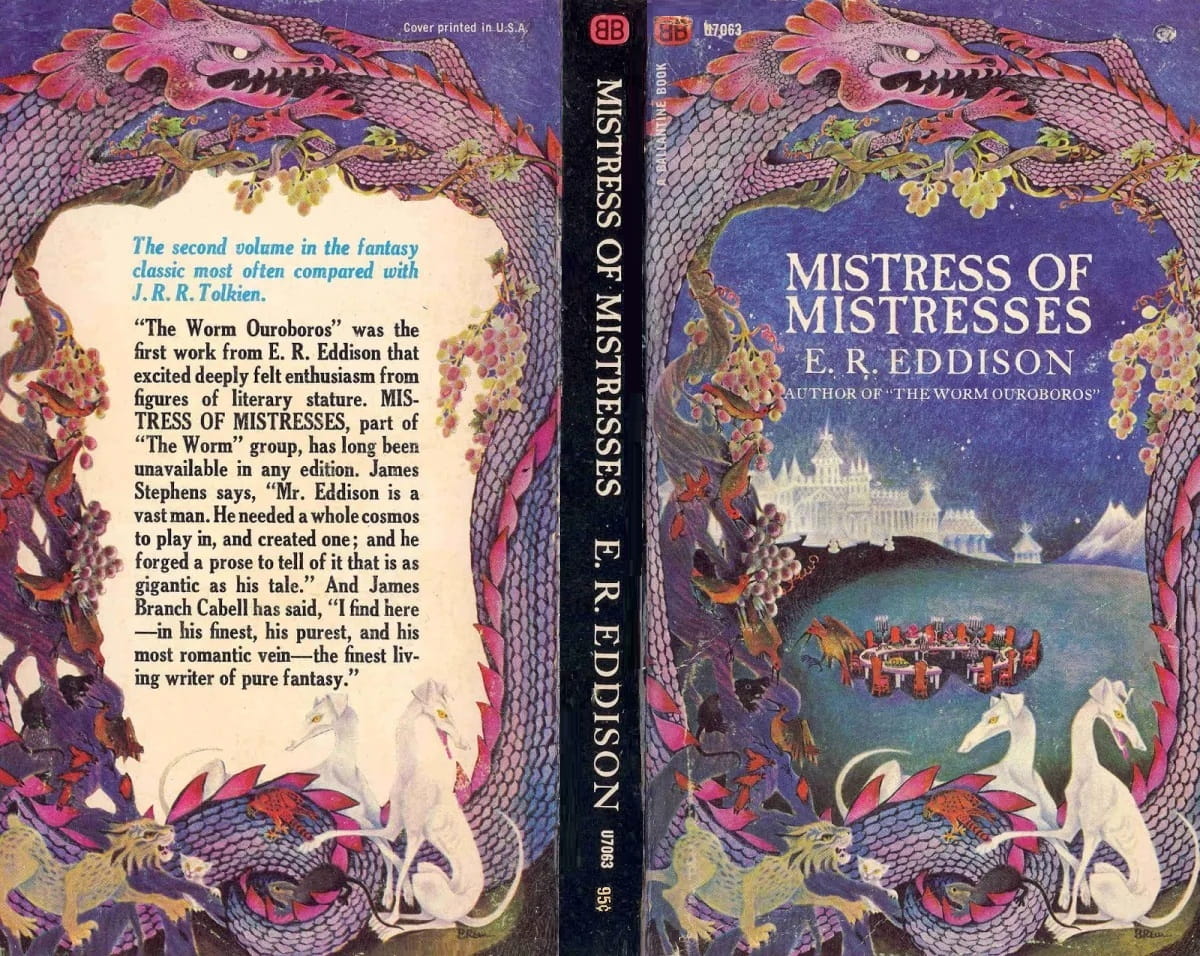
The Cornerstones of High Fantasy: E. R. Eddison, J.R.R. Tolkien, Stephen R. Donaldson, J. K. Rowling, and George R. R. Martin

The Cornerstones of High Fantasy: E. R. Eddison, J.R.R. Tolkien, Stephen R. Donaldson, J. K. Rowling, and George R. R. Martin

The Lord of the Rings trilogy by J.R.R. Tolkien: The Fellowship of the Ring, The Two Towers, and The Return of the King (Ballantine paperback editions, October & November 1965). Covers by Barbara Remington

I’ve defined Heroic Fantasy (HF) as a type of fiction in which a heroic (bigger than life) figures use a combination of physical strength and edged weapons (Swords, Axes, Spears) to face bigger than life foes. The hero may be either male or female, but the focus is primarily on personal conflict between the hero and various villains.

I divide Heroic Fantasy into four categories: Sword and Sorcery, Sword and Planet, High Fantasy, and Heroic Historical. I’ve previously discussed S&S, S&P, and Heroic Historical (HH). Today let’s check out High Fantasy.

Read More Read More

S. E. Lindberg is One of the most unique voices in Modern Sword & Sorcery

S. E. Lindberg is One of the most unique voices in Modern Sword & Sorcery


Lords of Dyscrasia by S. E. Lindberg (IGNIS Publishing, July 7, 2011). Cover by S. E. Lindberg

One of the most unique voices working in Sword & Sorcery today is S. E. Lindberg. I met Seth a few years back and we’ve corresponded frequently as well as running into each other here at Black Gate, where he is the Managing Editor, and at Goodreads. Lindberg has put together a unique setting for what he calls Dyscrasia Fiction.

Dyscrasia means “a bad mixture of liquids,” which is related to the Greek concept of the four “humors” of Blood, Phlegm, Black Bile, and Yellow Bile. In Dyscrasia fiction, these humors are sources of magical power and often soul and body corrupting influences.

Read More Read More

The Imaro Saga by Charles Saunders

The Imaro Saga by Charles Saunders

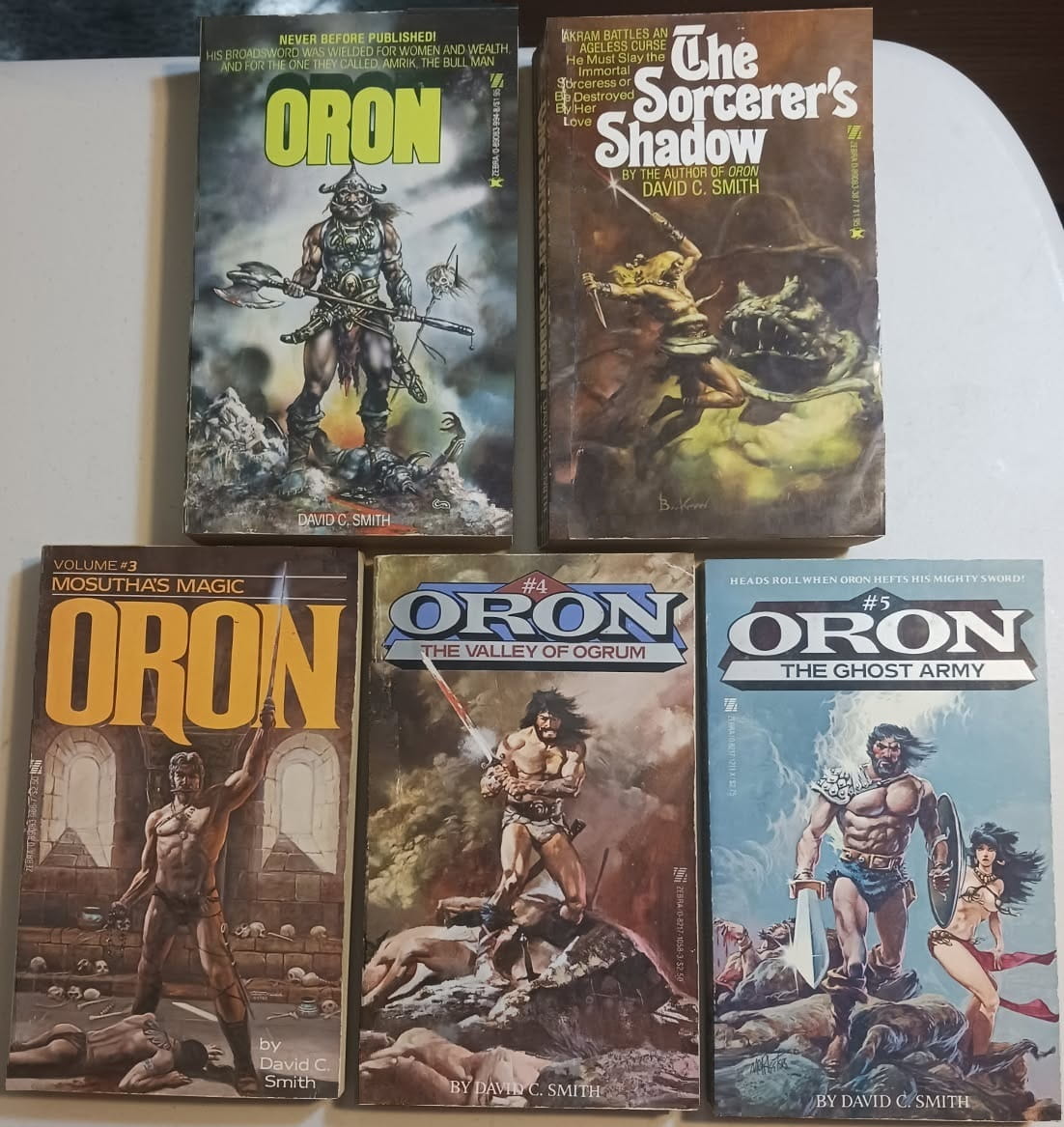
The Imaro trilogy by Charles Saunders, all from DAW Books: Imaro (November 1981), The Quest for Cush (February 1984) and The Trail of Bohu (October 1985). Covers: Ken Kelly and James Gurney

Charles Saunders (1946 – 2020) was one of two men who established a sub-genre of Sword & Sorcery that has come to be called Sword & Soul. The other was Samuel Delany (1942 – ). Saunders was born in the USA but moved to Canada as a conscientious objector after being drafted for Vietnam. He became a journalist and wrote a lot of nonfiction, much of it dealing with the lives of Blacks in Canada.

Around 1974, Saunders created a fictionalized Africa called Nyumbani and began writing S&S stories set there about a hero named Imaro. These were published in a small magazine but the first one was reprinted by Lin Carter in his 1975 edition of Year’s Best Fantasy. By 1981, some of these stories had been connected into novel form and were published as Imaro, by DAW books (Ken Kelly cover). Two more books followed, The Quest for Cush (1984) and The Trail of Bohu (1985), both with excellent and more appropriate-to-the-character covers by James Gurney.

Read More Read More

The Sword & Sorcery of John Jakes: Brak the Barbarian

The Sword & Sorcery of John Jakes: Brak the Barbarian

Brak the Barbarian paperbacks by John Jakes

When you mention John Jakes (1932 – 2023) to the average reader, they’ll probably come back with, “The Kent Family Chronicles guy?” or “the guy who wrote that North and South trilogy they made that mini-series from?”

I have some of those books but I’ve never read them. I know John Jakes, and probably most of you do, from Brak the Barbarian. There are 5 books.

Read More Read More

What I’ve Been Listening To, February 2026

What I’ve Been Listening To, February 2026

I’ve read 24 books so far this year, and 17 were audiobooks (we’ve already established I’m not going to say ‘books consumed.’ Listening and physically reading are distinctive, but they’re interchangeable here).

Of the 17 audiobooks, 15 were new. I re-read more than I read new books, but I’ve been using audiobooks to tackle things for the first time. 7 books were Clive Cusslers.

CLIVE CUSSLER

I first talked about Clive Cussler back in 2019. He would die a half-year later, at age 88. He had created an empire, with other authors carrying on his five sometimes-intertwined series’. I revisited his works last Summer. I’ve listened to 7 of his books so far this year, as I am well behind on my Cussler.

Isaac Bell is a turn-of-the 20th Century private eye for the Van Dorn Detective Agency. Justin Scott co-wrote the first 10. Jack Du Brul (who had been co-writing The Oregon Files), took over for the next 5. Though I liked it, for some reason the series hadn’t resonated with me in paperback. They were slow reads through the first 5. But Scott Brick reading them aloud worked for me, and I’ve listened to books 6 through 9: The Striker, The Bootlegger, The Assassin, and The Gangster. I like listening to Bell. So, audiobooks have me invested in a series that I wasn’t into in print. I will continue on. This series has run from 2007 through 2025.

Read More Read More

Five Things I Think I Think (February, 2026)

Five Things I Think I Think (February, 2026)

What? It’s been TWO WHOLE WEEKS since I told you what I’ve been thinking about?

Well, we certainly can’t have that now, can we? I start with a bit of snark, and finish with a mini-rant. But hey, Ohio thinks a foot+ of snow, and consistently negative wind chills, is perfectly acceptable. So, I’m doing some grumpy old man this Winter.

1 – READING IS FUNDAMENTAL

We are not nearly the reading culture we were in the past. Online has massively increased ‘watching’ bite-sized content. Which is rarely as intellectually as fulfilling as reading. Or even watching en entire movie.

And I happen to believe the messed-up state of the world is in part attributable to the decrease in intelligence (ignorance runs rampant) resulting from video being as filling as cotton candy and replacing reading (somebody scrolling tik-tok for three hours a day is not learning the way someone reading a half hour a day is).

You don’t have to read Shakespeare, or bios of physicists, or Wuthering Heights. There’s plenty of ‘more accessible’ non-fiction. And while there’s a lot of garbage fiction out there, the choices are endless.

Read More Read More