Browsed by
Category: Essays

This is Silly. Book Goals Are Not Personal

This is Silly. Book Goals Are Not Personal

A tea cup sits atop a stack of artfully placed old books.
Image by Ylanite Koppens from Pixabay

Good afterevenmorn, Readers!

How was your winter holidays? I hope you found it gentle and restful and full of the things that make you happy. I spent some time with family, which is always lovely, and more time by myself recovering (the joys of being a massive introvert). It seems that the end of the year was more fraught for others than myself, though.

I’m speaking of the BookTok community. There have been a few ruffled feathers with folks getting angry at other folks for the massive number of books they may (or may not, as one of the accusations proclaim) have read.

If that sounds silly to you, you are not alone. I’ve been watching from the sidelines giggling or rolling my eyes, depending. Let’s get into this nonsense… because sometimes watching train wrecks in slow motion is mildly amusing. And so I am here after another adventure into social media to report on what’s going on over there.
Read More Read More

The Best of Bob: 2025

The Best of Bob: 2025

Happy 2026! Let’s kick butt for another year. Or at least, limp to the finish in 52 weeks. I really enjoy ‘meeting’ with my friends – and some strangers – here at Black Gate every Monday morning. Keep checking in, and let’s keep the discourse going on things we love. Or at least that catches our eye. Black Gate really is a family. My time writing here has almost been longer than my marriage was!

I continued to evade the Firewall at Black Gate (no, I do not earn a cent a word every time I mention ‘Black Gate.’ like some kind of blogging Pulpster), so I showed up every Monday morning. I had a much harder time conning other folks into writing my column for me – they’re catching on. Drat! So, I had to do my own work this past year.

Here are what I thought were ten of my better efforts in 2025. Hopefully you saw them back when I first posted them. But if not, maybe you’ll check out a few now. Ranking them seemed a bit egotistical, so they’re in chronological order. Let’s go!

Read More Read More

Shouldn’t the Missing Be Missed?

Shouldn’t the Missing Be Missed?

I’m a big fan of mystery stories, and I’ve read a lot of the genre’s major writers, from well-mannered Brits like Doyle, Christie, and Chesterton to hard-hearted Yanks like Hammet, Chandler, and McBain. A lot of their stories begin with a disappearance (even if they end with a corpse), and though in fiction the Great Detective always solves the case, in real life many disappearances remain unsolved, which makes them the most baffling mysteries of all. That may be why people still debate the fate of Judge Crater, search remote islands for a trace of Amelia Earhart, and argue over whether the New York Giants snap the ball over the remains of Jimmy Hoffa.

I don’t spend much time worrying about those folks — what really bothers me are the people who disappear on the internet, without Hercule Poirot or Philip Marlowe ever so much as lifting a finger to find them.

Read More Read More

We Are Missing Important Science Fiction Books

We Are Missing Important Science Fiction Books


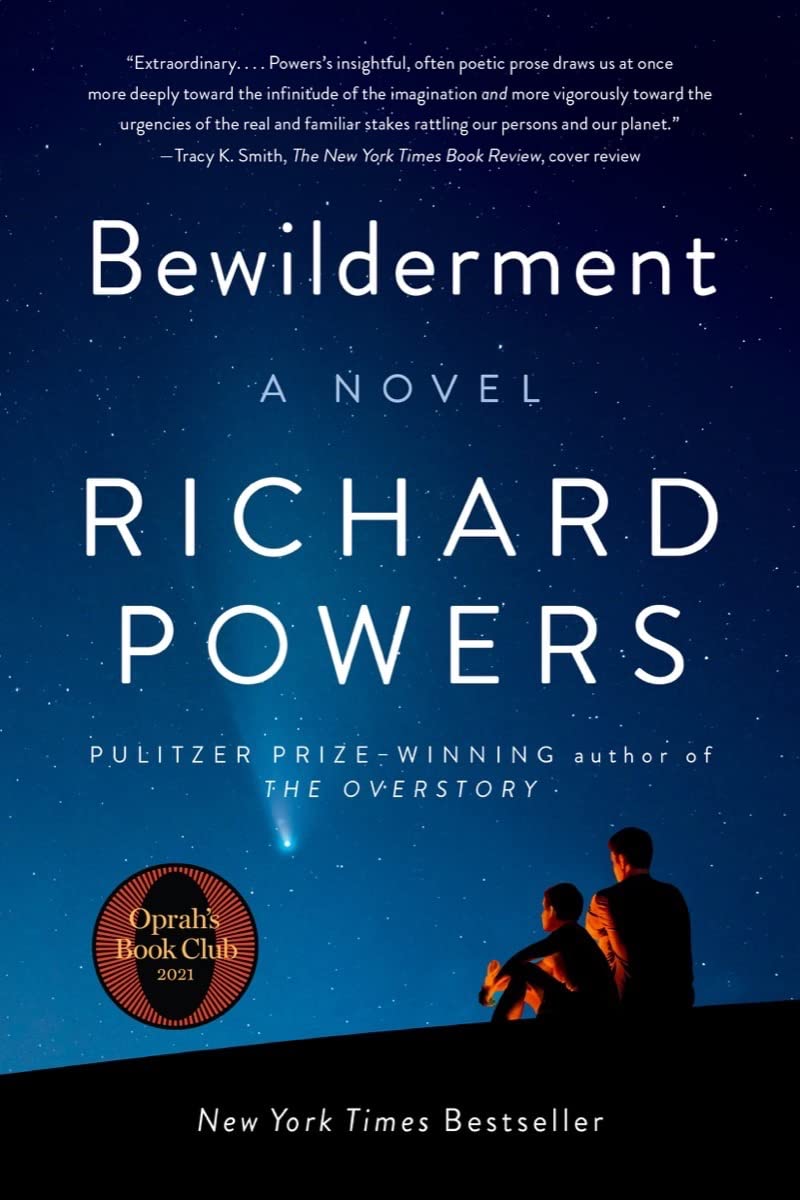
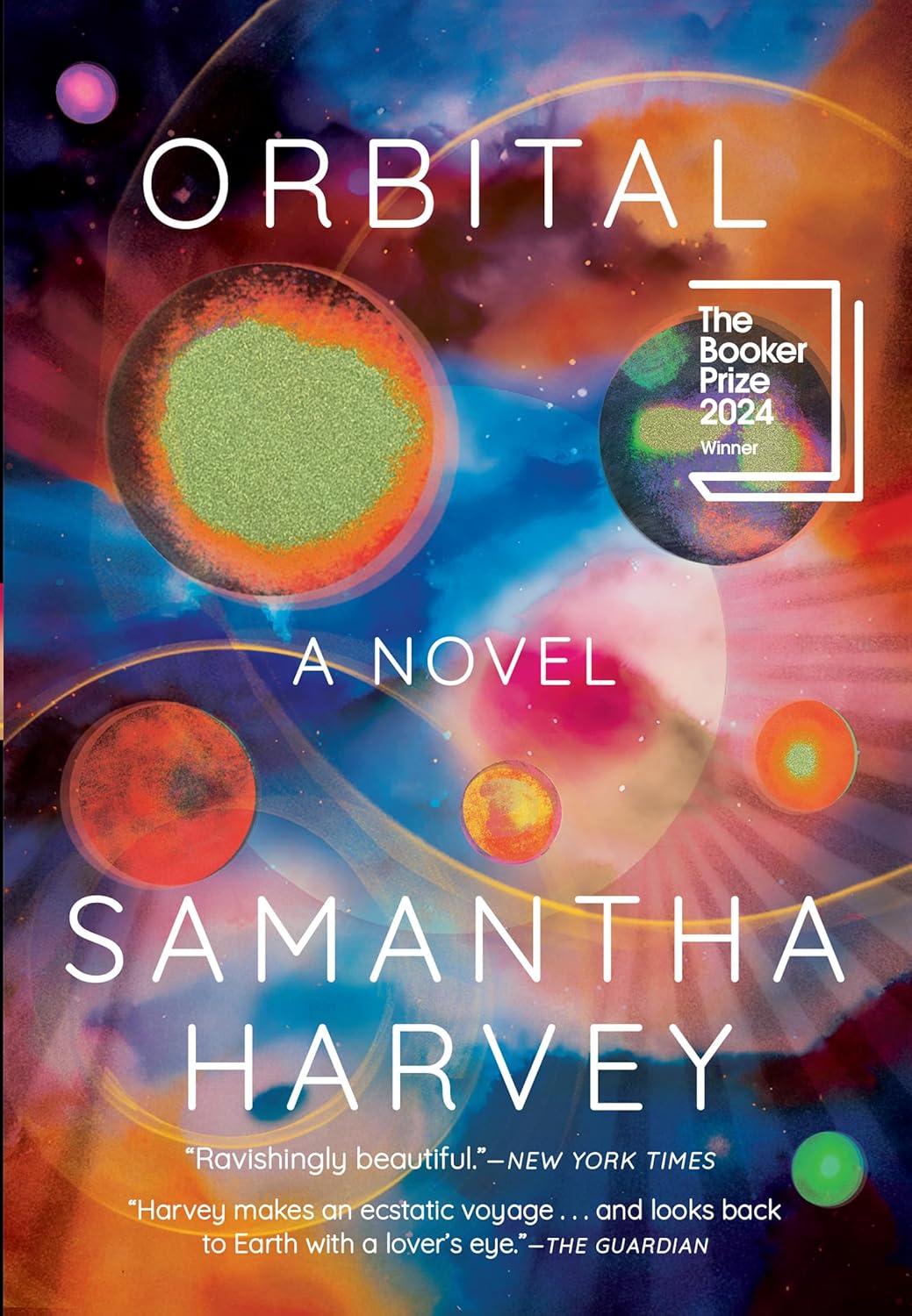
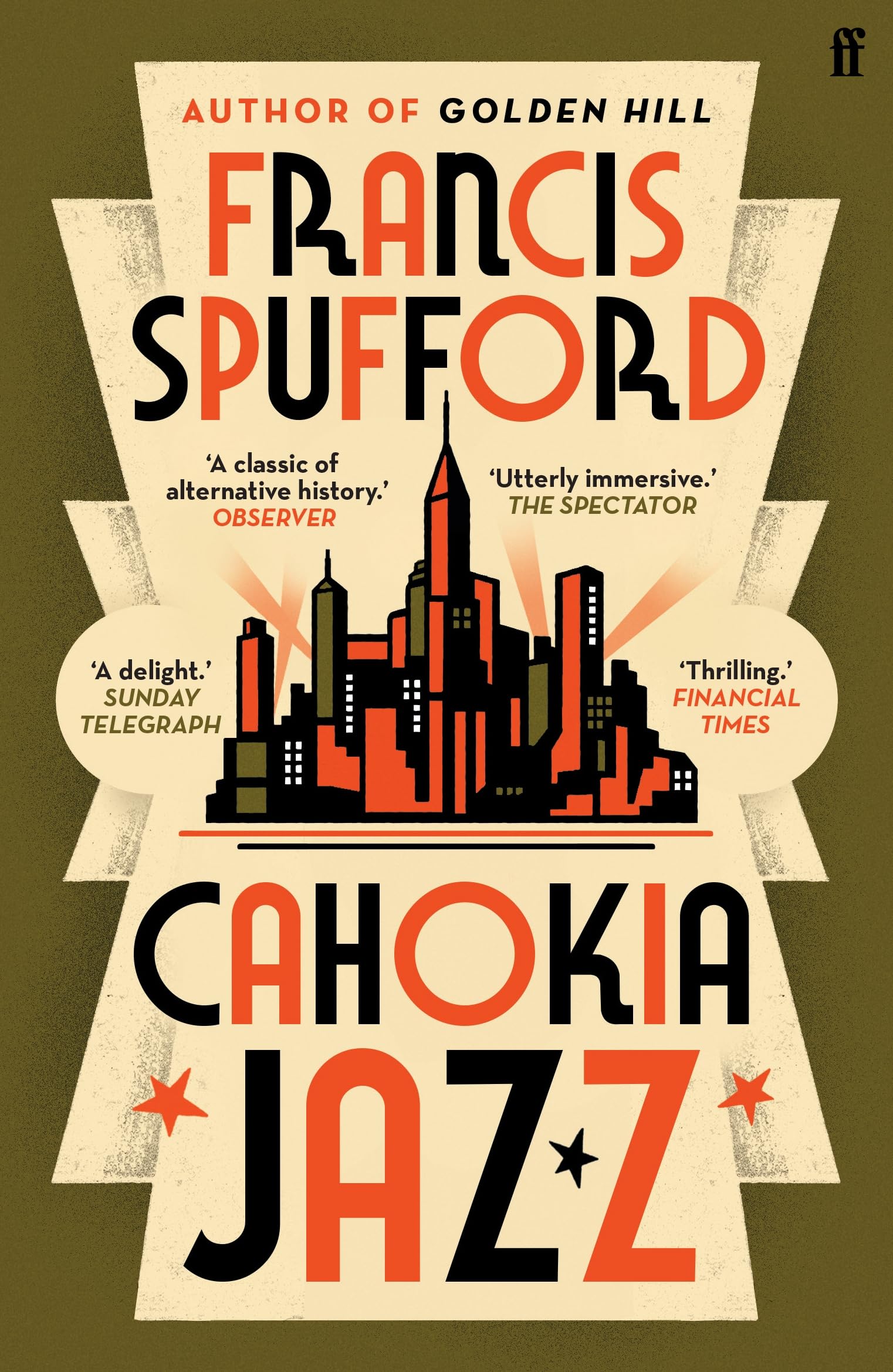
Bewilderment by Richard Powers (W. W. Norton, November 1, 2022); Orbital by Samantha Harvey
(Grove Press, October 29, 2024), and Cahokia Jazz by Francis Spufford (Faber & Faber, April 4, 2024)

I just finished Richard Powers’ Bewilderment, from 2021. It’s a really intriguing and powerful novel, that I argued with at times, but still loved. It’s got a great ending, tremendously moving.

And it is absolutely science fiction. Way more so than most SF books these days, even hard SF. But, somehow, it didn’t even get a sniff at either the Nebula or Hugo shortlist.

Mind you, I didn’t read it until now, so I’m part of the problem. And, to be fair, both Ian Mond and Paul di Filippo reviewed it for Locus, so it wasn’t ignored.

Read More Read More

Half a Century of Reading Tolkien: Part One

Half a Century of Reading Tolkien: Part One

I’ve been trying to remember when I first read The Lord of the Rings and it must’ve been when I was ten or so, meaning in 1976 or early 1977. I say this because my dad bought me The Silmarillion for Christmas and it was published in September 1977. That means I read The Hobbit when I was nine or so. Coming up on 59 next year, it means I’ve been reading Prof. Tolkien’s work for nearly fifty years.

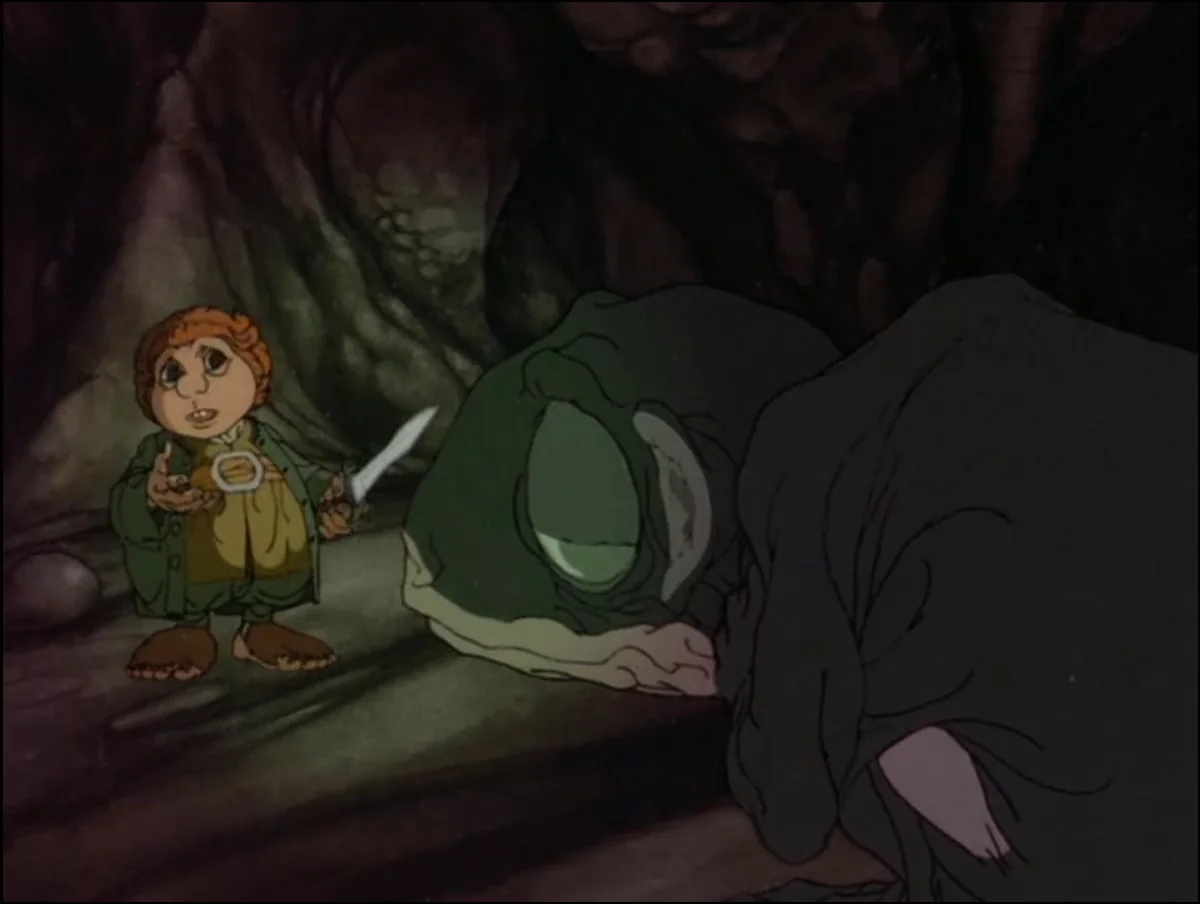
Rankin & Bass Bilbo and Gollum

I assume I came across The Hobbit on my dad’s shelf next to his living room chair. It’s where he kept the various books he was reading at any given time. His habit was to stay downstairs till midnight or one, reading and listening to WQXR, the New York Times’ old classical station. I’d definitely read it before November 1977 when the Rankin & Bass The Hobbit premiered. As a side note, my dad tried to get our first color TV before it aired, but he wasn’t able to.

I didn’t read LotR right away, but when I did, I found myself in competition with my dad to finish them. With only the single set of books in the house, we read them in tandem. I remember rushing home from church to see if I could grab The Fellowship of the Ring before my dad had finished reading The New York Times that morning. Even though some days I got the book before him, he read faster and more often and finished several days before me. Hey, I was only ten.

Read More Read More

Frankly Frankenstein

Frankly Frankenstein

My guess is that even people who’ve never read the novel or seen the Boris Karloff version likely recognize that “Frankenstein” signifies a human-made scientific creation that bites back. (Though they probably do confuse which is the creator and which is the actual monster.)

Here in the 21st century, what Mary Shelley depicted way back at the start of the 19th is embedded in our cultural collective consciousness, even for those people who don’t pay attention to the culture unless it involves Taylor Swift, because of how often it actually occurs throughout history. Take your pick of technological disasters, the latest perhaps being AI.

Of course the reason why Shelley’s Frankenstein: or, The Modern Prometheus  is a canonical work even before SF gained some legitimacy in academia is that this isn’t just a gothic horror story (though it is of course that).

Read More Read More

Interview with an AI: High Fantasy

Interview with an AI: High Fantasy

In the first of an occasional series, I interview the Bing AI about high fantasy.  The AI’s responses have not been edited.

What is high fantasy?

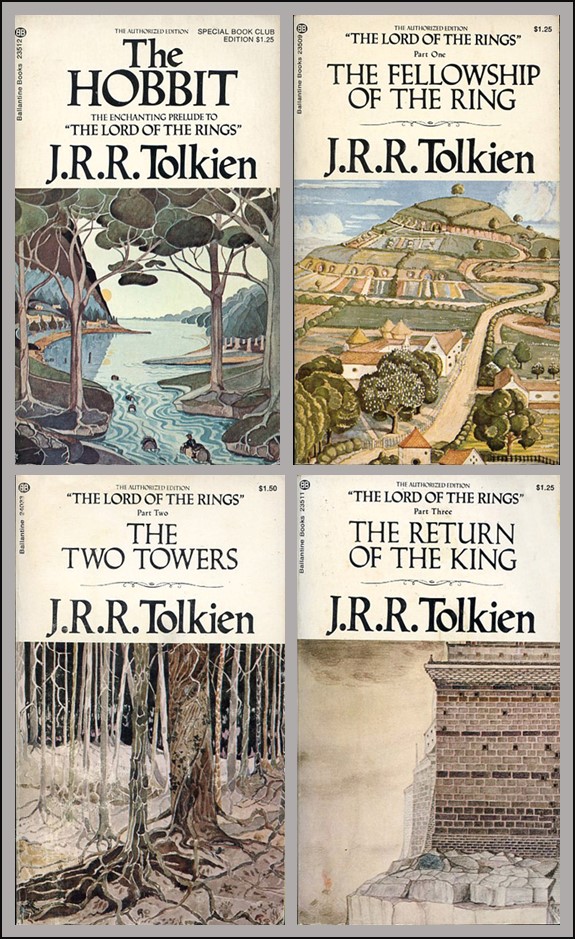
The Hobbit and
The Lord of the Rings

High fantasy, also known as epic fantasy, is a subgenre of fantasy defined by the epic nature of its setting or by the epic stature of its characters, themes, or plot. High fantasy is set in an alternative, fictional (“secondary”) world, rather than the “real” or “primary” world. This secondary world is usually internally consistent, but its rules differ from those of the primary world. By contrast, low fantasy is characterized by being set on Earth, the primary or real world, or a rational and familiar fictional world with the inclusion of magical elements.

High fantasy stories often feature world-threatening forces, fantastic creatures, historic or unusual technologies, magical elements, and other unearthly elements. The story might also include characters from royalty and be seen through the viewpoint of one hero, an underdog.

Some examples of high fantasy literature include J. R. R. Tolkien’s The Lord of the Rings, Ursula K. Le Guin’s Earthsea, and George R. R. Martin’s A Song of Ice and Fire.

How does high fantasy differ from sword and sorcery?

Read More Read More

Science Fiction History Considered As a Series of Images of Newsstand Displays

Science Fiction History Considered As a Series of Images of Newsstand Displays

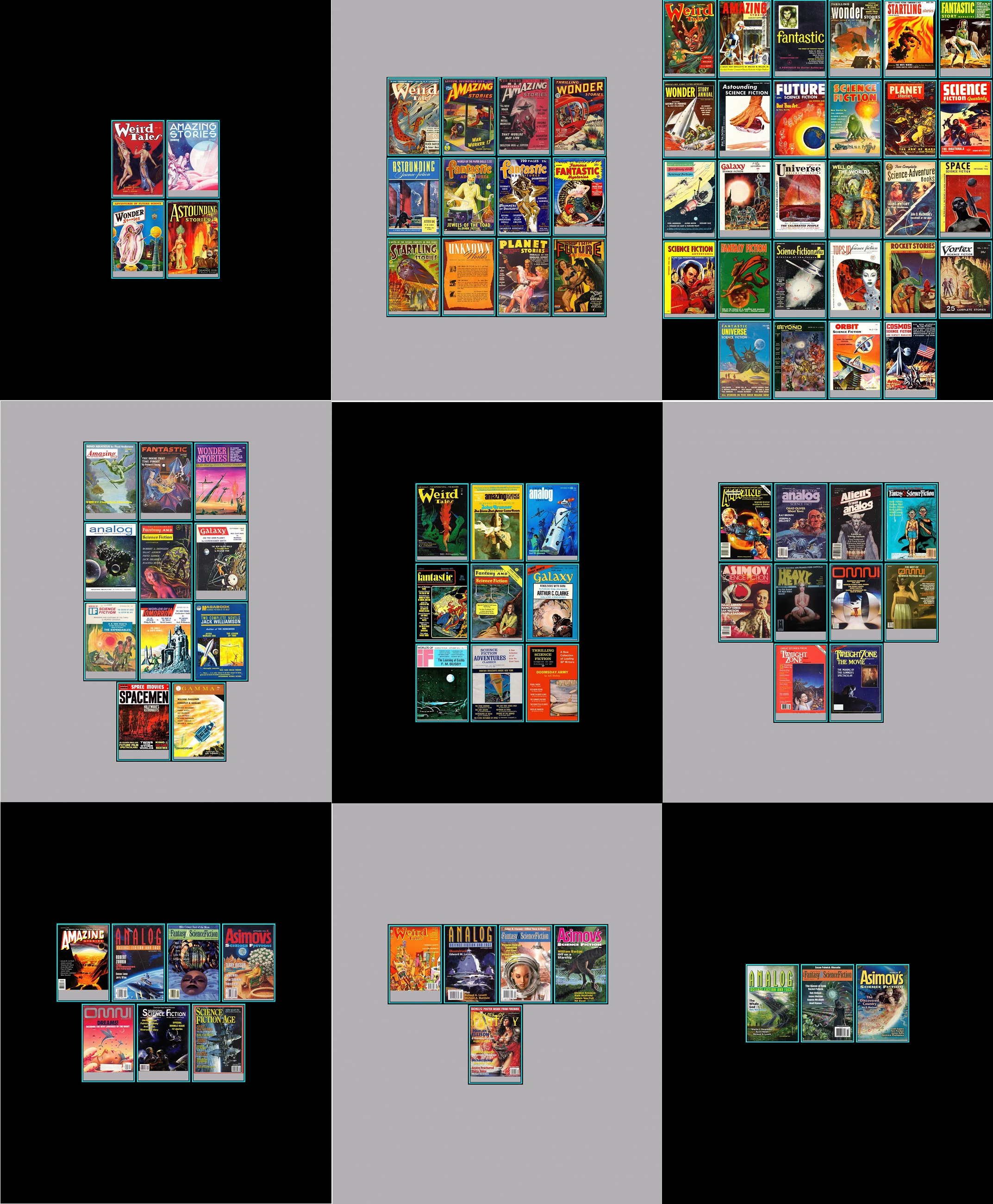
Science Fiction magazines likely displayed on the stands at ten year intervals, 1933 to 2013

Many readers here no doubt lack the experience of having personally cruised news stands, tobacco shops and underground hole-in-the-wall used book stores, through no fault of their own. Unless you can fault someone for not having been born in a particular year, which I think would be a silly thing to do.

I, on the other hand, managed to arrive on this planet at a time conducive to such things. Following a brief orientation period lasting a handful of years, during which I learned how to navigate within a 1G gravitational field and picked up a few useful tips, such as becoming proficient in one of the native languages and where food came from, not to mention the necessity of wearing clothing when out and about, I was introduced to a small, yet extremely powerful concept called “Science Fiction”.

In short order I became enraptured and the rest, as they say, is personal history.

Read More Read More

Thomas M. Disch: Love and Nonexistence

Thomas M. Disch: Love and Nonexistence


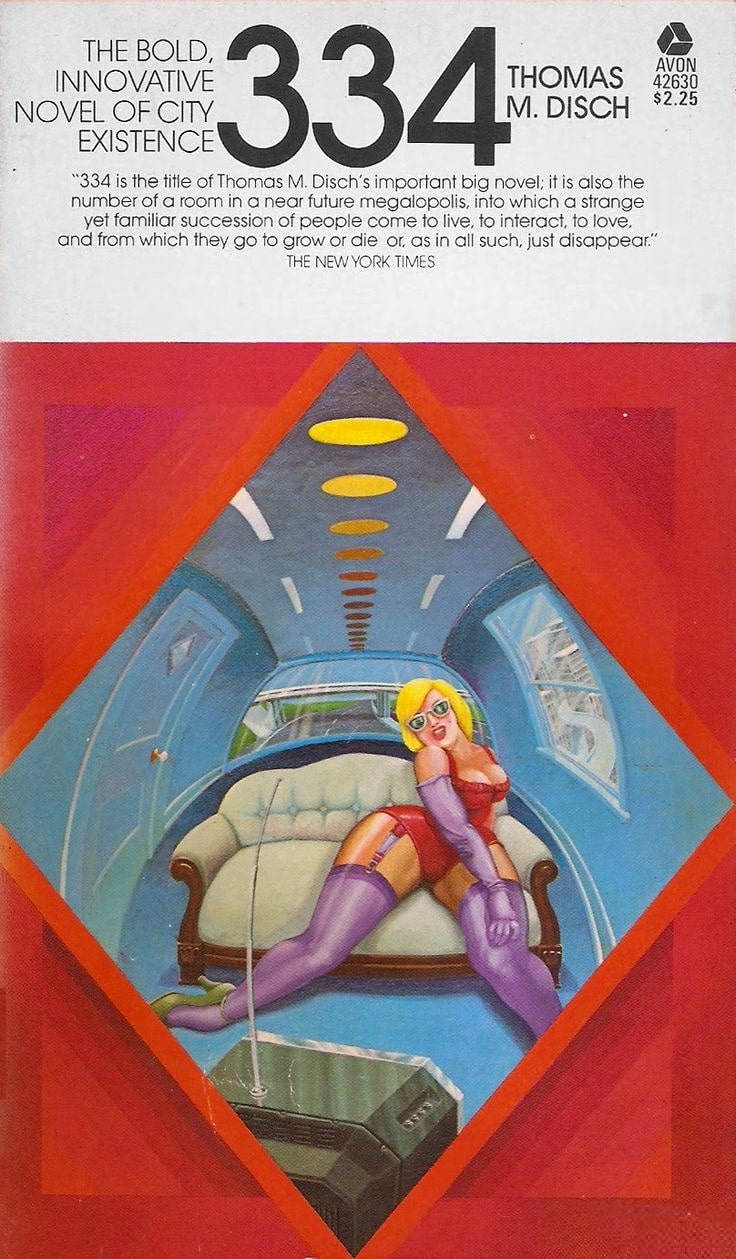
334 by Thomas M. Disch (Avon, October 1974). Cover artist unknown

In the last page of Thomas M. Disch’s novel 334, the family matriarch, Mrs. Hansen, has finished explaining why she should have the right to die. “I’ve made sense, haven’t I? I’ve been rational?” she asks her unseen auditor, a civil servant taking an application. “They’re all good reasons, every one of them. I checked them in your little book.” She has indeed given reasons why her life is no longer worth living, with disconcerting thoroughness, and makes clear that if her application is turned down, she will appeal. “I dream about it. And I think about it. And it’s what I want.”

What is remarkable about this scene is not the defense of suicide (which does not take place in the text — the book ends with Mrs. Hansen’s summation), but an articulated yearning for nonexistence. The three elements of this nexus — the voiced eloquence, the fiercely focused desire, and the prospect of nothingness — constitute three compass points of Disch’s art. There is a fourth, always present but harder to see, which we will come to in a moment. For now, let us consider these elements, vividly present throughout Disch’s fiction and widely remarked upon, but also widely misunderstood, especially in the SF genre, where he began his career and which he never fully left.

Read More Read More