Mary Poppins by PL Travers

Mary Poppins by PL Travers

Version 1.0.0

Mary Poppins gave a superior sniff.

“Don’t you know,” she said pitingly, “that everybody’s got a Fairyland of their own?”

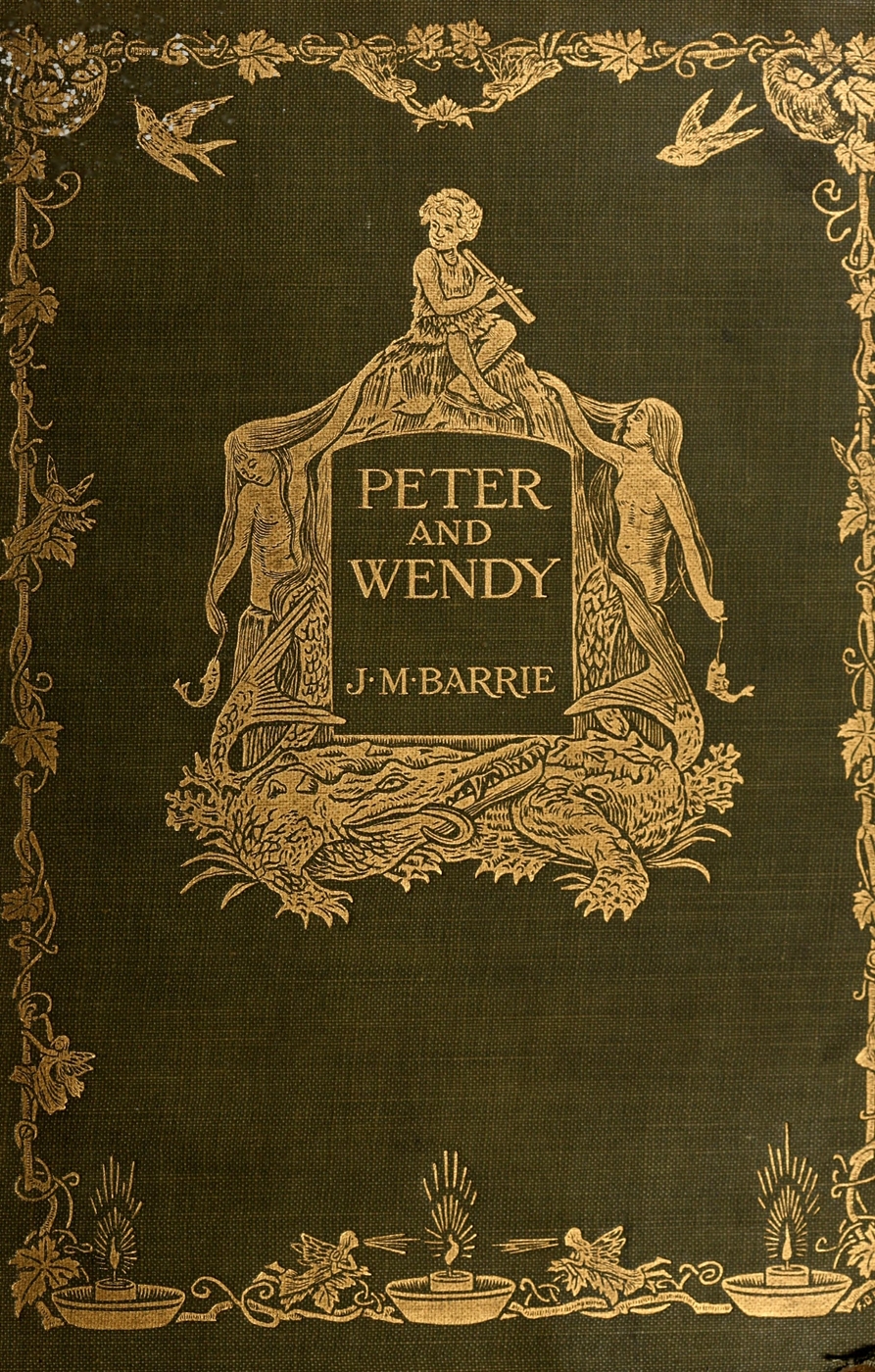
Ultimately, I have Baird Searles (or you have to blame) to thank for pointing to P.L. Travers‘ original Mary Poppins books. To quote the entry in his A Reader’s Guide to Fantasy (1982), “Those who know P.L. TRAVER’s acerbic creation, Mary Poppins, only through the persona of Julie Andrews, do not really know Mary Poppins, despite the best efforts of that charming actress. Mary Poppins seldom has a kind word for anyone, almost never smiles except at heir own prim reflections, and can get four children washed and in bed with No Nonsense Whatsoever.” I didn’t rush out and buy the books, but his words always lingered in my memory, and when I saw the books for sale in the old Borders in the World Trade Center, I bought the first one, Mary Poppins (1934), and promptly devoured it. Strains of the book and its sequels can be heard in the Julie Andrews’ movie, but there are deeper, more mythic moments that I imagine Walt Disney wanted no part of.

Travers was born Helen Lyndon Goff in Australia in 1899. She took to the stage as a teenager, creating for herself the stage name Pamela Lyndon Travers. For several years she traveled in Australia and New Zealand as part of a Shakespearean company. In New Zealand, she became a published poet and later a primary writer for the women’s sections in a Christchurch newspaper.

Read More Read More

Into the Weird: Weird Tales, May 1923 (Volume 1, Number 3) Part 1

Into the Weird: Weird Tales, May 1923 (Volume 1, Number 3) Part 1

Weird Tales, May 1923, front and back covers
The third issue of Weird Tales saw the magazine experiment with a significant change in presentation. The first two issues had been a standard pulp size, about 6 inches by 9; the May 1923 issue went to the bedsheet format, a bit more than 9 inches by 12, while cutting the number of pages from 192 to 120. Open the issue, or look through a pdf file, and further changes become apparent.

The layout’s gone to three columns of text instead of two. There are two reprints in the issue, one of them printed at a reduced type size, presumably to fit the space available. And the magazine boasts interior artwork for the first time, with nine stories getting uncredited illustrations; black-and-white line drawings, usually with heavy cross-hatching.

The artist was presumably this issue’s cover artist, William Heitman, who seems to have done all the interior artwork in Weird Tales’ first year. Heitman’s two-colour cover image is simple, bordering on crude, but conveys a mood. The blurb on the cover is for A. G. Birch’s “The Moon Terror,” though there’s nothing in the story like the picture, for reasons which we’ll come to later on in this post. The colour scheme of the cover’s similar to the last issue, with solid red and black, but the logo’s the third in three issues — though the magazine’s subhead, “The Unique Magazine,” has remained consistent.

Read More Read More

Spoiler Free Review: Coyote vs. Acme

Spoiler Free Review: Coyote vs. Acme

Coyote vs Acme

In the early 1990s during grad school, I stood outside Professor Derek Penslar’s office, waiting to talk about a class I was taking with him. He had a variety of cartoons and articles posted on his door. Two that I remember were an efficiency consultant’s report on Schubert’s Unfinished Symphony and Ian Frazier’s New Yorker article “Coyote v. Acme.” I picked up a copy of Frazier’s collection titled after that piece when it became available.

Tonight, my wife, a friend, and I got to see the movie inspired by that Frazier article: Coyote vs. Acme. We almost didn’t get to see it.

Filmed in spring of 2022, Warner Bros. Discovery announced plans to shelve the film in November 2023 in order to take a tax write-off, much as they did with Batgirl and Scoob! Holiday Haunt. After a private showing of the film for the cast and crew, however, Warner Bros. Discovery allowed the filmmakers to seek another distribution deal, partly because of public backlash to the decision caused by comments made by the filmmakers. In March of 2025, Ketchup Entertainment bought the distribution rights, screening it first at San Diego Comic-Con and then releasing it on August 28, 2026.

Read More Read More

Forgotten Authors: T.P. Caravan

Forgotten Authors: T.P. Caravan

Charles Carroll Muñoz (a.k.a. T.P. Caravan)

T.P. Caravan was born Charles Carroll Muñoz on July 2, 1926 in the Bronx, New York. His parents were O.A. and Constance (née Stoutenburgh) Muñoz.

During World War II, Muñoz served in the United States Navy as an aerial gunner, flying in Avenger bombers. When the war was over, he remained in the U.S. Merchant Marines, serving as a radio officer on freighters, tankers, and passenger ships. He also served during both the Korean and Vietnam Wars on munitions ships.

He earned his Master’s degree from Columbia in 1953 with a thesis about the eighteen century English poet Edward Young. In 1952, while attending Columbia University, he began publishing science fiction under the Caravan name with the short story “Happy Solution,” which appeared in the January issue of Other Worlds. Several other science fiction stories followed over the next thirteen years, including seven sequels to “Happy Solution.”

Read More Read More

Almost Gothic: The Nine Tailors by Dorothy Sayers

Almost Gothic: The Nine Tailors by Dorothy Sayers

The Nine Tailors, first edition (Harcourt, Brace, 1934)

The Nine Tailors has been described as the best of Dorothy Sayers’s novels. It certainly has many of the features of classic literary fiction, including a small rural community as a setting; a cast of characters from every level of society; and elaborate symbolism focused on a set of church bells, each with a meaningful name. Indeed the entire novel seems to have a symbolic level of meaning over and above the literal plot of the mystery. Of course mystery novels nearly all begin in medias res, with the discovery of a death, after which the detective reconstructs the previous events; but this novel’s backstory reaches back roughly two decades, to the Great War, and includes much more than the death.

The title The Nine Tailors alludes to the old saying “Nine tailors make a man.” This is sometimes taken as a slur on tailors as cowards or weaklings, saying that one real man is worth nine of them; but Sayers has in mind a custom of ringing nine strokes of a church bell for a man’s death, six for a woman’s, or three for a child’s. There are several deaths in the course of the novel.

Read More Read More

Becoming a Reader

Becoming a Reader

Andre Norton’s Janus novels: Judgment on Janus and Victory on Janus (Fawcett Crest, December 1979 and January 1980). Covers by Ken Barr

I read a lot as a kid and read widely, sampling anything I could find. I always had books on my “want to read” list but also had a lot of chores and never had as much time to read as I wanted.

As a result, when I was a teenager and we were “assigned” readings for school, I resented it. I already knew a dozen books in the library I wanted to read as soon as I could get to them. And, too often, the assigned books were not nearly as colorful or interesting as the stuff I was already reading.

Read More Read More

The Literacy Crisis – Vocabulary

The Literacy Crisis – Vocabulary

Me… yet again

Good afterevenmorn, Readers!

I have returned with the next issue of me yelling into the aether (the literacy crisis series), engendered by four simultaneous fights I witnessed on social media a couple of weeks ago. This one appears to be the most controversial, for reasons I cannot fathom.

Big words.

Let’s talk about it, shall we?

Read More Read More

A (Black) Gat in the Hand: Going The Distance with the Czar of Noir

A (Black) Gat in the Hand: Going The Distance with the Czar of Noir

“You’re the second guy I’ve met within hours who seems to think a gat in the hand means a world by the tail.” – Phillip Marlowe in Raymond Chandler’s The Big Sleep

Eddie Muller is known as the Czar of Noir. He founded the Film Noir Foundation and he hosts Noir Alley, on Turner Classic Movies. He’s written a couple respected non-fiction books about Noir and cinema.

In 2002, Austin hosted the big mystery convention, Bouchercon. I was living there and stopped in for a day. I met Eddie, who hadn’t yet started appearing on TCM opposite Robert Osborne. He was there with his just published first novel, The Distance.

Eddie’s father was a popular, long-time sportswriter for the San Francisco Examiner for over 40 years. He was known as ‘Mr Boxer.’ Eddie would also go to work in the newspaper business himself.

That background is all relevant, because for the book, Eddie drew heavily on his dad’s career, and his own life around the newspaper industry. The Distance features Mister Boxing, Billy Nichols, a local sports reporter who is a legitimate celebrity, working for William Randolph Heart’s The Examiner. Set around the post-WW II San Francisco boxing scene, the workings of the newspaper and the reporter’s life add great depth to the book.

Read More Read More

Weird Times 4: Demography and Race

Weird Times 4: Demography and Race

The flag of the United States of America, with 48 stars at top and with 50 at bottom.

This post is the fourth in a series reflecting on the world of 1923, and the 1920s generally, as a background to early issues of Weird Tales. Imagine that you’re an American in 1923, and you’re taking a walk to the newsstand to buy the first issue of a new pulp fiction magazine. What sort of things will you see?

You might, for example, see a flagpole with an American flag on it. It is a flag with a regular grid of stars in the corner, six rows of eight stars apiece, representing the 48 states of the Union. The United States in 1923 is a different place from what it will become a hundred years later, with a population that is distributed differently, different territories, a different self-image and different ideas about the nature of its peoples.

Read More Read More

Neverwhens: World Building in a Shared Universe– Cormac Mac Art and The Isle of Swords

Neverwhens: World Building in a Shared Universe– Cormac Mac Art and The Isle of Swords

Cormac Mac Art: Isle of Swords, by Matthew John (Titan Books, July 28, 2026). Cover uncredited

When Titan and Heroic Signatures announced they were bringing back Robert E. Howard pastiche, not just of Conan, but of many others of his rich panoply of heroes, I sacrificed many a reading night to take a deep-dive into the first year’s worth of stories, and chronicled the results at Black Gate. You can read about that descent into Cosmic Pastiche Horror here.

The truth was that, like most pastiche — assuming one excepts the value of pastiche at all — the results were mixed. Most was admirable attempts by authors who clearly had fond memories of REH, but didn’t really remember what made HIS fiction (not their memories of it, not their memories of it via Marvel comics, film, or even other pastiche) work. A few, namely the work by Scott Oden, John C. Hocking and James Lovegrove, “got” the characters they were writing (Oden can even sound like Howard), while an equal number could only be called… well… not worth the paper they weren’t printed on.

Read More Read More